Last updated: August 13, 2026
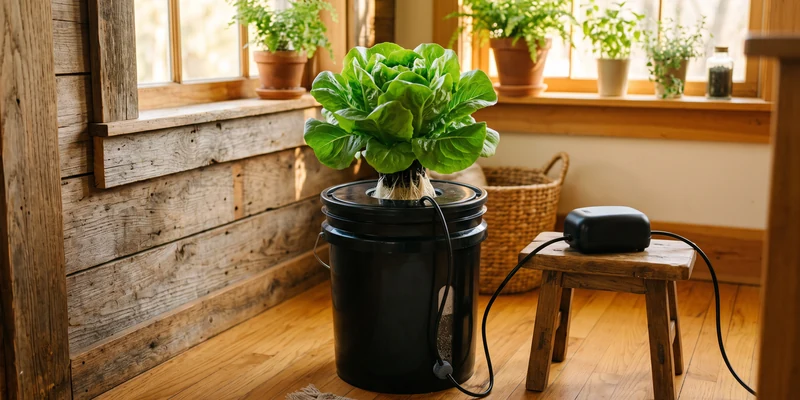
Shopping for a hydroponic system built on deep water culture is refreshingly simple compared to most gear categories, because every DWC system is the same idea in different packaging: a reservoir, a lid with net pots, and an air pump bubbling oxygen through nutrient solution. What you are really choosing is scale, bucket count, and how much of the parts list arrives in one box.
This guide sorts the options into the three formats that matter, single buckets, multi-bucket kits, and wide totes for greens, then picks the standouts in each and covers the add-ons that turn a kit into a running system. Everything here follows the method explained in our complete deep water culture guide.
This article contains affiliate links. If you buy through them, we may earn a commission at no extra cost to you. Learn more.
Quick Answer
Which DWC hydroponic system should you buy?
- For one or two plants, a complete 5 gallon bucket kit with pump, air stone, and pebbles included is the easiest start; VIVOSUN’s kits are the widely available reference.
- For a row of tomatoes or peppers, a 4-bucket kit with a single shared pump grows serious plants for the cost of a nice dinner out.
- For lettuce and herbs in quantity, skip buckets and use a shallow multi-site raft or tote system, or build one from a storage tote in an afternoon.
The Three DWC Formats Compared
Pick the format before the product: buckets for big single plants, multi-bucket kits for a fruiting lineup, and wide shallow reservoirs for greens. The table shows how they differ where it counts.
| Format | Best crops | Plant sites | Strengths | Watch out for |
|---|---|---|---|---|
| Single 5 gallon bucket | Tomato, pepper, cucumber, big basil | 1 | Cheap, simple, deep root room | One thirsty plant can empty it fast in summer |
| Multi-bucket kit (2 to 4 buckets) | A lineup of fruiting plants | 2 to 4 | One pump serves all, matched parts | More floor space, more solution to mix |
| Tote or raft system | Lettuce, herbs, greens | 6 to 12 plus | Many plants per gallon, easy harvest rotation | Shallow volume swings faster in temperature |
Whatever the format, the quality bar is the same: an opaque, food-safe reservoir, a pump with enough output for the water volume, a fine-bubble air stone, and net pots sized to your crop. Brand matters less here than in almost any other category, which keeps prices honest.
What Actually Matters in a DWC Kit
Four things separate a kit you will still be using next year from a box of parts in the garage. First, the air pump: it runs 24/7 and is the system’s heartbeat, so output and noise both matter. Look for a pump rated comfortably above your reservoir size; growers generally aim for roughly a liter per minute of air per gallon of solution as a relaxed rule of thumb.
Second, light-tightness. Any light reaching the solution grows algae, so dark buckets, snug lids, and covered ports are not cosmetic. Third, lid and net pot design: pre-cut lids with 6 inch net pots suit big plants, while greens do fine in 3 inch pots. Fourth, the boring hardware, check valve, quality tubing, and a water level indicator, which some kits include and all builders eventually add. A check valve stops water siphoning into the pump during a power cut, and pairs with the standard safety habits: GFCI outlet, drip loop in the cord, pump above the water line where possible.
Our Top Picks at a Glance
How we chose: we compared widely available DWC kits and components on reservoir quality, pump output, included accessories, and the patterns that repeat across owner feedback, using manufacturer specifications rather than hands-on testing of our own. Availability counted too: everything here is the kind of item that stays in stock.
🏆 Best Overall
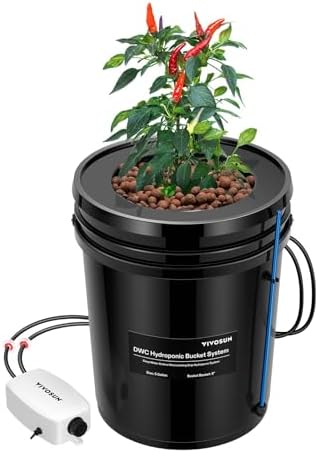
A complete 5 gallon DWC bucket kit from VIVOSUN: dark bucket, pre-cut lid with net pot, air pump, stone, tubing, and clay pebbles in one box. Owners consistently describe it as the no-decisions way to get a first plant floating the same day the box arrives.
🍅 Best for Multiple Plants
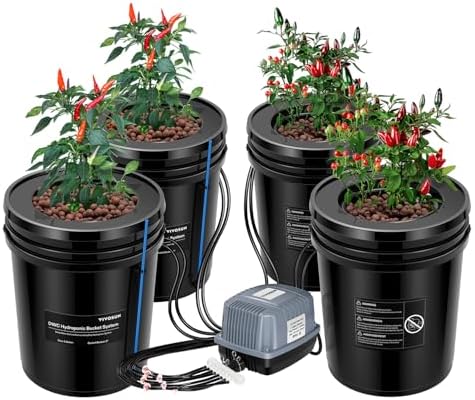
A 4-bucket VIVOSUN kit running off one shared pump, the standard way to grow a lineup of tomatoes, peppers, and cucumbers indoors or on a patio. Buckets can be tended or refreshed individually, which owners appreciate once plants diverge in thirst.
💰 Best Budget Pick
A compact multi-site DWC starter, the tote-style format with several net pot sites sharing one shallow reservoir. The cheapest cost per plant in hydroponics and the right first system for anyone whose ambitions are salads rather than tomato vines.
Kit or DIY Build?
If you own a drill and a hole saw, a single-bucket DWC build is one of the most satisfying afternoon projects in gardening, and every part is a commodity: bucket, lid, net pot, pump, stone, tubing. Our step-by-step 5-gallon bucket build walks the whole thing, hole sizes included.
The honest math: a DIY build usually saves a little money and teaches a lot, while a kit saves two shopping trips and guarantees the lid hole matches the net pot. Many growers do both, buying one kit to learn the shape of the system and cloning it from parts afterward. There is no wrong door into this method.
The Add-Ons That Complete the System
A DWC reservoir is only half the setup; the plant still needs food, and you still need eyes on the water. Three purchases round out any of the systems above, and none of them are optional for long.
🫧 The Upgrade Pump
Kit pumps work, but a stronger dual-outlet aquarium-style pump with adjustable flow runs multiple buckets, adds headroom for summer, and often runs quieter than the bundled unit. Our hydroponics air pump guide explains sizing.

🧪 The Nutrients
The three-part General Hydroponics Flora Series is the classic DWC pairing: flexible across leafy and fruiting stages and documented everywhere. Our Flora Series how-to covers mixing order and schedules.

🪨 The Medium
A bag of expanded clay pebbles anchors plants in their net pots, wicks moisture to young roots, and rinses clean for reuse crop after crop. GROW!T is the common name on the bag.

Setting Up for Success in the First Two Weeks
The window where new DWC systems fail is the first fortnight, and the fixes are all preventive. Set the water level touching the net pot for a new transplant, then let it fall an inch or two below as roots reach the solution. Mix nutrients at reduced strength for seedlings, and check pH every couple of days, aiming for the usual 5.5 to 6.5 window; a digital meter from our pH meter guide makes this a ten-second job.
Keep the reservoir cool and dark, and resist the urge to peek by lifting the lid constantly, since every lift is a light leak and a temperature swing. If roots ever look brown and slimy rather than white, act on it the same day; our root rot guide is the emergency manual.
Common Mistakes to Avoid
- Buying a clear container. Transparent totes grow algae before they grow lettuce. Dark reservoirs or a wrap of duct tape solve it.
- Undersizing the pump. Weak aeration is slow-motion root rot. Size above your volume and run it around the clock.
- Skipping the check valve. A power cut with the pump below the waterline can siphon the reservoir into the pump. The part costs pocket change.
- Big net pots for small crops. Lettuce in 6 inch pots wastes pebbles and lid space. Match pot size to the plant.
- Treating the kit as complete. No mainstream kit includes nutrients or a pH meter. Order them in the same cart and skip the two-week stall.
Where to Go From Here
If greens are the goal, our guide to the best hydroponic systems for lettuce compares DWC against rafts and NFT for pure salad output. If you are still weighing methods, the pump-free Kratky method is DWC’s silent sibling and costs even less to try.
And once the first system is bubbling, the upgrade path is wonderfully gradual: a second bucket, a stronger pump, a proper meter. DWC rewards exactly the kind of tinkering it takes to build one.
Frequently Asked Questions
What size DWC system should a beginner start with? One 5 gallon bucket or a small multi-site tote. Both teach the full routine, water level, nutrients, pH, aeration, at the smallest possible stakes.
Do DWC kits come with everything I need? Usually everything structural: bucket, lid, net pot, pump, stone, tubing, often pebbles. Nutrients, a pH meter, and pH adjusters are almost never included and are genuinely required.
Can I grow tomatoes in a DWC bucket kit? Yes, a 5 gallon bucket suits one indeterminate tomato well. Expect heavy drinking in fruit set, plan support for the vine, and check the reservoir daily in summer.
How loud are DWC air pumps? A quality aquarium-style pump is a soft hum, similar to a fish tank. Cheap pumps buzz, and the fix owners use is a better pump on a foam pad, not turning it off at night.
How many plants per bucket? One large plant per 5 gallon bucket. Crowding two into one bucket halves root room and doubles the odds of an oxygen shortfall; totes with multiple sites are the right tool for many small plants.
The Bottom Line
Choose the format that matches your crops: a single 5 gallon kit for a first big plant, a 4-bucket system for a fruiting lineup, a multi-site tote for greens. Add nutrients, a pH meter, and, when the budget allows, a better air pump, and any of the picks above becomes a system that outgrows its price tag. DWC is the rare category where the affordable answer is also the right one.