Last updated: August 13, 2026
Lettuce is the easiest crop in all of hydroponics, which means the best hydroponic system for lettuce is less about horsepower and more about fit: how many salads you actually eat, how much counter or floor space you have, and how much routine you want. A single head needs nothing more than a jar; a salad-every-day household is better served by a channel system with dozens of sites.
Every mainstream system type grows lettuce well, so this guide sorts them by lifestyle first. We compare smart gardens, passive Kratky containers, deep water culture, and NFT channels, then recommend a specific starting point in each lane based on the patterns that repeat across grower feedback.
This article contains affiliate links. If you buy through them, we may earn a commission at no extra cost to you. Learn more.
Quick Answer
Which hydroponic system is best for lettuce?
- For most kitchens, a countertop smart garden with around 10 to 12 pods, like the iDOO 12 pod system, is the easiest path to steady homegrown lettuce: light, pump, and reminders built in.
- On a minimal budget, the Kratky method in jars or a tote grows the same lettuce with no electricity at all, just slower and at smaller scale.
- For real volume, an NFT channel kit with 36 or more sites turns a shelf or bench into a weekly harvest rotation.
The Four System Types, Compared for Lettuce
Match the system to your salad habit and space, and the decision mostly makes itself. Here is how the four families stack up when lettuce is the goal.
| System | Capacity | Effort | Best for |
|---|---|---|---|
| Smart garden | Typically 3 to 12 pods | Minimal; light and pump automated | Kitchens, beginners, anyone who wants it to just work |
| Kratky (passive) | 1 plant per jar, more in totes | Near zero after setup; no power | Tightest budgets, experiments, windowsills |
| Deep water culture | A few plants per tote or bucket | Low; air pump runs constantly | Faster growth than Kratky at DIY prices |
| NFT channels | Commonly 20 to 72+ sites | Moderate; weekly reservoir routine | Households that eat salad daily |
Two notes before the picks. First, lettuce is a cool weather crop everywhere: whatever the system, it grows sweetest with room temperatures roughly in the 60s to low 70s Fahrenheit and around 12 to 16 hours of light. Second, loose leaf and butterhead varieties behave best indoors; our lettuce varieties guide goes deeper on that choice.
How Much Lettuce Do You Actually Eat?
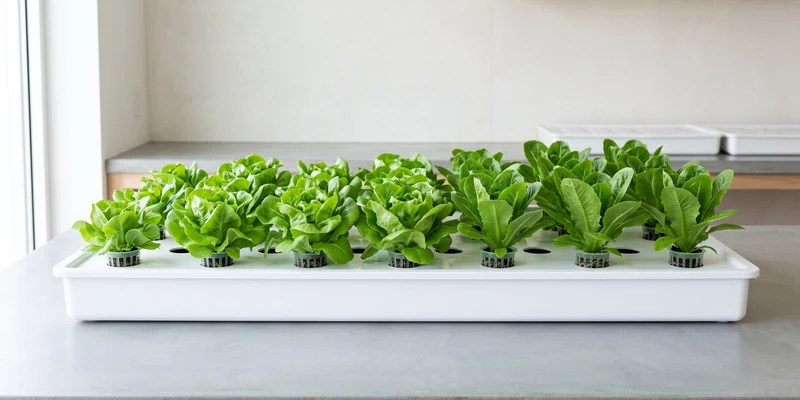
This one question sizes the purchase better than any spec sheet. A mature head of loose leaf lettuce yields salad for roughly two to four servings, and a plant takes around 5 to 7 weeks from seed to full size. So a steady one-salad-a-day habit needs a pipeline of roughly 8 to 12 plants in staggered stages, which is exactly a 12 pod smart garden or a small NFT system running continuously.
If salad is a weekend thing, three or four Kratky jars restarted on a rotation cover it with no hardware at all. Oversizing is the classic first-purchase mistake in this category: a 36 site system serving a one-person salad habit mostly grows guilt.
Our Top Picks by Situation
How we chose: we compared widely available systems on lettuce capacity, included lighting, noise, day-to-day workload, and long-term running costs, leaning on manufacturer specifications and recurring themes in owner feedback rather than hands-on testing of our own.
🏆 Best Overall
A 12 pod countertop system with a height-adjustable full spectrum light, quiet circulation pump, and simple controls. Twelve sites is the sweet spot for a real lettuce rotation, and owners consistently describe this class of machine as the one that finally made daily salads stick; our iDOO system review has the details.

💰 Best Budget Pick
The no-electricity route: wide mouth jars with net pot lids and a bag of nutrients, run Kratky style on a bright sill or under a basic light. Slower and smaller than powered systems, but the lettuce is just as real; our Kratky lettuce guide is the companion walkthrough.

🏗️ Best for Volume
A 36 site NFT channel kit with pump and timer. This is the configuration that turns lettuce from a novelty into a grocery line item, with staggered plantings feeding a continuous weekly harvest. Read our full NFT systems guide before committing bench space.

Smart Garden or DIY: The Honest Trade-Offs
Smart gardens buy convenience: the light schedule, water circulation, and feeding reminders are handled, and the failure rate for first crops is accordingly low. Their limits are capacity and pod economics, since branded pods cost more than seeds, though most machines accept generic sponges once you outgrow the starter kits. The category leaders are compared in our indoor hydroponic garden roundup.
DIY routes, Kratky and DWC totes, cost a fraction as much per plant site and scale exactly as far as your shelf does. The price is that you are the automation: you mix nutrients, set light timers, and notice problems yourself. Growers who enjoy the process tend to drift DIY over time; growers who just want salad tend to stay with the machine. Both are winning positions.
Two More Options Worth Considering
Different kitchens, different fits. These round out the field.
🌿 The Household Name
AeroGarden’s Harvest class machines remain the most familiar smart gardens in the category, and the brand relaunched in spring 2025 with fresh stock and pod supply after its early 2025 shutdown. A 6 pod unit suits herbs plus a couple of lettuce heads; see our AeroGarden review for the current state of the brand.

🧪 The Nutrient Restock
Whichever system you choose, lettuce wants a complete formula at modest strength, typically around 0.8 to 1.4 EC with pH around 5.5 to 6.5. A one part dry nutrient keeps refills simple across every system on this page; our lettuce nutrients guide compares the options.

Setting Up for Sweet, Crisp Heads
Whatever hardware you land on, the same three levers decide lettuce quality. Keep it cool, since warm rooms push lettuce to bolt and turn bitter. Keep light generous but not punishing, around 12 to 16 hours daily, with small LED panels typically hung around 12 to 24 inches above the canopy in DIY setups. And keep plantings staggered, starting a few new plugs every week, so the harvest arrives as a steady stream rather than one unmanageable wall of salad.
Seed starting is identical across systems: sponge or rockwool plugs, moist and warm, sprouting typically in 2 to 7 days. The full growing calendar lives in our guide on how to grow hydroponic lettuce at home.
Common Mistakes to Avoid
- Buying for an imagined appetite. Count your actual weekly salads, then size the system to that number, not to ambition.
- Running lettuce hot. Sustained temperatures much above the mid 70s Fahrenheit invite bolting and bitterness in every system type.
- Planting all sites at once. Twelve heads maturing the same week is feast then famine. Stagger by a week or two.
- Skipping the light math in DIY builds. A window that looks bright to you is often marginal for dense heads. When in doubt, add a panel.
- Letting solution run strong. Lettuce prefers modest feed strength; overly rich solution causes tip burn on the youngest leaves.
Where to Go From Here
If you are leaning toward the machine route, compare the leading countertop units in our best indoor hydroponic garden roundup. If DIY sounds like the fun part, start a jar this week with the Kratky lettuce walkthrough while you decide on bigger hardware.
Either way, buy seeds for two or three varieties up front. Trying a loose leaf, a butterhead, and a romaine in the first cycle teaches you more about your taste and your setup than any guide can.
Frequently Asked Questions
How long does hydroponic lettuce take to grow? Typically around 5 to 7 weeks from seed to a full head, with baby leaves pickable from around week 3 to 4. Powered systems with strong light sit at the fast end of that range.
Can I grow lettuce in a smart garden year round? Yes. Indoor systems with their own lights are season-proof, though lettuce still prefers a cool room; summer heat indoors can push plants toward bolting just as it does outdoors.
Does hydroponic lettuce taste different from store lettuce? Freshness is the real difference: leaves cut minutes before eating are crisper than anything that traveled in a truck. Flavor otherwise depends on variety and temperature far more than on the growing method.
What pH and EC does lettuce need? Most growers keep lettuce solution at a pH around 5.5 to 6.5 and a strength around 0.8 to 1.4 EC. Smart gardens hide this behind their dosing schedule; DIY growers check it with a basic meter at mixing time.
Which lettuce varieties work best indoors? Loose leaf and butterhead types mature fastest and tolerate indoor conditions best. Crisphead types like iceberg are slow and finicky under lights, so they are a poor first choice.
The Bottom Line
Every hydroponic system grows good lettuce, so buy for your lifestyle: a 12 pod smart garden for effortless steady salads, Kratky jars for the cheapest possible start, and an NFT channel kit when volume is the point. Keep the room cool, the light generous, and the plantings staggered, and homegrown lettuce becomes a routine instead of a project.