Last updated: August 13, 2026
The best indoor hydroponic garden is not the one with the most pods or the brightest light. It is the one that matches how much attention you actually want to give it. Every model in this category does the same basic job: it holds plants in water instead of soil, feeds them liquid nutrients, and runs a grow light on a timer so your kitchen counter can grow basil in January. What separates them is capacity, automation, and how much the ongoing pods and nutrients tie you to one brand.
This guide sorts the field by those three questions first, because once you answer them, your shortlist usually writes itself. Six systems come up again and again in owner feedback, from compact countertop gardens to a vertical tower that grows salads for a family, and each pick links to a deeper review where we have one.
This article contains affiliate links. If you buy through them, we may earn a commission at no extra cost to you. Learn more.
Quick Answer
Which indoor hydroponic garden should you buy?
- For most kitchens, a six pod countertop garden like the AeroGarden Harvest hits the sweet spot of fresh herbs, simple controls, and a footprint that fits under cabinets.
- If you want the lowest possible maintenance, Click and Grow’s soil pod system waters itself for weeks at a time and asks almost nothing of you.
- If you want real salad volume, look at a 12 pod system like the iDOO or LetPot, or go vertical with a Gardyn tower for dozens of plants at once.
What Actually Matters When You Compare These Systems
Five things decide whether an indoor garden becomes a habit or a dusty appliance, and pod count is only one of them. Work down this table before you look at a single product page.
| What to check | Why it matters | What to look for |
|---|---|---|
| Pod count | Sets how much you harvest and how crowded the deck gets | 3 to 6 pods for herbs, 9 to 12 for herbs plus greens, towers for salads at scale |
| Light height | Plants outgrow a light that cannot rise with them | An arm that extends to roughly 12 inches or more for herbs, higher for tomatoes and peppers |
| Water reservoir | A small tank means topping off every few days | Bigger tanks and visible water windows stretch the time between refills |
| Pod ecosystem | Ongoing cost and flexibility live here, not in the sticker price | Systems that accept generic sponges and your own seeds keep long term costs down |
| Automation | Timers and reminders are what keep plants alive on busy weeks | An automatic light cycle at minimum; app control and dimming are nice extras |
Capacity deserves one honest note: even a 12 pod garden will not replace your produce aisle. It will keep you in fresh herbs continuously and add regular salads. If you are curious what these systems realistically produce, see our guide to what you can grow in a hydroponic garden.
Pods and Nutrients: The Cost That Comes After the Box
The purchase price is only half the decision, because every one of these gardens consumes seed pods and liquid nutrients for as long as you run it. Brands differ sharply in how open that ecosystem is, and this is where buyers most often feel locked in later.
AeroGarden and most 12 pod systems use a standard style grow sponge, so third party sponges and grow anything kits let you plant your own seeds cheaply. Click and Grow uses proprietary soil pods that make the system nearly foolproof but keep you closer to the brand’s own refills. Gardyn’s tower runs on its yCube pods with an optional membership layer on top. None of these approaches is wrong, but you should pick one deliberately, and our AeroGarden pods guide shows how deep the third party option goes for the most popular ecosystem.
Our Top Picks at a Glance
How we chose: we compared widely available indoor hydroponic gardens on pod capacity, light height and power, reservoir size, pod ecosystem openness, and the themes that repeat across owner reviews, leaning on manufacturer specifications rather than any hands on trial of our own. Worried about the AeroGarden brand itself? The company paused operations on January 1, 2025 and relaunched in spring 2025 with pods and support available again, covered in our AeroGarden shutdown and relaunch explainer.
🏆 Best Overall
Six pods, a simple one button interface, and the largest pod and accessory ecosystem in the category. It is the system most first time indoor gardeners buy, and the reasons hold up; our AeroGarden review covers the relaunched brand in detail.

💰 Best Budget Pick
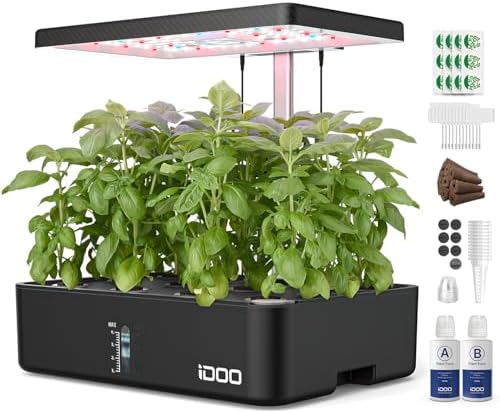
Twelve pods for less than many six pod gardens, with an adjustable light, a quiet circulation pump, and compatibility with cheap generic sponges. Owners consistently call it the value play; see our iDOO hydroponic system review.
🌱 Best Low Maintenance
Click and Grow’s soil pod approach means no pump, no nutrient mixing, and a water tank that lasts for weeks. The garden that suits people who travel or simply do not want a routine; our Click and Grow review explains the trade-offs.

Match the Garden to Your Situation
The three picks above cover most buyers, but the right answer shifts with your goal. Here is the honest sorting.
You mainly want fresh herbs for cooking
A 3 to 6 pod countertop garden is plenty. Basil, mint, parsley, and thyme are the crops these systems grow best, and a six pod deck keeps a kitchen in herbs continuously. If that is the whole mission, start with our indoor herb garden kit guide, and keep the footprint small with a countertop hydroponic garden.
You want salads, not just garnishes
Lettuce and greens need more sites and more light spread. A 12 pod system is the realistic starting point, and a vertical tower is the step beyond it. Towers trade counter convenience for wall scale volume, and they carry a bigger commitment in cleaning and pod costs.
You want to experiment with your own seeds
Pick an open ecosystem. AeroGarden’s grow anything pods and the generic sponges that fit iDOO and LetPot style decks let you start peppers, flowers, or any small seed you like. Proprietary pod systems are simpler but narrower.
Three More Picks for Specific Setups
These fill the gaps the top three leave open: app driven control, family scale volume, and a bigger AeroGarden for ambitious crops.
📱 Best App Controlled
LetPot’s 12 pod system adds app scheduling, light dimming, and water level alerts to the standard formula, a genuine step up in control for people who like tuning their setup. Our LetPot review covers how the smart features hold up in daily use.

🗼 Best for Serious Volume
Gardyn’s vertical tower grows dozens of plants in a couple of square feet, with cameras and an app that watches the garden for you. It is a different commitment level than a countertop unit; our Gardyn review weighs the membership question honestly.

⭐ Also Great for Bigger Crops
The nine pod AeroGarden Bounty brings a stronger light on a taller arm, a touchscreen, and enough headroom for compact tomatoes and peppers. The natural pick if you want the AeroGarden ecosystem with room to grow upward.

Placement, Water, and the Weekly Routine
Where you put the garden matters more than most product pages admit. These lights are bright, most run 14 to 17 hours a day, and a unit facing a couch or a bedroom door gets annoying fast. A kitchen counter away from direct sight lines, with an outlet nearby, is the classic spot. Since you are pairing electricity with a water reservoir, plug into a GFCI protected outlet and keep the cord in a simple drip loop so any splash runs away from the plug.
What maintenance really looks like
Expect a light weekly rhythm: top off the tank, add nutrients on the schedule the system prompts, and rinse the reservoir between plantings. Trim herbs often, because regular harvesting is what keeps them bushy instead of leggy. Every few months a deeper clean keeps algae and buildup away, and the routine is the same across brands; our step by step cleaning guide applies almost verbatim to any pod garden.
Common Mistakes to Avoid
- Buying on pod count alone. A cheap 12 pod deck under a weak light grows twelve mediocre plants. Light power and height matter as much as sites.
- Planting all twelve pods at once. Full decks crowd fast. Stagger plantings so harvests overlap instead of arriving in one wave.
- Ignoring the light schedule at setup. Set the on cycle to start early morning so the light is off by evening, or it will glow into your night.
- Letting the reservoir run near empty. Pumps run hot and loud with low water, and roots suffer. Check the window twice a week.
- Skipping the between crop clean. Old roots and nutrient residue are how odors and algae start. Ten minutes between plantings prevents it.
Where to Go From Here
If you are deciding between the two most searched brands, our AeroGarden vs Click and Grow comparison settles that question directly. If you are starting from zero and want the broader picture of growing indoors, our guide to growing herbs indoors covers light, temperature, and variety choices that apply to every system on this page.
Frequently Asked Questions
Are indoor hydroponic gardens worth it? For fresh herbs, most owners say yes: a countertop garden keeps basil and mint available year round with a few minutes of weekly care. For replacing grocery produce entirely, no single countertop unit gets there.
What is the easiest indoor garden for beginners? Soil pod systems like Click and Grow ask the least of you, since there is no pump or nutrient mixing. Classic hydroponic gardens like AeroGarden are nearly as easy and grow faster.
Do these gardens use a lot of electricity? The LED light is the main draw, and it runs many hours a day at modest wattage. Consumption is closer to a large light bulb than a kitchen appliance for countertop units, with towers drawing more.
Can I use my own seeds? In open ecosystems, yes. Grow anything style pods and generic sponges let you plant any small seed in AeroGarden, iDOO, and LetPot systems. Proprietary pod systems are more restrictive.
Is AeroGarden still in business? Yes. The brand paused operations on January 1, 2025 and relaunched in spring 2025, with pods, nutrients, and support available again. Our full explainer covers the timeline.
The Bottom Line
Decide on attention level first, capacity second, ecosystem third. A six pod AeroGarden Harvest is the safe default for herbs, Click and Grow wins if you want to forget the garden exists, and a 12 pod iDOO or LetPot is the value route to real salad volume. Match the machine to the habit you will actually keep, and any of these six will earn its counter space.