Last updated: August 13, 2026
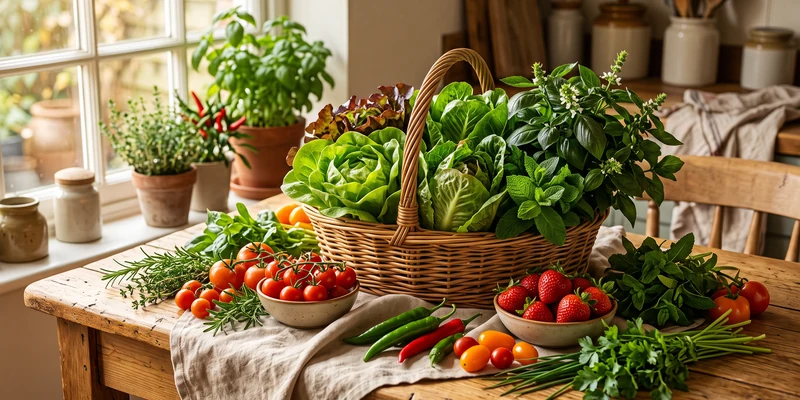
Ask what can you grow in a hydroponic garden and the honest answer is: far more than most beginners expect, and slightly less than the marketing photos suggest. Leafy greens and herbs grow so well in water that commercial farms use hydroponics for exactly those crops. Fruiting vegetables like tomatoes and peppers work too, with a couple of conditions attached. And a short list of crops, mostly root vegetables and large plants, simply are not worth the effort indoors.
This guide sorts the options into a practical hierarchy: what grows almost effortlessly, what grows well with the right light, and what to skip. Whether you run a countertop smart garden, a mason jar on a windowsill, or a full bucket system, the crop list below is the place to start.
This article contains affiliate links. If you buy through them, we may earn a commission at no extra cost to you. Learn more.
Quick Answer
What can you grow in a hydroponic garden?
- Easiest by far: lettuce, other leafy greens, and soft herbs like basil, mint, and cilantro. They thrive in nearly any system.
- Very doable with strong light: tomatoes, peppers, cucumbers, strawberries, and dwarf varieties of many fruiting crops.
- Skip indoors: most root vegetables, corn, melons, and anything tree sized. The effort outweighs the harvest.
The Full Crop List at a Glance
Here is the short version in one table: what grows well hydroponically, roughly how demanding it is, and what to know before you plant it. Save this overview; it answers most “can I grow X” questions in one scan.
| Crop group | Examples | Difficulty | What to know |
|---|---|---|---|
| Lettuce and leafy greens | Butterhead, romaine, spinach, kale, arugula, bok choy, Swiss chard | Easy | Fast, forgiving, happy under modest light; many are ready to pick in around 4 to 6 weeks |
| Soft herbs | Basil, mint, cilantro, parsley, dill, chives, green onion | Easy | Cut-and-come-again harvests for months; basil in particular loves hydroponics |
| Woody herbs | Rosemary, thyme, oregano, sage | Moderate | Slower growing and slower to germinate, but stable once established |
| Microgreens | Radish, broccoli, pea shoots, sunflower | Easy | Harvested in 1 to 3 weeks; usually grown on trays rather than in deep systems |
| Fruiting vegetables | Tomatoes, peppers, cucumbers, eggplant | Moderate to advanced | Need strong light, support, and hand pollination indoors; choose dwarf or compact varieties |
| Strawberries | Day-neutral and alpine varieties | Moderate | Popular and rewarding; they want good light and patience in the first weeks |
| Beans and peas | Bush beans, snap peas | Moderate | Fast growers that need trellising; bush types stay manageable |
| Edible flowers and houseplants | Nasturtium, marigold, pothos cuttings | Easy to moderate | Many houseplants root happily in water; flowers add variety to smart gardens |
| Root vegetables | Carrots, potatoes, beets | Not recommended | The edible part needs loose depth that water systems do not provide well |
| Large and long-season crops | Corn, melons, squash, fruit trees | Not recommended | Too big, too thirsty, or too slow for practical indoor hydroponics |
Why Some Plants Thrive in Water and Others Struggle
The pattern in that table is simple: hydroponics favors plants where you eat the leaves or the fruit, and works against plants where you eat the root. Roots in a hydroponic system are there to drink and anchor, not to swell into a carrot, and compact, fast-growing plants make the most of a small lit footprint.
Speed matters too. A lettuce that finishes in five weeks lets you fix mistakes and restart cheaply. A crop that occupies your system for four months before you learn anything, like a full-size melon vine, ties up light, nutrients, and space that could have produced a dozen salad harvests. That is why experienced growers generally steer beginners toward greens first, fruiting crops second.
Leafy Greens and Herbs: The Easy Wins
If you want a near-guaranteed first success, plant lettuce or basil. Both germinate readily, tolerate a wide pH window, most leafy greens do well around 5.5 to 6.5, and grow noticeably faster in hydroponics than many growers expect from soil experience.
Greens also suit every system type. They are the classic crop for passive setups like the Kratky method, where a jar of nutrient solution and a sunny spot is genuinely enough, and they are what the seed pod catalogs of countertop smart gardens are built around. For a full seed-to-harvest walkthrough, see our guide on how to grow hydroponic lettuce at home.
Herbs earn their spot on value
Herbs are arguably the best return on a small system. A single basil or mint plant, harvested a few stems at a time, can keep producing for months, and fresh-cut herbs are one of the few crops where homegrown is dramatically better than store-bought the moment you snip them. Soft herbs outperform woody ones indoors; rosemary and thyme will grow, just slowly.
A culinary herb seed variety pack is the cheapest way to try several at once and find out which ones your kitchen actually goes through.

Fruiting Crops: Possible, With Two Conditions
Tomatoes, peppers, cucumbers, and strawberries all grow well hydroponically, commercial greenhouses prove it daily, but indoors they come with two conditions: enough light, and a pollination plan. Meet both and fruiting crops are the most satisfying thing you can grow in water.
Light is the bigger hurdle. Leafy greens are content under the modest built-in lamps of most smart gardens, while fruiting crops want considerably more intensity for considerably longer, often in the range of 12 to 16 hours a day under a capable LED. Our guide to the best grow lights for tomatoes indoors covers what “capable” actually means.
Pollination and plant size
Indoors there are no bees, so fruiting crops need help: shake the flowering stems gently every day or two, or touch each flower with a soft brush. It takes seconds and works reliably for tomatoes and peppers. Just as important, pick compact varieties bred for containers, dwarf or “patio” tomatoes, compact peppers, and day-neutral strawberries, because a full-size indeterminate tomato will outgrow almost any home system. Strawberries are popular enough that dedicated setups exist; see our guide to the best hydroponic system for strawberries.
What Not to Grow, and Why
The do-not-bother list is short but firm: root vegetables, corn, melons, full-size squash, and anything resembling a tree. Each fails for a concrete reason rather than an arbitrary rule.
Carrots, potatoes, and beets need loose depth for the edible root to develop, which net pots and water channels do not offer; misshapen, stunted roots are the usual result. Corn and melons are simply too large and too hungry for the light a home setup provides. None of this means it is physically impossible, dedicated hobbyists manage some of it in media beds, but as a practical matter your space and nutrients are better spent elsewhere.
Matching Crops to Your System
What you can grow also depends on what you grow it in, so match the crop to the hardware you have. The short rules: shallow systems for greens and herbs, deep or bucket systems for fruiting crops, and pods for whatever the pod catalog offers.
- Countertop smart gardens: herbs, lettuce, cherry tomatoes, and flowers from the brand’s pod range. Compact by design, so stick to compact plants. If you are still choosing a unit, our roundup of the best indoor hydroponic gardens compares the main options.
- Kratky jars and totes: lettuce, greens, and soft herbs. Passive systems have no aeration, and thirsty fruiting crops outdrink them quickly.
- DWC buckets: the fruiting-crop workhorse. A single aerated five-gallon bucket comfortably supports one tomato, pepper, or cucumber plant.
- NFT channels and towers: greens, herbs, and strawberries. Shallow channels suit small root systems, not top-heavy vines.
If a pod catalog is the only thing standing between you and a crop on this list, a grow anything style kit solves it: blank sponges, baskets, domes, and labels that take whatever seed you want to plant.

Common Mistakes to Avoid
- Starting with the hardest crop. A first attempt at full-size tomatoes teaches frustration; a first attempt at lettuce teaches hydroponics.
- Ignoring variety names. “Tomato” is not one plant. Dwarf and container varieties succeed where standard ones overwhelm a system.
- Underestimating light for fruit. Greens forgive weak lamps; peppers and strawberries do not.
- Forgetting pollination. Flowers that drop without setting fruit usually just needed a daily shake.
- Mixing slow and fast crops in one small unit. The fast ones get harvested; the slow ones then sit in leggy shade of your attention. Group by timeline where you can.
Where to Go From Here
Pick one crop from the easy tier and get a full cycle done. Lettuce is the classic training crop, and our hydroponic lettuce guide walks through it step by step. If herbs are the goal, the broader playbook in growing herbs indoors applies to hydroponic and soil growers alike.
Once the first harvest lands, ambition tends to follow. That is the moment to size up a system for fruiting crops, or to add a second unit dedicated to greens while tomatoes take over the first.
Frequently Asked Questions
What is the easiest thing to grow in a hydroponic garden? Lettuce, closely followed by basil and mint. All three germinate reliably, tolerate beginner mistakes, and finish fast, with lettuce typically ready in around four to six weeks.
Can you grow tomatoes hydroponically at home? Yes, and they do very well, provided you use a compact variety, give them strong light for 12 to 16 hours a day, support the stems, and hand pollinate the flowers.
Can you grow root vegetables like carrots in hydroponics? Technically possible in deep media beds, but not practical in typical home systems. The edible root needs loose depth that net pots and water channels cannot provide, so results are usually stunted.
Do strawberries grow well in a hydroponic garden? Yes. Day-neutral and alpine varieties are the usual picks, and they reward good light and patience. See our guide to the best hydroponic system for strawberries for setups suited to them.
Can you grow fruit trees or melons indoors hydroponically? Not realistically. Both need more space, light, and time than home systems provide. Compact fruiting vegetables and strawberries deliver a far better harvest for the same effort.
The Bottom Line
A hydroponic garden grows leafy greens and herbs almost effortlessly, handles tomatoes, peppers, cucumbers, and strawberries once you provide serious light and a pollination habit, and is the wrong tool for root vegetables and oversized crops. Start with lettuce or basil, finish a full cycle, then graduate to fruit. That order turns almost every beginner into a successful one.