Last updated: August 15, 2026
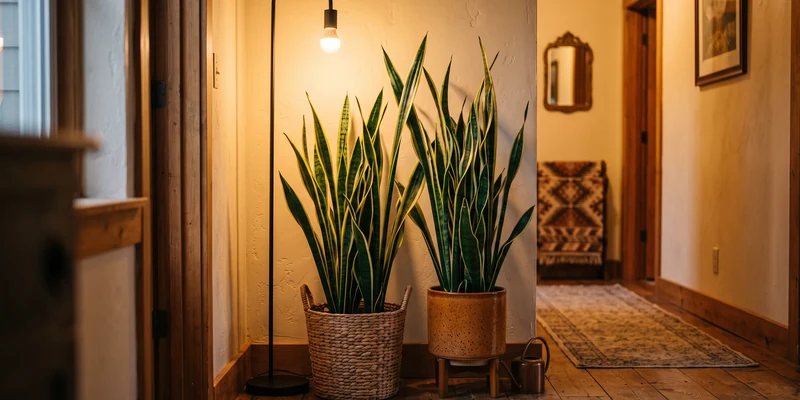
The snake plant is sold as the houseplant that needs nothing, and it more or less lives up to it. Put one in a dim hallway and it will still be there in two years. What it will not do is grow. Leaves lean outward instead of standing up, the yellow margins on a Laurentii fade toward plain green, and a plant that should be sending up new blades from the soil does absolutely nothing for a year at a time. A snake plant grow light is what turns a static plant into a growing one.
Dracaena trifasciata, still widely sold under its old name Sansevieria, comes from dry, bright regions of West Africa. It is genuinely tolerant of shade, but tolerance and preference are not the same thing, and this plant rewards decent light more visibly than most people expect.
This article contains affiliate links. If you buy through them, we may earn a commission at no extra cost to you. Learn more.
Quick Answer
What grow light does a snake plant need?
- A full spectrum white LED of moderate to decent output: a screw-in grow bulb suits one plant, a dimmable panel suits a tall specimen or a group.
- Keep a typical grow bulb roughly 18 to 30 inches from the leaf tips and run it about 10 to 14 hours a day on a timer.
- Light the whole blade, not just the tips. Snake plants are tall and narrow, so a light hung directly overhead leaves most of the leaf in shade.
Snake Plant Light Needs at a Glance
Snake plants sit between the shade-loving foliage plants and the sun-loving succulents. They handle more light than a pothos and less than a cactus, and they respond to the difference with growth speed, leaf posture, and variegation.
| Factor | What a snake plant wants | Notes |
|---|---|---|
| Light type | Full spectrum white LED, bulb or dimmable panel | No special spectrum needed; white light shows the leaf markings properly |
| Intensity | Moderate to bright, roughly 100 to 300 PPFD | The upper end speeds growth; the lower end simply maintains the plant |
| Distance | Commonly 18 to 30 inches for a grow bulb | Panels usually hang higher and dimmed; measure to the leaf tips |
| Hours per day | Around 10 to 14 | A dark period matters more here than in most houseplants |
| Coverage | The full height of the blades, not just the tops | Tall upright leaves are the real lighting challenge |
| Too little light looks like | Leaves leaning outward, dull color, faded yellow margins, no new blades | The plant is not dying, it is idling |
| Too much light looks like | Yellowish or bleached patches, dry brown areas on the sun-facing side | Usually from a strong panel placed too close, not from ordinary rooms |
Why This Plant Reacts Slowly and Then All at Once
Snake plants use a water-saving form of photosynthesis, common among desert plants, that involves taking in carbon dioxide at night and processing it during the day. It is an efficient strategy for dry places and a slow one, which is why a snake plant never grows explosively and why a light upgrade takes a while to show. Give it decent light for a full season and you generally see the answer as new blades pushing up from the soil.
That nighttime step is also a practical reason to keep a proper dark period. Running a light 24 hours a day is unhelpful for most plants and particularly pointless here, since part of the plant’s daily cycle depends on the dark. Ten to fourteen hours on a timer is the sensible setting; the wider picture is in our guide to how many hours of grow light plants need.
Posture and variegation are the readout
A well-lit snake plant holds its blades upright and tight. Leaves that splay outward from the base are usually reaching for light, and yellow-margined varieties such as Laurentii lose contrast in dim conditions because the plant favors green tissue that actually feeds it. Better light generally means better markings on new growth, though existing leaves keep whatever pattern they grew with.
Grow Light Picks for Snake Plants
How we chose: we compared widely available full spectrum LEDs on output, spread, mounting flexibility, and how they suit a tall narrow plant, using manufacturer specifications and the patterns that repeat across owner reviews. Height is the deciding factor: the taller your plant, the more you need light that spreads down the blade rather than just onto the tips.
🏆 Best Overall
A full spectrum white LED bulb with a standard E26 base in a floor lamp or pendant, aimed down at the plant from a couple of feet. Enough output for steady growth without turning a corner of the living room into a grow room; see our SANSI grow light review.

💰 Best Budget Pick
A clip-on gooseneck LED with adjustable arms, a dimmer, and a timer, clamped to a shelf or side table beside a smaller plant. The flexible neck lets you angle light along the blades instead of only onto the tips.

⬆️ Upgrade Pick for Tall or Grouped Plants
A compact dimmable LED panel hung above a plant corner, covering a mature snake plant and its neighbors from one source. The dimmer lets you run it gently, which suits a plant that does not want a vegetable’s worth of intensity.

Lighting a Tall, Narrow Plant
Most grow light advice assumes a canopy: a flat plane of leaves at roughly one height. A snake plant is the opposite, a set of vertical blades where the tips may be three feet above the soil. Hang a light straight overhead and the tips take almost all of it while the lower two thirds of each leaf sits in shade.
Two fixes work. Raise the light higher than you would for a leafy plant so the cone widens and reaches farther down the blades, accepting slightly less intensity at the top. Or place a light to the side at mid-leaf height and rotate the pot a quarter turn every week or two so every face gets its turn. Growers with tall specimens often do both, and the distance ranges per fixture type are covered in our guide to how far grow lights should be from plants.
Measure to the tips, then check the base
When you set the distance, measure from the fixture to the highest leaf tips, since those are the first to bleach if the light is too close. Then look at the bottom of the plant: if the lower halves of the blades are noticeably darker and the plant is leaning, the light is too narrow or too high above a small source.
What Changes Once the Light Improves
Better light means faster water use, and this is where good intentions turn into trouble. Overwatering is the classic way to kill a snake plant, and a plant in a dark corner stays wet for weeks. Once it is properly lit, the mix dries faster and the plant can take a normal watering rhythm, but the rule stays the same: let the mix dry out well before watering again, and check it rather than following a calendar.
Expect the response to be gradual. New blades commonly appear during the warmer months rather than in midwinter, so a light upgrade in autumn may not show results until spring. That is normal for a slow grower and not a sign the light is wrong. If you also keep succulents nearby, note they want more intensity than this plant does; our guide to the best grow light for succulents covers that group.
Common Mistakes to Avoid
- Believing the no-light marketing. Snake plants endure low light. They grow in decent light, and the difference is obvious after a season.
- Lighting only the tips. A narrow beam straight down leaves most of each blade in shade. Widen the coverage or light from the side and rotate.
- Moving it straight under a strong panel. A plant used to a dim corner bleaches if the change is sudden. Start dimmed or higher and step it up over a couple of weeks.
- Keeping the old watering schedule. Better light means faster drying, but it does not mean the plant wants constantly moist soil. Check before watering.
- Running the light around the clock. This plant does part of its work at night. A dark period is not optional.
- Expecting results in two weeks. Slow growth is the species, not a fault. Judge the change over a full growing season.
Frequently Asked Questions
Do snake plants need a grow light? Not to survive, but they need one to grow in a room with little natural light. Under a modest full spectrum LED you get upright leaves, better variegation on new blades, and occasional new shoots.
How far should the grow light be from a snake plant? Commonly 18 to 30 inches from the leaf tips for a screw-in grow bulb. Panels hang higher and are usually dimmed, since this plant does not want vegetable-level intensity.
How many hours a day should the light run? Around 10 to 14 hours on a timer, with a real dark period at night. Longer schedules bring little benefit for a slow-growing species.
Can a snake plant get too much light? Yes. Strong light placed too close can bleach or scorch the sun-facing side of the blades, especially if the plant came from a dim spot. Increase intensity gradually.
Why is my snake plant leaning even under a light? Usually the light is too far away, too weak, or off to one side. Move it closer, widen the coverage, and rotate the pot every week or two; our roundup of the best LED grow lights for indoor plants covers suitable fixtures.
The Bottom Line
Snake plants survive dim corners and grow in decent light, and the gap between those two states is bigger than their reputation suggests. A full spectrum white LED roughly 18 to 30 inches from the tips, running 10 to 14 hours a day, keeps blades upright, variegation crisp on new growth, and new shoots coming. Light the whole blade rather than only the tips, then be patient: this plant answers by the season, not by the week.
See our snake plant light picks