Last updated: August 13, 2026
Shopping for an indoor plant LED grow light means wading through a market that talks in watts, lumens, PPFD, and purple glamour shots, while all you want is a basil plant that stops sulking in January. The good news: the technology has matured to the point where excellent light is affordable in every form factor, from a bulb that screws into the lamp you already own to a panel that runs a whole grow tent.
The real decision is not which light is best, it is which form factor matches your plants and your space. A shelf of seedlings, a single monstera in a dim corner, and a countertop herb garden are three different lighting problems. This guide sorts the market by that logic first, then names the models that come up again and again in owner feedback.
This article contains affiliate links. If you buy through them, we may earn a commission at no extra cost to you. Learn more.
Quick Answer
Which LED grow light should you buy for indoor plants?
- For a dedicated growing area or several vegetable plants, a dimmable quantum board panel like the Spider Farmer SF1000 is the reference point.
- For one or two houseplants, a full spectrum screw-in bulb (SANSI) or a clip-on gooseneck lamp (GooingTop) solves the problem for very little.
- For shelves of seedlings, herbs, or microgreens, linked T5-style strip lights (Barrina) cover long, narrow spaces better than any panel.
What Actually Matters When Choosing a Grow Light
Five specifications decide whether a light will serve your plants, and marketing emphasizes almost none of them. Work down this table before comparing models and the shortlist builds itself.
| What to check | Why it matters | What to look for |
|---|---|---|
| Form factor | Determines what spaces and plant arrangements the light can serve | Bulb for one plant, clip-on for a corner, strips for shelves, panel for a growing area |
| Light output (PPFD) | Photosynthetic output is what plants use; wattage only measures consumption | Published PPFD maps at stated heights; treat lumens as a rough proxy at best |
| Spectrum | Full spectrum white light grows plants well and is pleasant to live with | Full spectrum LEDs around 3000K to 5000K; purple-only lights are unpleasant indoors |
| Coverage area | A light covers a real footprint honestly, and a bigger one only dimly | Match the maker’s veg coverage claim to your actual shelf or tent, then discount it a size |
| Dimming and heat | Dimming lets one light serve seedlings and mature plants; LEDs still make heat | A dimmer knob on panels, and enough clearance to hang the light at range |
Two related questions decide placement rather than purchase, and both have their own guides: how far a grow light should hang above plants, commonly 12 to 24 inches for mid-power LED panels, and how many hours of light plants need, commonly 12 to 16 for most edibles under LEDs.
The Four Form Factors, and Who Each One Suits
Every grow light on the market is one of four shapes. Choose the shape first; the brand comes second.
Screw-in bulbs: the invisible option
A full spectrum LED bulb in a standard E26 socket turns any lamp, track fixture, or clamp light into a grow light. It is the cheapest entry point and the only one your living room will not notice. The limit is reach: one bulb serves one plant or a small cluster, from fairly close range.
Clip-on gooseneck lamps: the houseplant fix
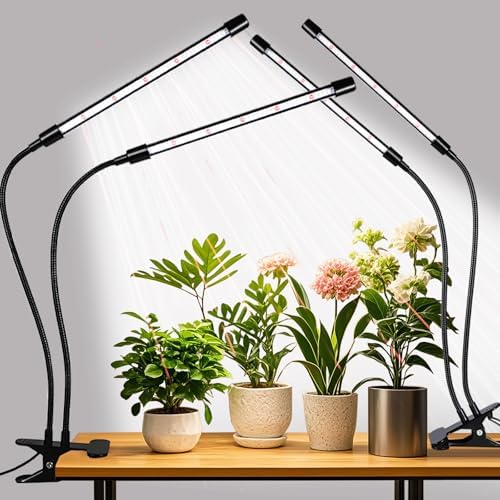
Clip-on lights with flexible necks and built-in timers aim adjustable light exactly where a dim corner needs it. Owners love them for single houseplants and small herb pots. Output is modest, which is fine for keeping plants healthy and less fine for fruiting anything.
Strip and T5-style lights: the shelf specialists
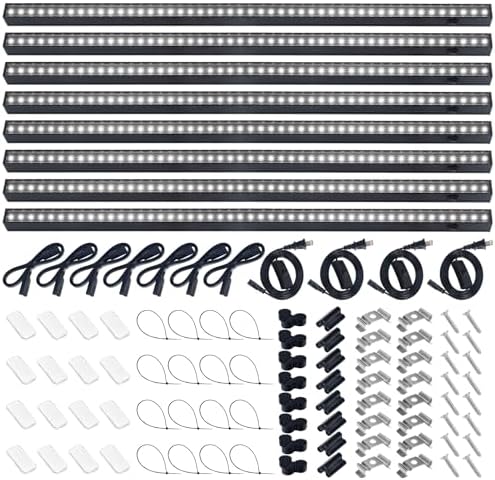
Linkable LED strips daisy-chain along shelves, wire racks, and windowsill returns, spreading even light across long narrow spaces. They are the standard answer for seedling racks and microgreens, and several strips together rival a small panel. Our guide to the best grow light for seedlings leans heavily on this category.
Quantum board panels: the serious growing area
Flat panels covered in white diodes, hung from adjustable hangers, are the modern default for tents and dedicated grow corners. They deliver the intensity fruiting crops need, dim down for young plants, and run cool enough to hang close. If your ambitions include tomatoes or peppers indoors, this is your category, and it pairs naturally with a tent from our grow tent kit guide.
Our Top Picks at a Glance
How we chose: we compared widely available lights on published output, coverage claims, spectrum, build quality, and the themes that repeat across owner reviews, not on any hands-on testing of our own. Every pick is a model with a long track record rather than this month’s launch.
🏆 Best Overall
A dimmable quantum board with Samsung diodes, honest coverage claims around 2×2 feet for vegetables at full power, and quiet fanless running. The default recommendation for a first real growing area, from herbs to fruiting crops.

💰 Best Budget Pick
A clip-on gooseneck lamp with full spectrum LEDs, a built-in timer, and dimming steps. The low-effort fix for a houseplant in a dark corner or a couple of herb pots, at the price of a plant pot.
🌱 Best for Shelves and Seedlings
Linkable T5-style LED strips that daisy-chain across shelves and racks, spreading even full spectrum light where a square panel wastes half its output. The standard choice for seed starting and shelf herb gardens.
Reading the Specs Without Being Fooled
Grow light marketing has two habits worth knowing about. The first is quoting equivalent wattage, as in “1000W equivalent,” while the fixture actually draws far less from the wall. Only the actual draw and the measured light output matter. The second is quoting coverage for flowering at heights no one uses; a panel that covers 3×3 feet in marketing often serves 2×2 feet honestly for fruiting crops.
Spectrum is simpler than it looks: modern full spectrum white LEDs grow everything from lettuce to tomatoes well, and the deep-purple blurple look is neither necessary nor pleasant in a living space. What “full spectrum” does and does not mean gets its own explainer in our guide to full spectrum grow lights.
Distance and hours: the two dials you control
Once the light is bought, results come down to placement and schedule. Many growers keep LED panels roughly 12 to 24 inches above the canopy, dimmed or raised for seedlings, and closer only for high-light crops that show they want it. Schedules commonly run 12 to 16 hours a day for edibles and less for low-light houseplants, always on a timer rather than memory.
Three More Picks for Specific Situations
The three picks above cover most homes. These fill the gaps: single-plant fixes, tent growers, and anyone stepping up in coverage.
💡 Best Screw-In Bulb
A full spectrum ceramic LED bulb that fits a standard E26 socket and turns any well-placed lamp into a grow light. The tidy fix for one monstera, fiddle leaf fig, or kitchen herb pot; our full SANSI grow light review covers the range.

⛺ Best for Grow Tent Starters
A budget-friendly quantum-style panel with a reflective hood design and coverage suited to a 2×2 tent for vegetables. A frequent first tent light in owner setups, with dimming on newer versions.

⬆️ Upgrade Pick
A bar-style LED fixture with an external dimmer, even light spread edge to edge, and the build quality of the brand’s ventilation gear. For growers ready to light a 2×4 area properly and control it precisely.

Setting Up for Results, Not Regrets
Hang panels from adjustable rope ratchet hangers rather than fixed hooks; you will change the height more often than you expect as plants grow. Put every light on a timer from day one, because consistency beats intensity for most home plants. And position lights above plants rather than beside them where possible, since plants stretch toward the source and sideways light builds leaning, lopsided growth.
Heat deserves one honest sentence: LEDs run far cooler than the older technologies, but a mid-power panel still warms a small enclosed space, which is one reason tents pair lights with ventilation. And since lights, timers, and sometimes humidifiers share an outlet strip near water in a growing space, plug the setup into a GFCI-protected outlet and keep connections above floor level.
Common Mistakes to Avoid
- Buying on equivalent watts. The number in the product title is marketing. Look for actual power draw and published PPFD instead.
- Hanging the light too close. Bleached, curled, or crispy top leaves mean too much intensity. Raise the light or dim it; plants recover quickly when caught early.
- Hanging it too far. Stretchy, pale, slow growth means the light is decorative at its current height. Distance guidance exists per fixture class; use it.
- Running lights around the clock. More is not better; most plants want a dark period. Twelve to sixteen hours covers nearly every edible.
- One bulb for a whole shelf. Light falls off fast with distance and angle. Match the form factor to the space instead of stretching one source.
- Ignoring the timer. Manual switching produces wildly inconsistent days, and plants show it. A basic timer is the best accessory in this category.
Where to Go From Here
If you are lighting a specific crop, the per-plant guides go deeper than any general roundup: our guides to the best grow light for herbs and the best grow light for tomatoes indoors translate the numbers above into per-crop setups. And if a light is step one of a bigger plan, our overview of indoor gardens with LED grow lights covers complete setups where the light is already integrated.
Frequently Asked Questions
Are LED grow lights worth it over regular LED bulbs? For plants that just survive, a bright regular bulb helps. For plants you want to actively grow, purpose-made grow lights deliver more usable intensity at the plant, and their published coverage and height guidance takes out the guesswork.
How far should an LED grow light be from my plants? It varies by output: many growers keep mid-power panels roughly 12 to 24 inches above the canopy and small bulbs and clip-ons closer, around 6 to 12 inches. Our grow light distance guide breaks it down by fixture type.
How many hours a day should a grow light run? Commonly 12 to 16 hours for edibles and 8 to 12 for most houseplants, with a real dark period every night. A timer makes the schedule automatic.
Do plants grow better under purple or white light? Full spectrum white light grows plants excellently and shows their true colors, which also makes problems easier to spot. The purple look reflects older diode strategies, not superior results.
Can one grow light serve my whole plant collection? Only if the collection shares one footprint. Light intensity drops sharply with distance and angle, so a scattered collection is usually better served by two or three small lights than one large one.
Do LED grow lights use a lot of electricity? They are the most efficient option in the category. A small panel drawing around 100 watts, run 14 hours a day, uses roughly what many common household appliances do; bulbs and clip-ons draw far less.
The Bottom Line
Choose the form factor before the brand: a panel for a real growing area, strips for shelves, a bulb or clip-on for single plants. Then buy on actual wattage and honest coverage, hang the light at the recommended range, and put it on a timer. Those choices, more than any spec sheet battle, decide how your plants look in February.