Last updated: August 13, 2026
Knowing how to clean an AeroGarden is the single most underrated skill of owning one. A garden that gets a proper reset between plantings germinates faster, smells like nothing, and keeps its pump alive for years. One that never gets cleaned slowly accumulates mineral scale, root fragments, and the biofilm that eventually shows up as odors, algae, or a struggling pump.
The good news: a full deep clean is a 20 to 30 minute job you only need between plantings, plus a two minute rinse habit along the way. This guide walks the whole routine step by step, using the sanitize and rinse approach experienced growers and the brand’s own guidance have converged on.
This article contains affiliate links. If you buy through them, we may earn a commission at no extra cost to you. Learn more.
Quick Answer
How do you clean an AeroGarden?
- Between plantings: empty the bowl, then run the pump with a sanitizing mix, commonly water with a small amount of white vinegar or unscented bleach, for a few minutes.
- Rinse thoroughly, run the pump once more with clean water, and rinse again before replanting.
- During a growing cycle: top off with fresh water, wipe visible film, and do partial water changes every few weeks.
The Deep Clean, Step by Step
Do this full reset every time a planting ends, or roughly every few months during very long grows. Save this checklist; the whole job fits in half an hour. First, one safety note: unplug the unit before you touch the bowl or pump, keep the light hood away from splashes, and plug back into a GFCI protected outlet when you are done, since this is an appliance that mixes water and electricity.
- Unplug and strip the garden. Remove spent pods, lift out the deck, and pull the grow domes and baskets you plan to reuse. Compost the old sponges and root mass; baskets and domes are washable and reusable, as covered in our pods guide.
- Dump the old water. Pour the reservoir out in the sink. Old nutrient water is fine for houseplants or the garden outside if you prefer not to waste it.
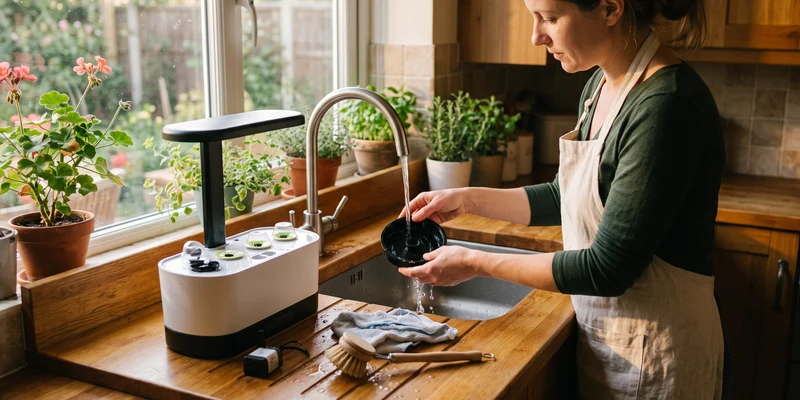
- Remove loose debris. Rinse the bowl and deck under warm tap water, rubbing off root fragments, mineral crust, and any green film with a soft cloth or sponge. A soft bottle brush reaches corners.
- Check and rinse the pump. Where your model allows, detach the pump or its intake cover and rinse away trapped root hairs, the most common cause of weak circulation and gurgling noises.
- Fill with a sanitizing mix. Refill the bowl with clean water and add a small amount of white vinegar or unscented household bleach; a commonly used ratio is about a quarter cup per full bowl. Use one or the other, never both together.
- Run the pump for a few minutes. Plug in briefly and let the pump circulate the mix, typically around five minutes, so the sanitizer reaches the internal channels you cannot scrub.
- Rinse, then rinse again. Unplug, dump the mix, and rinse the bowl thoroughly. Refill with plain water, run the pump another minute or two, and dump again. Repeat until you cannot smell vinegar or bleach at all.
- Wipe the light and body. With the unit unplugged, wipe the light hood, arm, and housing with a damp cloth. Dust on the LED lens quietly costs your plants light.
- Air dry and reassemble. Let parts dry, reassemble, refill with fresh water and nutrients, and plant the next round of pods into a genuinely clean system.
Everything on that list is household stuff except one item worth owning on purpose: a soft brush set, with a wide bottle brush for the bowl and a narrow one for the pump intake and the deck channels.

Vinegar or Bleach: Which Should You Use?
Both work, and the choice is mostly temperament. Vinegar is the gentler, food adjacent option that dissolves mineral scale well, which makes it the favorite for routine resets and for hard water households. Unscented bleach in a small dilution is the stronger sanitizer, the tool growers reach for after a mold outbreak, a root disease, or a garden that developed a persistent smell.
Whichever you use, the non negotiable step is the rinse cycle afterward. Sanitizer residue in the reservoir is worse for your next planting than the grime you removed, so rinse until odor free, then once more.
The In-Cycle Routine: Small Habits, Big Difference
You cannot deep clean while plants are growing, but three light habits keep a live garden fresh. Top off with plain water as the level drops, since nutrients are added on their own schedule, not with every refill. Wipe any film from the deck surface and bowl rim when you see it. And every few weeks, do a partial water change: scoop or siphon out a portion of the reservoir and replace it with fresh water to keep dissolved solids from creeping up.
When to break the schedule and clean early
Three signals justify an early reset: a sour or swampy smell from the bowl, visible green growth spreading beyond a pod surface, or a pump that turns loud or weak. Green film has its own dedicated playbook in our algae and mold guide, and a struggling pump is often just clogged with roots, one of the fixes in our troubleshooting guide.
How Often Should All This Happen?
The honest schedule is simpler than most owners fear. This is the rhythm experienced growers converge on:
| Task | How often |
|---|---|
| Top off water | Every few days, or when the low water light asks |
| Add nutrients | On the reminder cycle, typically every two weeks |
| Wipe visible film | Whenever you see it, seconds of work |
| Partial water change | Every few weeks during long grows |
| Full deep clean | Between plantings, or every few months in a long grow |
Common Cleaning Mistakes to Avoid
- Cleaning with the unit plugged in. Unplug first, every time. Water and live electronics do not negotiate.
- Using dish soap inside the reservoir. Soap residue clings to plastic and suds up in circulation. Stick to vinegar or diluted bleach and thorough rinsing.
- Mixing vinegar and bleach. The combination releases harmful fumes. Choose one sanitizer per clean.
- Skipping the pump. A sparkling bowl around a root clogged pump is a wasted clean. The pump is the part that fails first.
- Rushing the rinse. If you can smell sanitizer, your seedlings can taste it. Rinse cycles are the step that protects the next planting.
- Scrubbing the LED panel with a wet cloth. A barely damp wipe is enough. Moisture has no business inside a light hood.
Where to Go From Here
A clean garden solves a surprising share of problems before they start, but not all of them. If something is still off after a reset, blinking lights, a silent pump, pods that will not sprout, work through our AeroGarden troubleshooting guide next. And if green film keeps returning no matter how well you clean, the causes and permanent fixes are in the algae and mold guide.
Frequently Asked Questions
How often should I clean my AeroGarden? A full deep clean between plantings, typically every few months, plus quick habits in between: topping off water, wiping film, and partial water changes on long grows.
Can I clean an AeroGarden with vinegar? Yes, white vinegar is the standard gentle option. A small amount in a full bowl, circulated by the pump for a few minutes and rinsed thoroughly, handles routine cleaning and mineral scale.
Can AeroGarden parts go in the dishwasher? Many owners run bowls, decks, and baskets on a top rack gentle cycle, but plastics vary by model and heat can warp them. Hand washing is the safe default; check your model’s manual.
Do I need to clean it if everything looks fine? Yes. Biofilm and mineral buildup start invisibly, and the between planting reset is what keeps them invisible. Waiting for a smell means waiting too long.
Why does my AeroGarden smell even after cleaning? Usually a missed zone: root hairs inside the pump, residue under the deck rim, or a sponge fragment in a channel. Repeat the sanitize cycle and pay the pump extra attention.
The Bottom Line
Cleaning an AeroGarden is one honest half hour between plantings: strip, rinse, circulate a vinegar or bleach mix, then rinse until the smell is gone. Add small in cycle habits, fresh top offs, film wipes, occasional partial water changes, and the machine rewards you with faster starts, no odors, and a pump that lasts. Clean between every planting and most other problems never appear.