Last updated: August 13, 2026
It usually announces itself with a smell. You lift the lid on a bucket that was growing beautifully last week and find brown, slimy roots and water that smells swampy instead of clean. Deep water culture root rot is the one problem nearly every DWC grower meets eventually, and it is also one of the most fixable once you understand what is actually happening under the lid.
The honest version: root rot is not a single villain. It is a shortage of oxygen at the roots that opens the door for pathogens, most famously Pythium, which thrive in warm, stagnant water. Treat only the pathogen and it comes back; fix the oxygen and temperature conditions and it usually stays gone. This guide covers recognition, rescue, and the setup habits that prevent round two.
This article contains affiliate links. If you buy through them, we may earn a commission at no extra cost to you. Learn more.
Quick Answer
How do you fix root rot in deep water culture?
- Rescue: rinse the roots, trim away the brown slime, do a full reservoir change in a cleaned bucket, and get aeration running strong.
- Root rot is oxygen shortage plus pathogens, so the lasting fix is more air, cooler water (most growers aim below about 72 F), and no light in the reservoir.
- Many growers add a beneficial bacteria product after a rescue to help outcompete the pathogens while new white roots grow in.
Symptoms, Causes, and Actions at a Glance
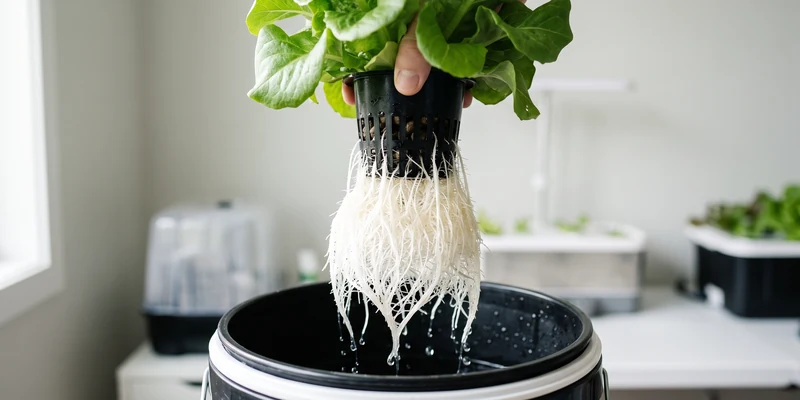
Not every discolored root is rot: nutrient staining turns healthy roots tan or brown while they stay firm and smooth. Rot is about texture and smell as much as color. Use this table to read what you are seeing.
| What you see | What it usually means | What to do |
|---|---|---|
| White or cream roots, earthy smell | Healthy system | Nothing; keep the routine going |
| Tan roots, firm and smooth | Nutrient staining, cosmetic | Confirm no smell or slime, then leave alone |
| Brown, slimy, matted roots | Root rot under way | Rescue routine below, today rather than this weekend |
| Swampy or sour smell from the bucket | Low oxygen, microbial bloom | Check the air pump and stone, change the reservoir |
| Wilting despite full reservoir | Damaged roots cannot drink | Inspect roots immediately; treat as rot until proven otherwise |
| Warm reservoir, above roughly 72 F | Low dissolved oxygen, pathogen-friendly | Cool the room or reservoir, shade the bucket, increase aeration |
What Root Rot Actually Is
Root rot in DWC is a chain reaction, and oxygen sits at the start of it. Roots submerged in water survive on dissolved oxygen; when aeration is weak or the water warms up, oxygen drops, root tissue weakens and dies back, and that dead tissue becomes food for opportunistic organisms already present in every reservoir.
Pythium and similar water molds are the usual finishers. They are nearly impossible to keep out entirely, and in a cool, well-aerated bucket they rarely gain ground. Warm, still, oxygen-poor water flips the advantage: they colonize stressed roots, the slime layer blocks oxygen further, and the spiral accelerates. That is why the recurring theme in every fix below is oxygen and temperature first, pathogens second. For the fundamentals of how a healthy bucket works, see our complete DWC guide.
The Rescue Routine, Step by Step
Caught early, root rot is survivable more often than not. Work through these steps in one session rather than spreading them over days.
- Lift and rinse. Take the net pot out and rinse the root mass gently with clean, cool water until the loose slime is off.
- Trim the dead. With clean scissors, cut away roots that are brown, mushy, or smell bad. Healthy tissue is firm, even if stained. Sanitize the scissors afterward.
- Empty and scrub. Dump the reservoir completely, scrub the bucket, lid, air stone, and tubing with diluted bleach or hydrogen peroxide, and rinse everything well.
- Refill cool and fresh. Mix a fresh, correctly dosed nutrient solution, ideally starting below 72 F. Weaker roots drink less, so many growers restart at reduced nutrient strength.
- Aerate hard. Confirm the air pump runs strong and the stone bubbles evenly. If aeration was marginal before, this is the moment to upgrade; our guide to air pumps for hydroponics covers sizing.
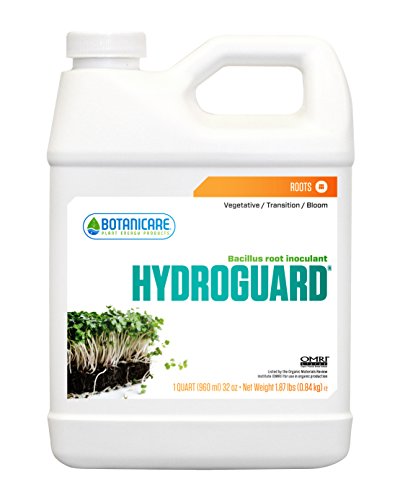
- Add reinforcements. Many growers add a beneficial bacteria inoculant, such as Botanicare Hydroguard, after a rescue to populate the root zone with competition for the pathogens.
- Watch for white. New white root tips within several days to a week are the sign the rescue took. No new growth after that window usually means the plant is not coming back.
A note on hydrogen peroxide: diluted peroxide is widely used to knock back the microbial load in an infected reservoir, but it is a blunt instrument that also kills beneficial microbes and fades quickly. Use it for cleanup and rescue, not as a permanent crutch, and do not combine it with a beneficial bacteria product at the same time.
The beneficial bacteria in step 6 is the one product most growers keep on the shelf for exactly this moment.
Preventing the Next Round
Prevention is four habits, and none of them are expensive. Keep oxygen high, keep water cool, keep light out, and keep the system clean between runs.
Oxygen means an air pump and stone matched to your bucket count, running around the clock; since the pump lives next to a full water reservoir, plug it into a GFCI outlet and leave a drip loop in the cord. Temperature means keeping the reservoir below roughly 72 F where you can, by shading buckets, cooling the room, or topping off with cool water. Light-proofing means opaque buckets and snug lids, because light feeds algae and algae feeds the wrong microbes. And the water line matters more than most beginners expect: an air gap between lid and solution keeps the upper roots breathing, which is covered in detail in our guide to the right DWC water level. Regular reservoir changes complete the picture; see how often to change hydroponic water.
If aeration is the weak link, a pump rated above your reservoir volume paired with fine bubble air stones is the upgrade that changes the odds.

Common Mistakes to Avoid
- Treating stained roots as rot. Tan, firm, odorless roots are just dyed by nutrients. Cutting them off harms a healthy plant.
- Dosing peroxide and calling it fixed. Without more oxygen and cooler water, the conditions that caused the rot are still there waiting.
- Skipping the full cleanout. Slime left in tubing or on the air stone reinfects the fresh reservoir within days.
- Running warm and clear. A translucent bucket in a warm room is the classic root rot starter kit. Opaque and cool wins.
- Giving up on day two. Plants with some healthy root left often regrow. Judge the rescue after a week, not overnight.
Frequently Asked Questions
What does root rot look like in DWC? Brown to gray roots with a slimy coating, often matted together, with a sour or swampy smell. Healthy roots are white to cream, or tan but firm when merely stained by nutrients.
Can a plant recover from root rot? Often, yes, if some firm root remains. After trimming, cleaning, and a fresh aerated reservoir, look for new white root tips within about a week.
Does hydrogen peroxide cure root rot? It helps sanitize a system during a rescue, but it is temporary and nonselective. The lasting cure is oxygen, cool water, darkness, and cleanliness, with beneficial bacteria as backup.
What water temperature prevents root rot? Most DWC growers aim to keep the reservoir below about 72 F (22 C), since cooler water holds more dissolved oxygen and slows Pythium.
Is root rot contagious between buckets? In connected recirculating systems, yes, it spreads through shared water. Separate buckets are isolated, but shared tools and hands can still carry it, so sanitize between buckets.
The Bottom Line
Root rot is oxygen failure first and infection second, so treat both: trim and clean to remove the pathogens’ foothold, then fix aeration, temperature, and light-proofing so they cannot rebuild. A strong air pump, a reservoir below about 72 F, an opaque bucket, and clean restarts prevent nearly all of it. Judge any rescue by one signal, new white root tips within a week.