Last updated: August 13, 2026
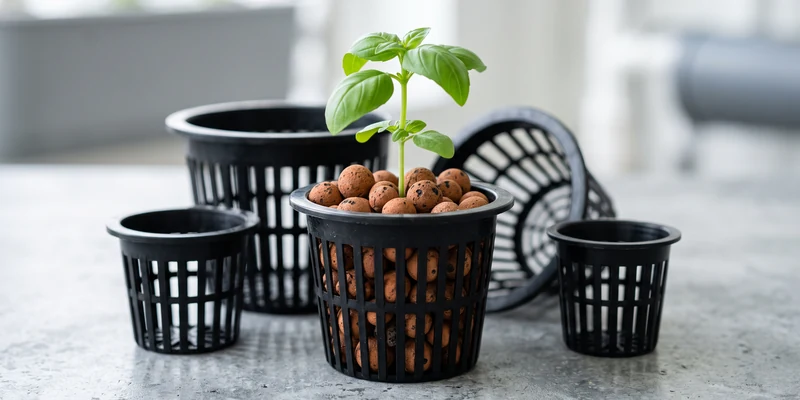
Net pots are the least glamorous part of any hydroponic setup and one of the few parts that touch every single build. These slotted plastic cups hold your plant at the waterline, let roots grow out through the mesh, and anchor everything from a basil seedling in a mason jar to a tomato in a 5-gallon bucket. Buy the wrong size and plants tip over, fall through the lid, or sit too high to reach the water.
The good news is that net pots are cheap, standardized, and easy to get right once you know how sizing works. This guide covers the common sizes, which one fits which system, the details that separate sturdy pots from flimsy ones, and our picks across the sizes most home growers actually need.
This article contains affiliate links. If you buy through them, we may earn a commission at no extra cost to you. Learn more.
Quick Answer
Which net pots should you buy?
- For most systems and most crops, 3-inch net pots are the standard: big enough for lettuce, herbs, and starts, small enough for tote and jar lids.
- Growing one big plant per bucket? Use a 6-inch pot or a net pot bucket lid made for 5-gallon buckets.
- For windowsill Kratky, wide-mouth mason jar net pot lids drop straight into the jar with no cutting at all.
Net Pot Sizes and What Each One Is For
Size is the only decision that really matters, and it follows the plant and the container, not preference. Small pots suit greens and tight lid spacing, big pots suit plants that get heavy and top-loaded. This table is the shortcut.
| Size | Typical use | Crops | Notes |
|---|---|---|---|
| 2 inch | NFT channels, dense lettuce totes, seed starting | Lettuce, spinach, small herbs | Cheapest per pot; too small for anything top-heavy |
| 3 inch | The all-rounder for Kratky totes, DWC, towers | Lettuce, basil, kale, starts for bigger systems | The default size most guides assume |
| 3.75 to 4 inch | Wide-mouth mason jars, mid-size plants | Herbs, compact peppers, strawberries | Check jar and lid diameter before ordering |
| 5 to 6 inch | 5-gallon DWC buckets, Dutch buckets | Tomatoes, cucumbers, full-size peppers | Holds enough clay pebbles to anchor a heavy plant |
| Bucket lid net pots | Net pot molded into a bucket lid | One large plant per bucket | No hole cutting; snaps onto standard buckets |
If you are still deciding what system those pots go into, our deep water culture guide and Kratky method guide explain where the net pot sits in each design.
What Makes a Good Net Pot
Beyond size, three things separate pots that last for years from pots that crack in a season: the lip, the plastic, and the mesh pattern. None of them show up in product photos at a glance, so it pays to know what you are looking at.
The lip carries the entire weight of plant, media, and wet roots, so a wide, rigid rim beats a thin rolled edge, especially on totes where the lid flexes. Thicker plastic resists cracking when you pop pots out of a lid, and UV exposure makes brittle plastic worse, so heavier pots earn their keep in bright rooms and greenhouses. Mesh matters less than people expect: wide slots let roots through faster and hold clay pebbles fine, while fine mesh contains smaller media like perlite mixes.
Reusability and cleaning
Net pots are reusable more or less indefinitely if you clean them between runs. Soak off old root material, scrub, and sanitize with a mild bleach or peroxide solution, then rinse well. Roots grown through the mesh will not pull free, so cut spent roots away rather than tearing the pot.
Our Net Pot Picks
How we chose: we compared widely available net pots on rim strength, plastic thickness, size accuracy, and how consistently owners report them fitting standard lids and jars, based on specifications and recurring themes in reviews. Every pick is a size class more than a single hero product, because the right size beats any brand.
🏆 Best Overall
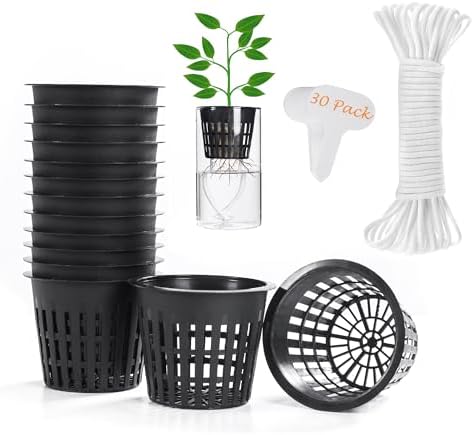
A bulk pack of 3-inch net pots with a wide, stiff rim. This is the size that fits tote lids, tower holes, and most DIY builds, and a pack this size covers a full system with spares for seed starting.
💰 Best Budget Pick
A 50-pack of 2-inch slotted net cups for dense lettuce and greens spacing in NFT channels and totes. Owners use these by the tray, and at this size a thin rim is acceptable because the plants stay light.

🫙 Best for Mason Jars
Wide-mouth mason jar net pot lids that rest directly in the jar mouth, no cutting or adapters. The zero-effort way into Kratky growing; pair them with our Kratky mason jar walkthrough.
Matching Pot to System
The system dictates the pot more than the crop does. Kratky jars want a pot or lid that matches the jar mouth exactly, since the plant hangs from that rim for its whole life. Totes and DWC buckets are flexible: you cut the hole, so buy the pots first and trace them. Towers and NFT channels are the opposite, the holes are fixed, so measure before ordering.
Depth matters in passive systems. In a Kratky build the solution starts just touching the bottom of the net pot, so a taller pot buys your seedling more margin while roots reach down. In aerated DWC the air stone splashes the pot bottom constantly and depth is less critical; our DWC bucket setup shows the geometry.
Two More Picks for Big Plants and Buckets
Once a tomato or cucumber enters the plan, small pots stop being an option. These two carry real weight.
🪣 Best for 5-Gallon Buckets
A net pot bucket lid that snaps onto a standard 5-gallon bucket, turning it into a DWC unit with no hole saw involved. The molded lid spreads the load better than a cut lid ever will.

⭐ Also Great
Heavy-duty 6-inch net pots for Dutch buckets, large DWC lids, and any plant that will be trained up a string. The extra media volume keeps tall plants from levering themselves loose.

Filling and Planting a Net Pot
A net pot works best filled with an inert medium that anchors the stem and wicks a little moisture. Clay pebbles are the default: rinse them, fill the pot about a third, set your seedling or starter plug in the middle, and backfill around it so the plug sits snug and shaded.
Keep the top layer of media dry-ish in open systems to discourage algae on the surface. If you are new to clay pebbles, the rinse-and-fill routine is covered start to finish in our guide to how to use clay pebbles, and the material itself in clay pebbles in hydroponics.
Common Mistakes to Avoid
- Ordering before measuring. Nominal sizes vary by maker, and a 3-inch pot from one brand may not fit a hole traced from another. Measure the rim, not the label.
- Going too small for the crop. A tomato in a 2-inch pot will fall over or snap at the rim. Big plants need big pots and plenty of media.
- Letting light through the lid holes. Gaps around a loose pot let light into the reservoir, and algae follows. Snug fits and opaque lids fix it.
- Throwing pots out after one run. Cleaned and sanitized, net pots outlast almost everything else in the system.
- Filling with soil. Potting mix washes through the mesh and fouls pumps and roots. Use clay pebbles or another inert medium.
Frequently Asked Questions
What size net pot do I need? For lettuce, herbs, and greens, 2 to 3 inches. For tomatoes, cucumbers, and large peppers, 5 to 6 inches or a bucket lid net pot. When in doubt, 3 inch is the safe default for small crops.
Do roots grow through net pots? Yes, that is the design. Roots pass through the slots into the solution below while the pot anchors the stem and media above the waterline.
What do you fill net pots with? An inert medium, most commonly clay pebbles. They hold the plant upright, wick a little moisture, and rinse clean for reuse; see our clay pebble guide.
Can I reuse net pots? Yes. Remove old roots, scrub, sanitize with diluted bleach or peroxide, and rinse thoroughly. Most pots survive many seasons of this.
Do net pots work without a hydroponic system? They are also used for orchids and semi-hydro houseplants, where the open mesh gives roots the airflow they prefer.
The Bottom Line
Buy net pots by size, not brand: 2 to 3 inches for greens and starts, 5 to 6 inches or a molded bucket lid for anything heavy, and jar lids for windowsill Kratky. Favor a stiff rim and thicker plastic, fill with rinsed clay pebbles, and clean pots between runs so one purchase lasts for years.