Last updated: August 13, 2026
Lettuce is the crop the Kratky method was practically designed for, and Kratky lettuce is where most passive hydroponic growers start. It grows fast, stays compact, drinks a predictable amount of water, and finishes its whole life cycle before the reservoir runs dry. Set up correctly, a container you fill once will hand you a full head of lettuce about five to seven weeks later without a pump, a timer, or a single water change.
That said, “set it and forget it” still has a setup to get right. Container size, nutrient strength, light hours, and temperature decide whether you harvest crisp leaves or watch a seedling stall. This guide follows the entire cycle, from seed to salad, with the typical timelines and numbers at every stage.
This article contains affiliate links. If you buy through them, we may earn a commission at no extra cost to you. Learn more.
Quick Answer
How do you grow Kratky lettuce from seed to harvest?
- Sprout lettuce seed in rockwool (typically 2 to 7 days), move the seedling into a net pot over a light-proof container holding around 1 gallon of nutrient solution per plant, and give it around 12 to 16 hours of light per day.
- Do not top off the water: the falling level creates the air gap the roots need for oxygen.
- Expect baby leaves in around 3 to 4 weeks and a full head in around 5 to 7 weeks from sprouting, with cool temperatures keeping the leaves sweet.
The Kratky Lettuce Timeline at a Glance
From dry seed to harvested head, the whole run typically takes around 5 to 7 weeks. Here is the cycle stage by stage, with what to do and what to expect at each point.
| Stage | Typical timing | What to do |
|---|---|---|
| Germination | Days 1 to 7 | Sow in moist rockwool or a starter plug; keep it damp and dim until the seed cracks, then give light immediately |
| Seedling | Days 7 to 14 | Grow under light until roots poke out of the plug and the plant has 2 to 3 true leaves |
| Transplant | Around day 10 to 14 | Set the plug in a net pot, fill the container so solution touches the net pot bottom, black out the reservoir |
| Vegetative growth | Weeks 2 to 5 | Hands off; the water level falls and air roots form in the gap |
| Baby leaf harvest | Around weeks 3 to 4 | Optional: pick outer leaves and let the center keep growing |
| Full head harvest | Around weeks 5 to 7 | Cut the whole head, or keep picking outer leaves until the plant bolts |
If jars and containers are new territory, our Kratky method guide explains the theory, and the mason jar setup guide is the cheapest way to run your first head.
Starting Seeds: The First Two Weeks Decide Everything
Lettuce germinates quickly and reliably when it stays moist and cool. Push one or two seeds a few millimeters into a soaked rockwool cube or sponge plug, keep it damp, and expect sprouts typically within 2 to 7 days. Lettuce germination slows in heat, so a kitchen counter usually beats the top of a warm appliance.
Rockwool starter plugs are the usual medium for this stage: they hold moisture evenly, drop straight into a net pot once roots appear, and come in sheets sized for a whole tray of seedlings.

The moment a sprout appears, it needs strong light. A leggy, stretched seedling with a long pale stem has been reaching for a window and will flop when transplanted. Around 12 to 16 hours a day under a small grow light keeps seedlings squat and sturdy. Transplant once roots show at the bottom of the plug and the plant has a few true leaves, usually around day 10 to 14.
Container, Water, and Nutrients: Sizing the One Fill
Plan on roughly 1 gallon of nutrient solution per head of lettuce. That is the amount a single plant typically drinks on its way to full size, which is exactly what makes lettuce such a clean fit for a fill-once method. A quart jar works but often runs dry right at the finish; a half gallon to full gallon per plant gives comfortable margin.
Whatever container you use, the lid needs a net pot to sit in. Three inch pots are the standard fit for lettuce, and buying a multipack means every future container is already sorted.

Mix a hydroponic nutrient at the label rate for leafy greens. Most leafy greens do well with a pH around 5.5 to 6.5 and a modest feed strength, commonly around 1.0 to 1.4 EC for growing lettuce. You do not need a meter to succeed at this scale, but a basic pH check helps if plants look off. Our guide to the best nutrients for the Kratky method covers products that dissolve cleanly and stay stable in a passive reservoir.
Fill height and the air gap
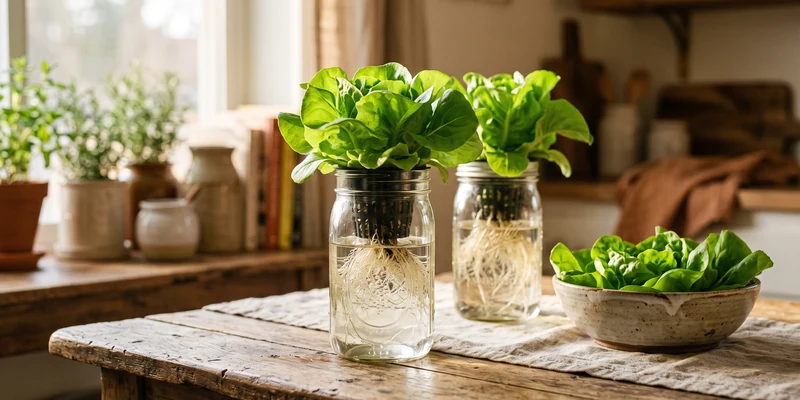
At transplant, the solution should just touch the bottom quarter of the net pot so the medium can wick moisture upward. From then on, do not refill. As the plant drinks, a humid air gap opens, upper roots become oxygen-gathering air roots, and lower roots keep feeding. Topping the container back up drowns those air roots, which is the single most common way a healthy Kratky lettuce suddenly wilts.
Light and Temperature: Where Flavor Is Won or Lost
Lettuce is a cool weather crop, and it does not forget that indoors. Growth is happiest with days around 60 to 75 degrees Fahrenheit; sustained heat much above that pushes the plant toward bolting, where it stretches, flowers, and turns bitter. If your grow spot runs warm, choose heat-tolerant varieties and harvest on the early side.
For light, around 12 to 16 hours per day is the common range, from a bright window supplemented with a lamp or from a dedicated grow light. More light generally means faster, denser heads up to a point, while weak light gives thin, open growth. Many growers keep small LED panels roughly 12 to 24 inches above the canopy, adjusting until the plant is compact but not bleached or crispy at the leaf tips.
Choosing Varieties That Behave in a Container
Loose leaf and butterhead types are the reliable choices, because they mature fast and tolerate warm rooms better than crisphead types. Iceberg-style heads are slow and fussy indoors, so save those for later experiments.
- Loose leaf (e.g. Black Seeded Simpson, Salad Bowl types). Fastest to harvest and ideal for picking outer leaves over several weeks.
- Butterhead (e.g. Buttercrunch, Rex types). The classic hydroponic lettuce: soft, dense heads typically ready around 5 to 7 weeks.
- Romaine. Works well but runs a week or two longer; give it the full gallon of solution.
For the whole indoor cycle beyond the Kratky specifics, including washing and storage, see our guide on how to grow hydroponic lettuce at home.
A seed variety pack is the easy way to cover this ground, since most packs mix loose leaf, butterhead, and romaine types so you can run several containers at once and learn which ones suit your room.

Harvesting: Two Ways to Take the Crop
You can treat Kratky lettuce as one harvest or many. For a single harvest, cut the whole head at the base once it feels full, typically around week 5 to 7, and start a fresh container. For a rolling harvest, pick the outer leaves once the plant is established and let the center keep producing; a single plant can feed a salad habit for several extra weeks this way.
Either way, harvest in the morning if you can, when leaves are at their most turgid, and get the crop into the refrigerator quickly. When the plant starts stretching upward and the sap turns milky and bitter, it is bolting, and that container is done regardless of how much solution remains.
Common Mistakes to Avoid
- Topping off the reservoir. The falling water level is the oxygen system. Refilling to the brim suffocates the roots.
- Weak light. A north window in winter produces pale, floppy, open plants. When in doubt, add a grow light.
- Too much heat. Warm rooms speed up bolting and bitterness. Cooler is sweeter, within reason.
- Clear containers. Any light reaching the solution grows algae. Black out every container completely.
- Transplanting too late. A rootbound seedling with a tall stem never quite recovers. Move it as soon as roots exit the plug.
Where to Go From Here
Once one head works, scale sideways rather than up: several containers started a week apart give you a continuous salad supply from the same windowsill. A tote with multiple net pot holes is the natural next build.
If you would rather have a machine handle the light schedule and reminders, a countertop system does the same job with less thought; our roundup of the best hydroponic systems for lettuce compares the passive and powered options side by side.
Frequently Asked Questions
How long does Kratky lettuce take from seed to harvest? Typically around 5 to 7 weeks for a full head, depending on variety, light, and temperature. Baby leaves can be picked from around week 3 to 4.
Do I ever add water to Kratky lettuce? Normally no. Size the container at around a gallon per plant and the solution runs out close to harvest time. Only if a plant clearly needs more time and the container is nearly empty should you add a partial refill, keeping the air gap intact.
Why is my Kratky lettuce bitter? Heat and age are the usual causes. Warm conditions and long days push lettuce toward bolting, which turns the sap bitter. Grow cooler if you can, and harvest before the plant starts stretching upward.
What pH does Kratky lettuce need? Most leafy greens do well around 5.5 to 6.5. Mix your nutrients, check once if you have a meter, and at this scale you rarely need to adjust again.
Can I grow Kratky lettuce with just a window? Sometimes, in a very bright, cool, south facing window. Results are far more consistent with a small grow light running around 12 to 16 hours per day, especially outside summer.
The Bottom Line
Give one lettuce plant about a gallon of blacked-out nutrient solution, around 12 to 16 hours of decent light, and a cool room, and the Kratky method does the rest. Do not top off the water, keep an eye out for bolting, and expect a full head in around 5 to 7 weeks. It is the cheapest reliable path to homegrown salad indoors.