Last updated: August 13, 2026
Choosing hydroponic nutrients for the Kratky method comes with one constraint that regular hydroponics does not have: whatever you mix on day one is what the plant lives with for the whole crop. There is no pump circulating the solution, no drain to flush a mistake, and usually no mid-cycle adjustment. That pushes the choice toward complete, stable, fully water soluble formulas that behave predictably in a still reservoir.
The good news is that the best options for passive growing are also some of the simplest and most economical nutrients in all of hydroponics. This guide explains what “complete” actually means, why dry powders dominate Kratky setups, and which specific products growers keep coming back to for lettuce, herbs, and beyond.
This article contains affiliate links. If you buy through them, we may earn a commission at no extra cost to you. Learn more.
Quick Answer
What are the best nutrients for the Kratky method?
- The MasterBlend 4-18-38 combo kit (with calcium nitrate and Epsom salt) is the community standard for Kratky lettuce and greens: complete, cheap per gallon, and very stable in a passive reservoir.
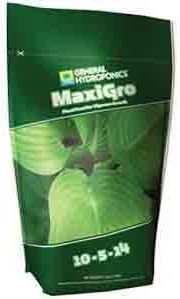
- If you want the simplest possible routine, a one part dry formula like General Hydroponics MaxiGro is one scoop, one stir, done.
- Liquids like the General Hydroponics Flora Series work fine too and are easier to measure for single jars, at a higher cost per gallon.
What Kratky Growing Demands From a Nutrient
Four requirements separate a good Kratky nutrient from a frustrating one, and none of them are about brand prestige. Check these before anything else.
| Requirement | Why it matters in Kratky | What to look for |
|---|---|---|
| Complete formula | The solution is the plant’s only mineral source for weeks | Nitrogen, phosphorus, potassium plus calcium, magnesium, sulfur and micronutrients, on the label |
| Fully water soluble | Undissolved residue sinks and stays in a still reservoir | Formulas sold specifically for hydroponics, not garden fertilizer |
| pH stability | Nobody is monitoring the jar daily | Formulas known to settle near a pH of around 5.5 to 6.5 in typical tap water |
| Sensible dosing at small volumes | Many Kratky containers hold 1 quart to 1 gallon | Clear per gallon rates, powders you can weigh, or liquids with small measures |
Notice what is not on the list: growth boosters, additives, and multi-bottle feeding schedules. Passive systems reward simplicity, and the deeper chemistry behind these labels is covered in our hydroponic nutrients explainer.
Dry Powder or Liquid: The Real Fork in the Road
Dry powders win on cost and shelf life, liquids win on convenience at tiny volumes, and both grow excellent lettuce. A bag of dry nutrient mixes hundreds of gallons and stores for years, which is why the MasterBlend style kits have become the default among Kratky growers who run more than a jar or two.
Liquids earn their place when you are mixing one mason jar at a time. Measuring a few milliliters of liquid is easier than weighing a fraction of a gram of powder, and there is no dissolving step. The practical middle ground many growers use: mix a gallon of solution from powder at full strength, then pour from that gallon as jars need filling. Our guide on how to mix hydroponic nutrients walks through the routine, including why calcium nitrate always gets dissolved separately.
Our Top Picks for Kratky Growing
How we chose: we compared widely available hydroponic nutrients on completeness, solubility, pH behavior in still reservoirs, dosing practicality at jar and bucket scale, and the patterns that repeat across grower feedback in passive hydroponics communities. No single product here is exotic; that is the point. These are the formulas people actually refill.
🏆 Best Overall
The three part dry kit, 4-18-38 base plus calcium nitrate plus Epsom salt, that passive hydroponics standardized on. Complete, extremely economical per mixed gallon, and stable for a full lettuce cycle in a sealed container. Our MasterBlend mixing guide and review covers the exact ratios.

🥄 Best One Part Formula
A complete dry nutrient in a single container: one scoop per gallon, stir, done. The lowest-effort option that still covers calcium and magnesium, which makes it a natural match for windowsill jars and first-time growers.
🧪 Best Liquid Option
The long-running three bottle liquid system. Easier to measure for a single quart jar than any powder, flexible across leafy and fruiting stages, and available everywhere. See our guide to using the Flora Series for simple Kratky-friendly ratios.

Matching the Nutrient to What You Grow
Lettuce, herbs, and greens are what Kratky does best, and any pick above serves them well at the label’s leafy green rate, typically mixed to a modest strength around 1.0 to 1.4 EC. If you are following along with a first crop, our Kratky lettuce guide includes the feeding side of the timeline.
Fruiting crops like tomatoes and peppers in larger Kratky containers ask for more: higher overall strength and more potassium once flowering starts. The MasterBlend kit and the Flora Series both handle that shift by adjusting ratios, while a grow-focused one part formula is happiest staying in the leafy lane. If fruit is the long-term plan, pick a system you can steer.
What about organic nutrients?
Organic liquids tend to be a poor fit for Kratky specifically. They rely on microbial activity to break nutrients down, and a warm, still, unaerated reservoir is exactly where those brews go cloudy and smelly. Mineral (salt based) nutrients stay clean in passive systems; save the organic experiments for aerated or media based setups.
Two Add-Ons Worth Having
Neither of these is strictly required for a first jar, but both remove the most common sources of guesswork once you run more than one container.
⚖️ For Dialing In pH
A simple up and down adjustment pair for the occasional water source that lands outside the comfortable range. A few drops at mixing time is normally all a Kratky batch ever needs.

📏 For Measuring Instead of Guessing
A pocket pH meter takes the mystery out of odd tap water and stalled plants. Worth it once you are mixing weekly; our pH meter guide compares the reliable options.

Mixing for a Passive Reservoir: The Short Version
Mix in this order and Kratky nutrients stay trouble free. Dissolve each dry component fully in water before adding the next, always keeping calcium nitrate separate from the concentrated base mix, since the two can react and form insoluble residue when combined undiluted. With liquids, add micro first, then the others, stirring between bottles.
Mix at or slightly below label strength for greens; a passive reservoir slowly concentrates as the plant drinks water faster than minerals, so starting hot compounds over time. Check pH once after mixing, aim for around 5.5 to 6.5, fill your containers, black them out, and you are done until harvest.
Common Mistakes to Avoid
- Using soil or houseplant fertilizer. Most lack usable calcium and magnesium, and deficiencies show up mid-crop when nothing can be flushed.
- Mixing calcium nitrate into the concentrate. Combine dry parts only in the full volume of water, never in the same concentrated solution.
- Starting at maximum strength. Kratky reservoirs concentrate over the cycle. Label rate or slightly under is the safe opening move.
- Choosing organic brews for still water. Unaerated organic solutions commonly ferment. Stick to mineral formulas in passive systems.
- Buying a five bottle feeding system. Multi-stage schedules assume weekly reservoir changes that Kratky never does. Simpler is genuinely better here.
Where to Go From Here
If you are still choosing your first setup, the nutrient decision pairs naturally with the container decision: jars for a test run, totes or buckets for a steady supply. The full Kratky method guide connects those pieces.
And once your bag of powder arrives, mix a gallon, start a couple of lettuce plants, and let the method prove itself before you scale. One good harvest answers more questions than any comparison chart.
Frequently Asked Questions
Can I use regular Miracle-Gro for Kratky? Standard soil formulas are not built for hydroponics and typically lack usable calcium. Some growers experiment with them, but results are inconsistent; a true hydroponic formula costs little more and removes the gamble.
How strong should Kratky nutrient solution be? For lettuce and greens, a modest strength around 1.0 to 1.4 EC, which usually means the label’s leafy green rate or slightly under. Fruiting crops in bigger containers run stronger, typically around 2.0 EC and up.
Do I need to change the nutrient solution mid-grow? For quick crops, no. Size the reservoir so it lasts the cycle, at around a gallon per lettuce plant. Long-season fruiting plants are the exception and get topped up partially with fresh solution.
Is MasterBlend really enough on its own? The 4-18-38 base alone is not; it is designed to be combined with calcium nitrate and Epsom salt. The three together form a complete formula, which is why the combo kits are the standard purchase.
What pH should my solution be? Most crops in Kratky systems do well around 5.5 to 6.5. Check once at mixing time; passive reservoirs rarely need adjustment after that with a stable mineral formula.
The Bottom Line
For Kratky growing, buy a complete mineral formula and keep the routine simple: the MasterBlend combo kit for the best economics at scale, MaxiGro for one scoop simplicity, or the Flora Series if you prefer measuring liquids for single jars. Mix at label strength or slightly under, land the pH around 5.5 to 6.5, and let the sealed reservoir do the rest.