Last updated: August 13, 2026
Spend any time in hydroponics forums and MasterBlend hydroponic nutrients come up within about three posts. The 4-18-38 powder, combined with calcium nitrate and magnesium sulfate, has become the default recipe for home growers raising lettuce and greens in buckets, totes, and Kratky containers, largely because it costs so little per mixed gallon and stores almost indefinitely.
It is also the nutrient most likely to intimidate a beginner, since it arrives as three bags with instructions in grams and no capful to pour. This guide covers what the system is, the ratio growers commonly use, how to mix it without creating sludge, and who is better off buying something simpler.
This article contains affiliate links. If you buy through them, we may earn a commission at no extra cost to you. Learn more.
Quick Answer
Is MasterBlend worth it, and how do you mix it?
- Yes if you grow more than a jar or two: a complete, very economical dry system once combined with calcium nitrate and Epsom salt, and it stores for years.
- The widely used starting ratio is 2 parts 4-18-38 base to 2 parts calcium nitrate to 1 part magnesium sulfate by weight, dissolved into a full volume of water.
- Skip it if you mix single jars, own no gram scale, or want a capful-per-gallon routine. A one part powder or a liquid trio suits that better.
MasterBlend at a Glance
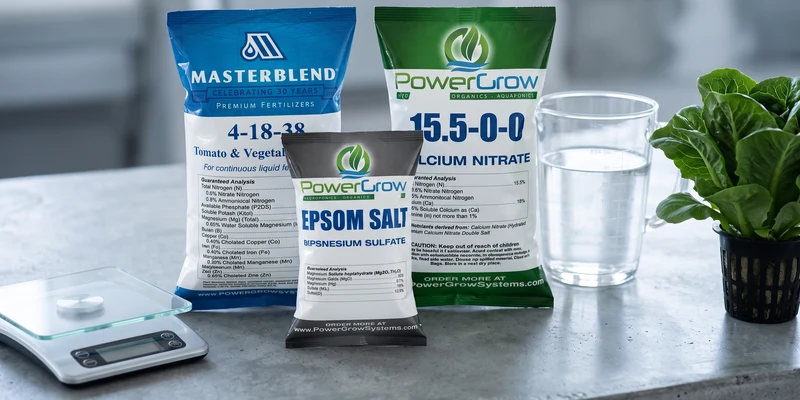
MasterBlend is a commercial fertilizer maker, and the product home growers mean is its 4-18-38 tomato and vegetable formula. On its own that bag is not complete: it is designed to be paired with a separate calcium source and a magnesium source, which is why it is usually sold as a three component kit.
| Aspect | Detail |
|---|---|
| Product type | Dry, fully water soluble mineral nutrient in three components |
| Components | MasterBlend 4-18-38 base, calcium nitrate, magnesium sulfate (Epsom salt) |
| Base analysis | 4 percent nitrogen, 18 percent phosphate, 38 percent potash, plus micronutrients |
| Common mixing ratio | 2 parts base to 2 parts calcium nitrate to 1 part Epsom salt, by weight |
| Best suited to | Lettuce, greens, herbs, and fruiting vegetables in DWC, Kratky, and media systems |
| What you also need | A gram scale, a mixing container, and a way to check pH |
| Storage | Sealed and dry, powders keep for years; humidity is the enemy, not time |
Combo kits exist precisely because the base alone leaves plants short of calcium and magnesium. If the chemistry is unfamiliar, our hydroponic nutrients explainer covers why complete formulas are split into parts.
The Mixing Ratio Growers Commonly Use
The recipe that circulates almost everywhere is 2:2:1 by weight: two parts 4-18-38, two parts calcium nitrate, one part magnesium sulfate. In practice many growers work from roughly 2.4, 2.4, and 1.2 grams per gallon of water, which scales to about 12, 12, and 6 grams for a 5 gallon bucket.
Treat that as a widely used starting point rather than a law. Greens are often grown at or slightly below it, established fruiting plants stronger. Hard tap water already contributes calcium and magnesium, so some growers ease back on those components. Verify against your kit’s label, since packaging and concentrations vary.
Checking strength instead of guessing
An EC meter turns this from arithmetic into observation. Lettuce and herbs commonly do well around 1.0 to 1.4 EC, seedlings lower, mature tomatoes considerably higher; our EC and PPM guide explains the units.
How to Mix It Without Making Sludge
One rule matters: never combine calcium nitrate with the base powder in a concentrated solution. Calcium reacts with the sulfates and phosphates in the other components, leaving white sediment and a nutrient missing pieces.
The routine that avoids it is simple. Start with your full volume of water. Weigh and add the MasterBlend base, stir until dissolved. Add the magnesium sulfate, stir again. Add the calcium nitrate last, stirring until clear. Then check pH, comfortable for most crops somewhere around 5.5 to 6.5, and adjust in small increments. Our guide on how to mix hydroponic nutrients covers stock solutions too.
Where to Get It
How we chose: buying the three components together in matched quantities avoids the classic mistake of running out of calcium nitrate halfway through a bag of base.
🏆 The Standard Purchase
The three component combo kit: 4-18-38 base, calcium nitrate, and magnesium sulfate in proportional quantities, so the ratio works out without a second order. The package that turned MasterBlend into the default choice for home lettuce growing.

What MasterBlend Gets Right
Cost per mixed gallon is the headline, and it is not close. A modest kit produces a large number of gallons of complete solution, which is why growers running several buckets or a lettuce raft gravitate to it. Dry powders also store for years when sealed and dry, so there is nothing to spoil or freeze in a cold garage.
The second strength is consistency. Because you weigh the components, every batch is the same, and the formula behaves predictably in still and aerated reservoirs alike. That stability is why passive growers favor it, as covered in our guide to the best nutrients for the Kratky method.
Where It Falls Short
It asks more of you than any liquid: a gram scale, a place to mix, and the discipline to add components in order. For someone filling a single mason jar on a windowsill, weighing fractions of a gram is awkward, and a capful of liquid is the better tool.
It is also less flexible mid-crop, since shifting the ratio for flowering means recalculating three components rather than pouring differently from three bottles. Calcium nitrate absorbs moisture from humid air and clumps, so storage discipline matters more here than with liquids.
Who It Is For, and Who Should Skip It
Buy it if you run multiple containers, a tote, or a bucket system, grow lettuce and greens regularly, and find weighing three powders once a week a fine trade for the running cost. It is the most economical serious nutrient most home growers will ever use.
Skip it if your setup is one small jar, if you have no scale and no intention of buying one, or if you want the nutrient decision to take five seconds. A one part powder or a liquid trio grows the same lettuce with less ceremony.
Alternatives Worth Considering
If MasterBlend is not quite the fit, or you want it easier to live with, these three cover the realistic options.
⚖️ The Tool That Makes It Work
A pocket scale reading to a hundredth of a gram. Kitchen scales that jump in whole grams are the main reason home batches come out inconsistent, and this is the accessory that turns MasterBlend from fiddly into routine.

🥄 The Simpler Powder
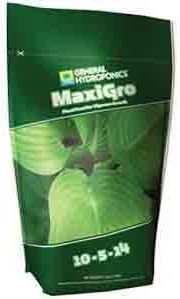
A complete one part dry nutrient: one scoop per gallon, no ratio, no order of operations. It gives up flexibility for fruiting crops but keeps the low cost and long shelf life.
🧪 The Liquid Route
A three bottle liquid system measured with a cap or syringe, easier at jar scale and simpler to shift toward flowering. It costs more per mixed gallon, which is the trade; see our guide to using the Flora Series.

Frequently Asked Questions
Is MasterBlend 4-18-38 a complete nutrient on its own? No. It is designed to be combined with calcium nitrate and magnesium sulfate, and the three together form a complete formula. That is why combo kits are the usual purchase.
What is the MasterBlend ratio? The widely used guideline is 2 parts base to 2 parts calcium nitrate to 1 part Epsom salt by weight, commonly around 2.4, 2.4, and 1.2 grams per gallon. Check your kit’s label and adjust for crop and water.
Why do I have to add calcium nitrate separately? Calcium reacts with sulfates and phosphates in concentrate and forms compounds that will not dissolve. Adding it last, into the full volume of water, keeps everything in solution.
Can I use MasterBlend for lettuce and tomatoes both? Yes. Greens are grown at a lower strength and fruiting crops considerably higher, which is a matter of how much you dissolve rather than a different product.
Does MasterBlend need pH adjustment? Often only a little, since mixed solutions commonly land near the comfortable window of around 5.5 to 6.5 depending on your water. Check with a pH meter after mixing.
How long does mixed solution keep? Use it within a week or two, kept cool and out of light. The dry powders themselves keep for years sealed.
The Bottom Line
MasterBlend earns its reputation on economics and consistency: complete, stable, and very inexpensive once you combine the base with calcium nitrate and Epsom salt at roughly 2:2:1 by weight. The price of admission is a gram scale and the discipline to dissolve components in order. Run more than a couple of containers and it is the obvious choice; mix single jars and a one part powder or a liquid trio serves you better.