Last updated: August 13, 2026
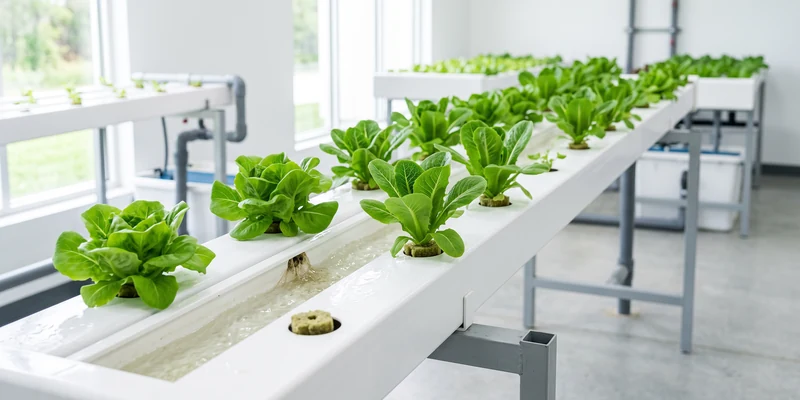
An NFT hydroponic system is what most people picture when they imagine a “real” hydroponic farm: rows of white channels, green heads of lettuce marching down them, and a thin stream of nutrient solution flowing underneath the roots. NFT stands for nutrient film technique, and the “film” is the entire idea: a shallow trickle of solution, just a few millimeters deep, runs along the bottom of a gently sloped channel while the upper roots sit in moist air.
That design makes NFT extremely efficient with water and nutrients, and extremely productive for leafy greens. It also makes it the least forgiving of the common home systems when the power fails or the pump clogs. This guide explains how the technique actually works, who it suits, and which kits make sense for a first channel system at home.
This article contains affiliate links. If you buy through them, we may earn a commission at no extra cost to you. Learn more.
Quick Answer
What is an NFT hydroponic system, and should you buy one?
- NFT circulates a thin film of nutrient solution through sloped channels, so roots get water, food, and plenty of oxygen at once; it is the productivity champion for lettuce, herbs, and greens.
- Buy an NFT kit if you want steady volume, think a salad every day, and do not mind a pump, a timer, and a weekly reservoir routine.
- Skip it for large fruiting plants and for fully hands-off growing: tomatoes outgrow the channels, and the Kratky method is the better zero-maintenance choice.
How NFT Actually Works
Every NFT system, from a windowsill kit to a commercial greenhouse, is the same five parts arranged the same way. Solution is pumped from a reservoir up to the high end of a sloped channel, flows as a thin film past the roots, and drains back to the reservoir to circulate again.
| Part | What it does | What to check on a kit |
|---|---|---|
| Channels | Hold the plants and carry the film of solution | Food safe PVC or PP, flat bottomed channels; square profiles beat round pipes for root contact |
| Slope | Keeps the film moving by gravity | A drop of around 1 in 30 to 1 in 40 along the channel is the commonly used range |
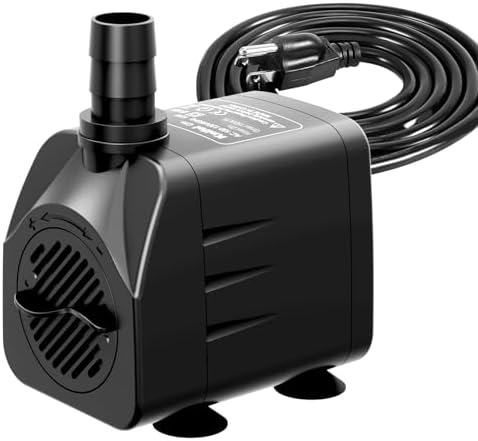
| Pump | Lifts solution from reservoir to channel inlets | A modest submersible pump; quiet operation matters indoors |
| Reservoir | Stores and buffers the nutrient solution | Bigger is more stable; small reservoirs swing in strength and temperature |
| Net pots and plugs | Suspend seedlings so roots reach the film | Usually small 1 to 2 inch pots with sponge or rockwool plugs |
The thin film is the clever part. Because only the root tips sit in liquid while the rest of the root mat sits in humid air, NFT roots get more oxygen than roots standing in deep water, and oxygen is what drives fast growth. The trade-off: there is no buffer. If the pump stops or a channel clogs, that thin film disappears within minutes and plants can wilt within hours. Deep water systems fail slower; see our deep water culture guide for that comparison.
What NFT Grows Well, and What It Does Not
NFT is a leafy green machine, and honest kits are sold that way. Lettuce, spinach, arugula, bok choy, basil, cilantro, and most soft herbs thrive because their root systems stay compact and their tops stay light enough for the channels to support. Strawberries also do well in NFT, which is why commercial berry greenhouses use hanging gutters; our strawberry system guide covers that path.
Large fruiting crops are the wrong fit. Tomatoes, cucumbers, and squash build root mats dense enough to dam the channel, and their weight and height overwhelm the structure. Root vegetables have nowhere to go in a shallow channel. If those are your goals, a bucket system serves them far better; NFT owners who love their systems are almost always the ones who kept them planted with greens.
The Best NFT Kits to Start With
How we chose: home NFT kits are mostly built from the same food safe PVC channel stock, so we compared layouts, site counts, pump and timer inclusions, and the assembly and leak themes that repeat across owner feedback, rather than chasing brand names. Match the size to your actual salad consumption and you will choose well.
🏆 Best Overall
A 36 site, 4 channel NFT kit with food safe PVC channels, a quiet submersible pump, and a cycle timer. This size fills a bench or wide shelf, produces salad for a household on a staggered planting schedule, and stays manageable for a first pump-driven system.
🌱 Best Starter Size
A compact single layer kit with around 10 to 20 sites. Small enough for a countertop or windowsill shelf, cheap enough to treat as a trial run, and it teaches the whole NFT routine, planting, pump schedule, reservoir care, before you commit floor space.
🏗️ Best for Serious Volume
A double layer setup with around 72 sites for growers who want a true weekly harvest rotation. Expect real assembly time and a dedicated corner with strong light on both tiers, but per head of lettuce this is as productive as home growing gets.

Running an NFT System Day to Day
The weekly routine is short but non-negotiable: check the reservoir level, top up with fresh solution, and give the pump inlet a glance for debris. Most growers change the reservoir fully every 1 to 2 weeks and rinse channels between crops. Solution strength for greens typically sits around 0.8 to 1.4 EC with a pH around 5.5 to 6.5, checked with a basic meter when you top up.
Continuous flow versus timed cycles is a common question, and for home scale channels continuous flow is the simpler, safer answer; timers earn their keep mostly in media beds and larger installations. One safety note applies to every pump system: plug it into a GFCI protected outlet and leave a drip loop in the cord so water cannot run down into the plug.
Seedlings first, always
NFT channels cannot start seeds. Sprout them in rockwool or sponge plugs under a light for around 10 to 14 days first, then set the plugs into the channel once roots emerge. A cheap tray plus the plugs that come with most kits handles this fine.
Two Add-Ons That Complete the Setup
Kits include the plumbing but not the inputs. These two round out a working system.
🧪 The Nutrients
A complete hydroponic formula sized for a recirculating reservoir. A dry powder or one part liquid keeps weekly top-ups simple; our guide to the best hydroponic nutrients matches formulas to system types.

🔄 The Backup Pump
NFT’s one real vulnerability is pump failure, and a spare submersible pump costs little compared to a channel full of wilted lettuce. Match the flow rate and outlet size of the kit pump and keep it in a drawer.
Common Mistakes to Avoid
- Planting tomatoes in the channels. Their root mass dams the film and floods the channel. Greens and herbs only.
- Setting the slope by eye. Too flat and solution pools; too steep and the film races past the roots. Stay near the 1 in 30 to 1 in 40 range and check with a level.
- Ignoring the pump for weeks. A slowly clogging inlet is the classic silent failure. A ten second look during top-ups prevents it.
- Letting light into channels and reservoir. Any gap where light meets solution grows algae, which then feeds the clogs.
- Transplanting bare seeds. NFT needs established seedlings with roots long enough to reach the film. Start plugs separately, every time.
Where to Go From Here
If NFT sounds like more plumbing than you want, the passive route grows the same crops with zero moving parts, just slower and at smaller scale; start with our Kratky method guide. If lettuce specifically is the goal, our comparison of the best hydroponic systems for lettuce puts NFT head to head with smart gardens and DWC.
Whichever direction you go, plan the light before the system arrives. Channels full of seedlings under a dim ceiling fixture is the most common day one disappointment; our LED grow light guide covers fixtures that can feed a full bench of greens.
Frequently Asked Questions
What does NFT stand for in hydroponics? Nutrient film technique. A pump sends a thin film of nutrient solution, typically only a few millimeters deep, along sloped channels where plant roots absorb water and minerals while staying mostly in oxygen-rich air.
Does an NFT system need to run 24/7? Most home growers run the pump continuously, since the film is shallow and roots dry quickly without it. Timed cycles are possible but add risk in channels; continuous flow is the standard advice at home scale.
What happens if the power goes out? The film stops and roots start drying within minutes, with visible wilting possible within hours in warm rooms. Brief outages are usually survivable; long ones are NFT’s main weakness compared to deep water systems.
What slope should NFT channels have? A drop of around 1 in 30 to 1 in 40 along the channel length is the commonly recommended range. Kits usually build this into the frame, but it is worth verifying with a level after assembly.
Is NFT better than DWC? Neither is better outright. NFT typically wins on plant density, water efficiency, and clean harvests of greens; DWC is more forgiving of pump and power problems and handles bigger plants. Our DWC guide lays out the full comparison.
The Bottom Line
NFT is the most productive home method for lettuce, herbs, and greens: a thin, moving film of solution feeds dense rows of plants with maximum oxygen at the roots. Its price is dependence on the pump and a modest weekly routine. Start with a kit sized to your real salad appetite, keep it planted with greens rather than ambitions, and it will out-produce everything else on this site per square foot.