Last updated: August 13, 2026
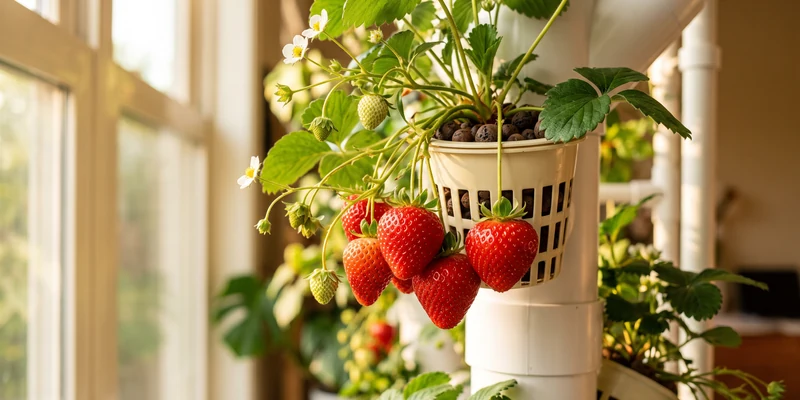
A strawberry hydroponic system is one of the most satisfying indoor projects there is, and one of the most misunderstood. Commercial greenhouses grow strawberries hydroponically at enormous scale, so the method is proven. But strawberries are not lettuce: they fruit rather than leaf, they want more light, they need pollination help indoors, and they start best from plants rather than seeds. Buy a system with those realities in mind and the berries follow.
This guide covers what strawberries actually demand from a system, which setups deliver it, and the specific hardware worth starting with, from a single deep water bucket to a vertical tower full of plants.
This article contains affiliate links. If you buy through them, we may earn a commission at no extra cost to you. Learn more.
Quick Answer
What is the best hydroponic system for strawberries?
- For a first grow, a deep water culture bucket or tote with an air pump is the most forgiving home for a few day-neutral strawberry plants.
- For a real crop, a vertical tower system packs a dozen or more plants into two square feet, the same logic commercial berry farms use.
- Whatever the system, start from day-neutral bare-root crowns or runners rather than seed, give around 12 to 16 hours of strong light, and hand pollinate the flowers.
What Strawberries Demand From a System
Strawberries will grow in almost any hydroponic setup, but they fruit well only when a handful of conditions line up. These are the requirements that should drive the purchase.
| Requirement | Why it matters | What to aim for |
|---|---|---|
| Plant, not seed | Seed-grown strawberries take a year or more to fruit | Day-neutral bare-root crowns or rooted runners |
| Strong light | Fruit takes far more energy than leaves | Around 12 to 16 hours daily under a capable full spectrum light |
| Slightly acidic solution | Strawberries prefer the lower end of the hydro range | pH typically around 5.5 to 6.2, modest strength around 1.0 to 1.4 EC |
| Root zone oxygen | Strawberry crowns rot in stagnant, soaked conditions | Aerated DWC, flowing NFT, or drip-fed towers; keep the crown above the waterline |
| Pollination help | No bees indoors means no fruit set on its own | A small brush or fan across open flowers every day or two |
| Cool-ish room | Flavor and fruit set favor moderate temperatures | Roughly 60s to low 70s Fahrenheit days, cooler nights help |
The variety choice matters as much as hardware: day-neutral cultivars like Albion, Seascape, and Evie types flower repeatedly indoors regardless of day length, while traditional June-bearing types wait for seasonal cues your grow room never sends.
Which System Types Fit Strawberries Best
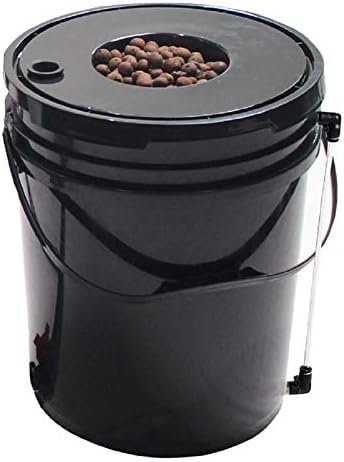
Deep water culture is the beginner answer: a bucket or tote with an air stone gives roots constant oxygen and gives you a big, stable reservoir that forgives missed check-ins. It suits a handful of plants and pairs naturally with the 5 gallon bucket build most DIY growers start with.
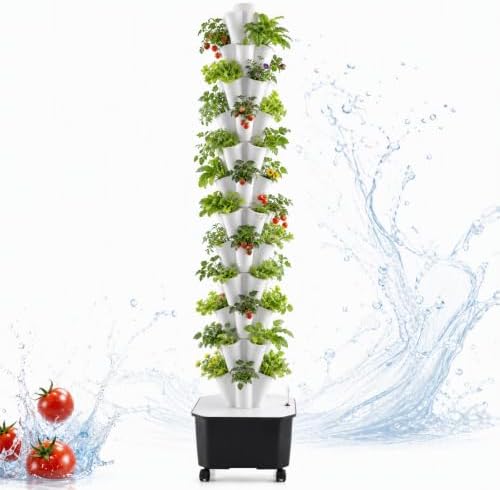
Towers and NFT channels are the scale answer. Strawberries are small plants with shallow roots, which is exactly what vertical planters and channels are designed around, and it is why commercial berry production leans on gutters and stacked systems. A tower multiplies plant count without multiplying floor space; an NFT channel system does the same horizontally on a bench. Media bed and drip systems work too, but they add complexity a home berry grower does not need.
Our Top Picks for Growing Strawberries
How we chose: we compared widely available systems on root zone oxygen, crown placement, plant capacity per square foot, lighting needs, and the experiences growers repeatedly report with strawberries specifically, using manufacturer specifications and owner feedback rather than in-house testing.
🏆 Best Overall for Beginners
A 5 gallon DWC bucket kit with air pump, air stone, and net pot lid. One bucket carries two or three day-neutral plants with a reservoir big enough to stay stable between top-ups, and the parts transfer to any future build. The full theory lives in our DWC guide.
🗼 Best for a Real Crop
A vertical hydroponic tower with a built-in pump and a couple dozen planting ports. Strawberries are the crop this format was made for: shallow roots, trailing fruit that hangs clear of the structure, and a dozen plants on a two square foot footprint. Plan a grow light beside it unless it lives in serious sun.
🖥️ Best Hands-Off Setup
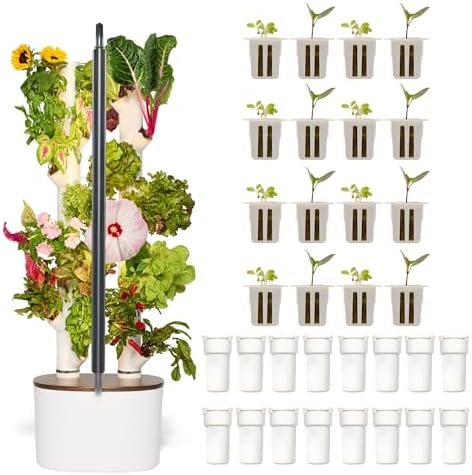
A vertical smart garden with integrated lights, app-managed watering cycles, and room for berries alongside greens. The premium route for growers who want the tower concept with the automation of a countertop unit; our Gardyn review covers the flagship of this class.
Planting: Crowns, Not Seeds
Start from dormant bare-root crowns or rooted runners, available from nurseries and online in most seasons. Rinse the roots free of any soil, trim them to fit, and set the crown in a net pot with clay pebbles so the root mass reaches the solution zone while the crown itself, the knobby center where leaves emerge, stays above the waterline and dry. A buried or waterlogged crown is the most common way an indoor strawberry dies in week one.
New plants typically settle in for a few weeks, push fresh leaves, and begin flowering; first ripe berries commonly arrive around 8 to 12 weeks after planting, then continue in flushes. Pinch off runners as they appear so the plant spends energy on fruit rather than expansion, unless you want to root them as free new plants.
Light, Pollination, and the Add-Ons That Matter
Fruit is expensive for a plant to make, so lighting is where strawberry setups most often fall short. A capable full spectrum panel running around 12 to 16 hours daily is the norm, with many growers keeping LED panels roughly 12 to 24 inches above the canopy and watching leaf color for stress. Our LED grow light guide covers suitable panels.
Pollination is the step nobody warns you about. Outdoors, insects do it; indoors, you are the bee. Swirl a soft paintbrush around each open flower every day or two, or let a small fan play across the plants. Skipped pollination shows up as small, lumpy, half-formed berries.
💡 The Light That Feeds the Fruit
A full spectrum LED panel sized for a bucket or tower footprint keeps berries coming through winter. Choose the panel for your canopy area rather than the biggest one on the page.

🧪 The Fruiting Formula
Strawberries want a feed you can steer toward bloom once flowers appear, which is exactly what a three part liquid system offers. Our Flora Series guide includes a simple fruiting schedule.

Common Mistakes to Avoid
- Starting from seed. Strawberry seed is a year-long science project. Crowns and runners fruit within a season.
- Drowning the crown. Keep the crown above the waterline; only roots belong in the wet zone.
- June-bearing varieties indoors. They wait for seasonal signals that never come. Day-neutral cultivars flower on their own schedule.
- Underpowered light. Plenty of leaves and no berries usually means enough light to live, not enough to fruit.
- Forgetting pollination. No bees indoors. A brush or fan across open flowers is part of the routine.
- Letting runners run. Unpinched runners quietly redirect the plant’s energy away from fruit.
Where to Go From Here
If you are new to hydroponics entirely, run a bucket of lettuce first: the DWC guide teaches the water and nutrient routine on a crop that forgives everything, and the same bucket then hosts your first strawberry crowns.
If automation appeals more than plumbing, the smart garden route covers berries too; our indoor hydroponic garden roundup flags which countertop and tower units have the headroom and light for fruiting plants.
Frequently Asked Questions
How long until hydroponic strawberries produce fruit? From established day-neutral crowns, first ripe berries commonly arrive around 8 to 12 weeks after planting, then continue in repeated flushes for months under steady light.
Do hydroponic strawberries need to be pollinated? Yes. Indoors there are no insects to move pollen, so growers hand pollinate with a small brush or run a fan across open flowers every day or two. Unpollinated flowers produce misshapen or no fruit.
What pH do strawberries need in hydroponics? Slightly lower than leafy greens: most growers hold strawberry solution around 5.5 to 6.2, at a moderate strength typically around 1.0 to 1.4 EC.
Can you grow strawberries in an AeroGarden or smart garden? Many growers do, planting crowns or young plants in the grow deck rather than using seed pods. Machines with taller light arms and larger reservoirs handle it best; compact 3 pod units are tight for a fruiting plant.
How many strawberry plants do I need? One healthy day-neutral plant yields a modest but steady trickle of berries. For regular harvests worth planning around, most households want at least 6 to 12 plants, which is where towers earn their footprint.
The Bottom Line
Strawberries thrive in hydroponics when you respect their three quirks: start from day-neutral crowns, keep the crown dry above an oxygen-rich root zone, and hand pollinate under strong light. A DWC bucket is the forgiving first home; a tower is the scale play. Get those fundamentals right and the system choice is the easy part.