Last updated: August 13, 2026
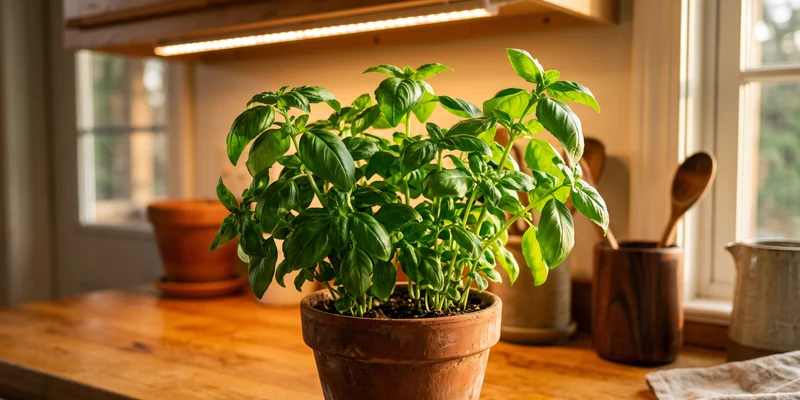
Basil is the houseplant-aisle heartbreak story: it comes home from the store lush and fragrant, spends two weeks on a kitchen windowsill, and slowly stretches itself into a pale, leggy ghost. The diagnosis is almost always the same. Basil is a Mediterranean sun worshipper, and the average indoor windowsill delivers a fraction of the light it wants. The right basil grow light fixes this completely, and it does not need to be big, expensive, or purple.
This guide covers what basil actually asks for in light intensity, hours, and distance, which type of light fits which kitchen setup, and the handful of habits that turn one supermarket plant into months of pesto.
This article contains affiliate links. If you buy through them, we may earn a commission at no extra cost to you. Learn more.
Quick Answer
What is the best grow light for basil?
- Any full spectrum white LED with decent output works: a screw-in grow bulb for one pot, a clip-on gooseneck for a counter corner, or a small panel or strip light for several plants.
- Run it 12 to 16 hours a day on a timer; basil is a high-light herb and rewards long, consistent days.
- Keep small lights roughly 6 to 12 inches above the canopy and panels a bit higher, then watch the plant: stretching means closer or longer, pale crispy tops mean back off.
What Basil Needs From a Light
The short version: basil is one of the hungriest common herbs for light, happier alongside tomatoes than alongside mint. Give it strong, full spectrum light for long days and it grows fast, bushy, and intensely aromatic. Here is how the requirements translate to a setup.
| Factor | What basil wants | Practical translation |
|---|---|---|
| Light appetite | High; a full-sun herb outdoors | Treat it like a vegetable, not a houseplant |
| Hours per day | Commonly 12 to 16 under LEDs | Set a timer; consistency beats intensity |
| Distance | Close enough for real intensity | Roughly 6 to 12 inches for bulbs, clip-ons, and strips; panels commonly 12 to 24 inches, dimmed for seedlings |
| Spectrum | Full spectrum white light | Around 3000K to 5000K grows basil well and looks normal in a kitchen |
| Warmth | Dislikes cold more than dim light | Keep it away from drafty winter windows; the light corner can be warmer than the sill |
| Signs it is working | Short internodes, dense leaves, strong scent | Stretching and pale growth mean more light; bleached tops mean too close |
Which Type of Light Fits Your Setup?
Basil does not care what shape its sun is. Pick by how many plants you grow and where they live.
One pot on the counter: a grow bulb or clip-on
For a single basil plant, a full spectrum screw-in LED bulb in a desk lamp or pendant aimed down at the pot is the simplest fix there is. Clip-on gooseneck lights do the same job with a built-in timer and adjustable arms, clamping to a shelf or cabinet edge above the pot. Both keep a plant compact and productive at very close range.
The two common versions of that fix, a full spectrum bulb for a fixture you already own and a clip-on lamp with its own timer:


A row of herbs: strip lights under a cabinet or shelf
If basil shares a counter or shelf with parsley, cilantro, and friends, linkable LED strip lights mounted under the cabinet above spread even light across the whole row. This is the tidiest kitchen solution and scales one strip at a time. For the wider herb-shelf strategy, see our guide to the best grow light for herbs.
Linkable strips in the familiar T5 format are the usual pick for that job:

Serious basil production: a small panel
For a dedicated growing corner, several plants, or basil grown from seed year round, a small LED panel delivers intensity the other formats cannot, with dimming to dial it back for seedlings. If you are comparing specific models across all these categories, our roundup of the best LED grow lights for indoor plants names the reliable picks in each form factor.
Dialing In Hours and Distance
Basil under LEDs commonly gets 12 to 16 hours of light per day, and growers consistently find the plant repays the longer end of that range with faster, bushier growth. What it also needs is a real dark period, so resist the temptation to run lights around the clock. A basic outlet timer makes the whole question disappear; the background on schedules lives in our guide to how many hours of grow light plants need.
Distance is the dial people get wrong most often, in both directions. Small bulbs, clip-ons, and strips typically sit roughly 6 to 12 inches above the canopy; mid-power panels hang higher, commonly 12 to 24 inches, depending on wattage and dimming. The plant gives you feedback within days: stretching, wide gaps between leaf pairs, and leaning mean it wants more; bleached, curled, or crispy top leaves mean it is getting too much. Our grow light distance guide covers the ranges per fixture type.
Raise the light as the plant grows
Basil under good light grows fast, sometimes inches per week, and a light that was perfectly placed in March is inside the canopy by April. Adjustable goosenecks, shelf brackets, or hanging cords save you from rebuilding the setup monthly.
Getting More Basil From the Same Light
Light is half the harvest; the other half is how you cut. Pinch or cut stems just above a pair of leaves, and the plant branches into two new stems at that point. Repeat every week or two and a single plant becomes a small bush. Never strip individual leaves from the bottom up, which leaves a bare stalk that never fills back in.
Pinch off flower buds the moment they appear, because a flowering basil shifts its energy away from leaf production and the flavor of the remaining leaves commonly declines. Warmth, steady moisture, and an occasional feed complete the picture. And if your basil lives in water rather than soil, in a jar, a smart garden, or a DWC setup, light requirements stay exactly the same; our guide to growing herbs indoors without sunlight covers full setups where the grow light does all the work.
Common Mistakes to Avoid
- Trusting a north-facing windowsill. The classic kitchen spot is the classic failure. If the plant stretches and pales, the window has already voted.
- Buying purple light for a kitchen. Blurple fixtures grow basil no better than modern white full spectrum LEDs, and they make your kitchen look like a submarine.
- Running the light 24 hours. Basil wants long days, not endless ones. Give it a dark period every night.
- Setting the light once and forgetting it. Fast growth closes the distance to the fixture within weeks. Check monthly, raise as needed.
- Harvesting leaves instead of stems. Picking single leaves gives you a bare stalk. Cutting above a leaf pair gives you two stems and a bushier plant.
- Blaming the light for cold damage. Blackened leaves after a cold night at the window are a temperature problem no lamp can fix. Move the plant, keep the light.
Frequently Asked Questions
Can basil grow with only artificial light? Yes, completely. Basil needs no sunlight at all if a full spectrum LED delivers enough intensity for 12 to 16 hours a day, which is exactly how smart gardens and indoor farms grow it year round.
How many hours of grow light does basil need? Commonly 12 to 16 hours per day under LEDs, with a dark period every night. Longer days within that range generally mean faster, bushier growth.
How close should the grow light be to basil? Roughly 6 to 12 inches for bulbs, clip-ons, and strips, and commonly 12 to 24 inches for mid-power panels. Watch the plant: stretching means closer, bleached tops mean farther.
Is a purple grow light better for basil? No. Modern full spectrum white LEDs grow basil just as well, show the plant’s true color so problems are visible, and are far more pleasant in living spaces.
Why is my basil still leggy under a grow light? The usual causes are a light that is too weak, hung too far away, or run too few hours. Move it closer, extend the schedule toward 16 hours, and pinch the stems to force branching.
The Bottom Line
Basil fails indoors for one reason, not enough light, and thrives the moment that is fixed. Any full spectrum white LED matched to your setup, a bulb for one pot, strips for a shelf, a panel for a corner, will do it, run 12 to 16 hours a day within pinching distance of the plant. Add a timer and a weekly haircut above a leaf pair, and the pesto supply takes care of itself.
See what basil needs from a light