Last updated: August 13, 2026
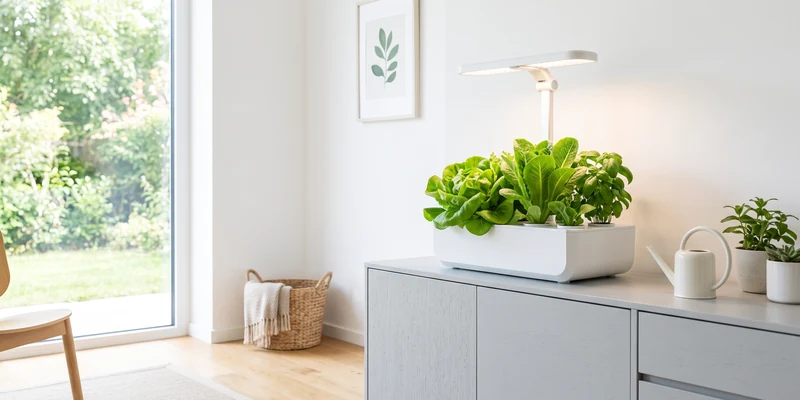
An indoor garden with LED grow light built in solves the single biggest problem of growing food inside: windows are weaker than they look, and most kitchens get nowhere near enough sun for herbs, let alone lettuce. Put a purpose-built light directly over the plants and the location stops mattering. A dark counter, a basement shelf, a rental with one north-facing window, all of them become growing space.
The real question is which kind of setup fits you: an all-in-one smart garden where light, water, and timing are handled for you, or a shelf setup you assemble from a light and some trays, which costs less per plant and scales as far as your shelving does. This guide compares both routes and names the models that owners consistently recommend in each.
This article contains affiliate links. If you buy through them, we may earn a commission at no extra cost to you. Learn more.
Quick Answer
Which indoor garden with LED grow light should you get?
- For most kitchens: a countertop smart garden with a built-in LED, such as the AeroGarden Harvest or the budget-friendly iDOO, grows herbs and greens with almost no thought.
- For hands-off growing: Click & Grow’s pod system waters itself for weeks at a time.
- For volume or seed starting: a vertical tower like Gardyn, or a simple shelf with full spectrum LED strip lights, grows far more per dollar.
The Two Routes: All-in-One or Light Plus Shelf
Every indoor garden with an LED grow light is one of two things: a closed appliance where the light is part of the machine, or an open setup where you position a light over whatever containers you like. The right choice follows from how much you want to grow and how much you want to tinker.
| What to compare | All-in-one smart garden | Light plus shelf setup |
|---|---|---|
| Light | Built in, height-adjustable, on a timer out of the box | You choose the fixture and hang it; a plug-in timer handles scheduling |
| Watering | From a tank, often with reminders or app alerts | Manual, or your own hydroponic containers |
| Capacity | Typically 3 to 12 pods per unit; towers reach 30 plants | Limited only by shelf space and fixtures |
| Effort to start | Minutes: insert pods, fill tank, plug in | An afternoon of assembly and positioning |
| Cost per plant | Higher, plus branded seed pods over time | Lower, especially past the first shelf |
| Best for | Kitchen herbs, salad greens, first-time growers | Seed starting, microgreens, houseplants, ambitious growers |
If you land on the open route, the fixture itself deserves more attention than the shelf. Our hub on the best LED grow lights for indoor plants breaks down panels, strips, and bulbs in detail.
What Makes a Grow Light Actually Good
Three things separate a useful LED from a decorative one: enough intensity for the plants you want, a full spectrum tuned for growth, and adjustability so the light can rise as plants do. Everything else on the spec sheet is secondary.
Intensity is where cheap gear disappoints. Herbs and lettuce are modest customers, while fruiting plants like tomatoes want several times more light. As a rule of thumb, many growers keep LED panels 12 to 24 inches above their plants and run them 12 to 16 hours a day for edibles; built-in smart garden lamps handle this automatically. For the reasoning behind those numbers, see our guides on how far a grow light should be from plants and how many hours of grow light plants need.
One practical safety note
Lights and pumps live next to water in any indoor garden, so plug the setup into a GFCI-protected outlet and leave a drip loop in the cord, the small dip that keeps stray water from running into the plug. It is a thirty-second habit that removes the main risk of the hobby.
Our Top Picks at a Glance
How we chose: we compared widely available indoor gardens and grow light setups on light quality, capacity, ease of use, and long-term running costs, leaning on manufacturer specifications and the themes that repeat across owner reviews rather than any hands-on trial of our own.
Worried an appliance garden is a gimmick? The core of every one of these is the same honest hardware: a decent LED on a timer above water and nutrients. The machines just remove the scheduling from your head.
🏆 Best Overall
The classic countertop smart garden: six pods, a height-adjustable full spectrum LED on an automatic timer, and water and nutrient reminders. AeroGarden paused operations in early 2025 and relaunched later that spring, so pods and support are available again; the ecosystem remains the deepest in the category.

💰 Best Budget Pick
Twice the pod count of the entry AeroGarden for less money, with a full spectrum LED, quiet circulation pump, and simple vegetable and flower light modes. Owners call it the best value entry into hydroponic growing, and it accepts inexpensive generic sponges and seeds.

🌿 Best Low-Maintenance
The set-and-forget option: drop in soil-capsule pods, fill the tank, and the built-in LED and wick system handle weeks at a time between refills. No pump to clean and a design that looks intentional on a counter. See our Click and Grow Smart Garden review for the full picture.

Matching the Setup to What You Want to Grow
Choose by harvest, not by hardware. A steady supply of basil and mint needs only a small pod garden. Salads for a household every week point to a large unit or tower. Seed starting for an outdoor garden each spring is the classic shelf-and-strip-light job.
Herbs are the most forgiving place to start and the fastest to pay off; our guide to the best grow light for herbs covers the light side, and any smart garden above handles them well. Greens want a bit more capacity per plant, and fruiting crops want the strongest light in this article plus support and hand pollination.
Seed starting is its own use case
If the goal is trays of seedlings rather than counter herbs, skip the appliance gardens entirely. A wire shelf with strip lights on each level starts more plants than a dozen pod machines, and the fixtures earn their keep every spring. Details in our guide to the best grow light for seedlings.
Three More Picks for Specific Situations
The three picks above cover most counters. These fill the gaps: serious volume, the shelf route, and a single plant that needs help.
🗼 Best for Volume
A vertical hydroponic tower that grows up to 30 plants on about two square feet, lit by two full-height LED columns and managed through an app with cameras and sensors. A real commitment in space and budget, but nothing else on this list produces salads at this rate. Our Gardyn review covers the membership question.

🔧 Best for Shelf Setups
Full spectrum LED strip lights that daisy-chain across shelf levels and mount with included clips or tape. The standard recommendation for seed-starting racks and microgreens, and the cheapest way to turn any bookcase into a garden. Pair with a basic plug-in timer.

💡 Best Single-Plant Option
A full spectrum LED bulb that screws into any standard E26 lamp you already own, turning a desk lamp into a grow light for one herb pot or houseplant. The lowest-commitment entry point in this entire guide.

Living With an Indoor Garden: Placement and Upkeep
Give the unit a spot away from heat sources and drafts, with enough clearance for the lamp arm at full height, and accept that a grow light is bright: 12 to 16 hours of white-pink light in an open living room is noticeable, so a kitchen counter, office, or shelf often beats the coffee table.
Upkeep is modest but real. Top up the tank when the indicator asks, add nutrients on the schedule your system suggests, trim herbs before they flower, and rinse the tank between plantings. Ten minutes a week keeps a pod garden producing for months.
Common Mistakes to Avoid
- Trusting a window instead of a light. Indoor light levels drop off dramatically a few feet from glass; the LED is the whole point.
- Running the light around the clock. Plants need a dark period. Stay in the 12 to 16 hour range for edibles and use the built-in timer.
- Planting tall crops in a short garden. Full-size tomatoes hit the lamp of a countertop unit in weeks; choose dwarf varieties or a taller system.
- Ignoring pod running costs. Branded pods are convenient but add up; most systems accept generic sponges and your own seeds.
- Letting the tank run dry. Small tanks empty faster as plants mature; the last week of a lettuce crop drinks more than the first month.
Where to Go From Here
If a pod garden is the fit, start with herbs and a salad green, then branch out once the first cycle succeeds. If you have caught the ambition for something bigger, the full smart garden field, including larger and app-connected units, is compared in our roundup of the best indoor hydroponic garden.
Going the shelf route instead? Your next decision is the fixture, and the LED grow light hub is where the panel-versus-strip question gets settled properly.
Frequently Asked Questions
Do indoor gardens with LED lights really work? Yes. Herbs and leafy greens grow reliably under the built-in full spectrum LEDs of countertop smart gardens, and shelf setups with strip lights are how many gardeners start hundreds of seedlings each spring.
How many hours should the LED grow light run? Most edibles do well with 12 to 16 hours of light and a real dark period each night. Smart gardens handle this automatically; for open setups, a basic plug-in timer solves it. More in our guide to grow light hours.
How much electricity does a small LED indoor garden use? Countertop units use modest amounts of power, comparable to typical household LED lighting running on a long schedule, since their lamps are small and efficient. Larger towers and multi-shelf setups scale up accordingly.
Can I grow tomatoes in a countertop smart garden? Dwarf and cherry varieties, yes. The pod catalogs include compact tomatoes bred for these units. Full-size varieties outgrow the lamp height and are better suited to a bucket system under a stronger panel.
Is a smart garden better than a grow light and my own pots? Neither is better outright. The appliance wins on convenience and looks; the open setup wins on cost per plant and flexibility. Many growers end up with one of each doing different jobs.
The Bottom Line
An indoor garden with an LED grow light removes the one thing your home lacks, reliable light, and the choice comes down to convenience versus capacity. Pick a countertop smart garden for effortless herbs and greens, a tower for household-scale salads, or strip lights over a shelf for the most plants per dollar. All three routes end at the same place: fresh harvests that no windowsill could manage.