Last updated: August 15, 2026
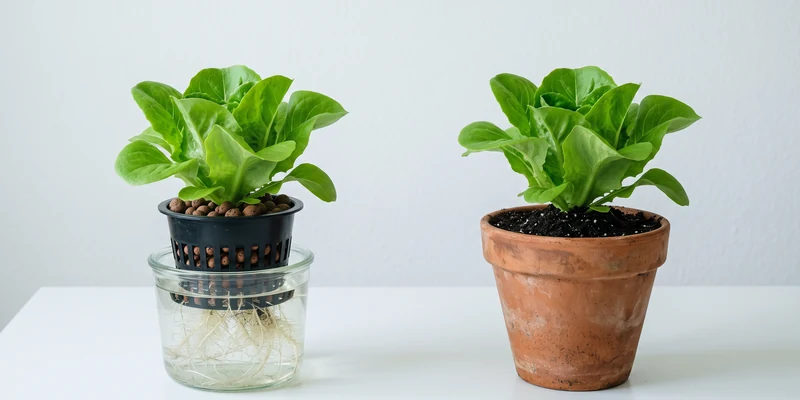
Every grower who sets up their first bubbling bucket eventually faces the skeptical question from a soil gardener: why complicate something that dirt has handled for ten thousand years? The deep water culture vs soil debate deserves a better answer than tribal loyalty. Both methods grow excellent food, and they ask for genuinely different things from you: different routines, different budgets, different tolerance for technology, and different failure modes.
This comparison puts the two side by side on the things people actually argue about: growth speed, flavor, effort, cost, and what goes wrong. By the end you will know which one fits your kitchen, your schedule, and your temperament, and why plenty of growers refuse to choose at all.
This article contains affiliate links. If you buy through them, we may earn a commission at no extra cost to you. Learn more.
Quick Answer
DWC or soil: which grows better?
- DWC generally grows faster, especially leafy greens, because roots get constant water, nutrients, and oxygen without ever searching for them.
- Soil is more forgiving, cheaper to start, and keeps working through a power outage; it buffers your mistakes in a way a reservoir never will.
- Flavor differences are real but subtle and mostly trace back to nutrition and harvest freshness, not to the method itself being superior.
DWC vs Soil at a Glance
Here is the honest scorecard. Neither column sweeps, and the rows that matter most depend on what kind of grower you are.
| Factor | DWC | Soil |
|---|---|---|
| Growth speed | Generally faster; lettuce commonly finishes in around 30 to 40 days from transplant | Slower; the same crops often take weeks longer |
| Startup cost | Higher: reservoir, air pump, nutrients, meters | Lower: pots, potting mix, fertilizer |
| Daily effort | Level checks, pH and EC monitoring, solution changes | Watering rhythm and occasional feeding |
| Forgiveness | Low buffer; mistakes reach roots fast | High buffer; soil absorbs errors |
| Power dependence | Air pump must run around the clock | None |
| Cleanliness indoors | No dirt, no spills of potting mix | Soil, drainage trays, occasional gnats |
| Pests and disease | Fewer soil pests; root rot is the main threat | Fungus gnats and soil-borne issues more common |
| Water use | Efficient; the reservoir recirculates nothing away | Higher; water drains past the root zone |
| Control | Total: you set every nutrient level | Partial: the mix and microbes share the job |
| Scale and portability | Buckets and totes, tied to an outlet | Any pot, any windowsill, any yard |
Speed: Why DWC Usually Wins
The speed gap is the least controversial claim in this debate. In soil, roots spend energy growing through a resistant medium in search of water and nutrients, and both arrive on an irregular schedule. In deep water culture, everything a root wants surrounds it constantly: water, dissolved nutrients, and pump-driven oxygen. The plant spends its energy on leaves and fruit instead of exploration.
Growers who run both side by side commonly report leafy greens finishing noticeably faster in DWC, with lettuce going from transplant to full head in around 30 to 40 days under good light. Fruiting crops show the same pattern with more variables in play. How the oxygen side of that equation works is covered in our complete DWC guide.
Speed is a multiplier, not a guarantee
The caveat: DWC accelerates whatever is happening, including problems. A nutrient mix that is too strong, a pH drifting out of range, or a warming reservoir reaches every root within hours. Soil dilutes and delays your mistakes; a reservoir delivers them efficiently. Faster growth is the reward for tighter management, not a free gift.
Taste: Smaller Difference Than Both Camps Claim
Flavor is where the debate gets emotional and the evidence gets thin. Blind tastings reported by growers and restaurants point in both directions, and the honest summary is that method matters less than nutrition, variety, and freshness. A well-fed hydroponic basil and a well-fed soil basil are both excellent; a starved or stressed plant tastes worse from either system.
What hydroponics does give you is control over the inputs: you decide exactly what goes into the solution, which is a different claim than the produce being better or cleaner. And because a DWC herb garden lives in your kitchen rather than the backyard, harvest-to-plate freshness often favors the indoor crop in practice. That freshness, more than any chemistry, is usually what people are tasting.
Effort and Cost: Different Shapes of Work
Soil asks for little and often: a watering rhythm, some feeding, occasional repotting. Almost nothing about it can fail overnight. DWC front-loads the work into setup and then converts gardening into light system management: checking levels, measuring pH and EC, and swapping the reservoir on schedule. Our walkthrough of a 5-gallon DWC bucket build shows what that setup actually involves, and it is less than most people expect.
On cost, soil wins the opening move: pots and potting mix are cheap everywhere. DWC needs a container, air pump, net pots, nutrients, and ideally a pH meter, though a basic single-bucket build stays modest. Running costs flip some of that back: hydroponic nutrients are used efficiently, water use is low, and there is no annual bag of potting mix. Understanding what you are buying is half the battle; our plain-English explainer on hydroponic nutrients covers it.
The failure modes are opposites
Soil fails through pests, overwatering, and neglect, all of which move slowly. DWC fails through equipment and chemistry: a dead air pump, a heat wave warming the reservoir, or a pH swing, all of which move fast. The single scariest DWC failure, root rot in warm oxygen-poor water, is preventable and fixable; our DWC root rot guide covers both. One practical safety habit applies to any electrical gear near water: run pumps from a GFCI-protected outlet and leave a drip loop in every cord.
Which One Fits You?
Choose soil if you want the lowest-stakes start, garden outdoors anyway, dislike gadgets, or want a method that shrugs off a two-week vacation with a self-watering pot. Soil is also the obvious answer where power is unreliable, since it needs none.
Choose DWC if you grow indoors, want speed and a dirt-free kitchen, enjoy a bit of measurement, or specifically want winter salads and herbs on a schedule. If that is you, a ready-made kit or a classic bucket build are both good doors in; our roundup of the best DWC hydroponic systems compares the two routes. And plenty of growers run both: soil for the tomatoes in the yard, a bubbling bucket for the basil by the stove. The methods are tools, not teams.
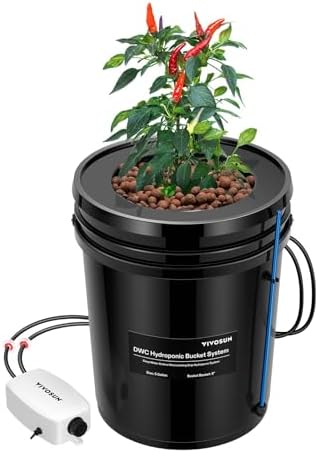
If you want to try the hydroponic side without assembling a parts list, a complete 5 gallon bucket kit covers it: reservoir, lid, net pot, air pump, stone, and tubing in one box.
Common Mistakes to Avoid
- Treating DWC like a houseplant. Watering habits do not transfer; reservoir management does. The plant is fine being ignored, the system is not.
- Using garden soil indoors in pots. If soil is your choice, use potting mix; garden soil compacts and brings pests inside.
- Expecting miracle flavor from either camp. Feed the plant well and harvest fresh; that is where taste actually comes from.
- Skipping the pH meter in DWC. Soil buffers pH for you; water does not. Flying blind is the top source of mystery problems.
- Putting the air pump on a questionable outlet. The pump is the system’s heartbeat. Give it a reliable, GFCI-protected socket.
Frequently Asked Questions
Does DWC really grow plants faster than soil? For most crops, yes, and leafy greens show it most clearly. Constant access to water, nutrients, and oxygen removes the delays soil roots face. The gap narrows when light or temperature, not roots, are the limiting factor.
Does hydroponic produce taste different from soil-grown? Differences are subtle and driven mostly by nutrition, variety, and freshness rather than the method. Well-managed plants from either system taste excellent; the indoor crop often wins on harvest freshness alone.
Is DWC cheaper than soil in the long run? Startup costs are higher for DWC, but nutrients and water are used efficiently and there is no potting mix to replace. For a small setup, the difference in either direction stays modest.
Can I move a soil plant into DWC? It is possible but messy: every trace of soil has to be washed from the roots, and the plant sulks during the transition. Starting from seed or a clean cutting works far better.
What happens to DWC plants if the power goes out? Oxygen levels in the reservoir fall once bubbling stops, and warm conditions shorten the safe window to a day or two. Soil is indifferent to outages, which is a genuine point in its favor.
The Bottom Line
DWC buys speed, cleanliness, and control at the price of equipment and attention; soil buys forgiveness and independence at the price of pace. If you grow indoors and enjoy a little measurement, the bubbling bucket will out-run the pot on your windowsill. If you want gardening that survives neglect and power cuts, dirt remains undefeated. The best growers usually end up owning both answers.