Last updated: August 13, 2026
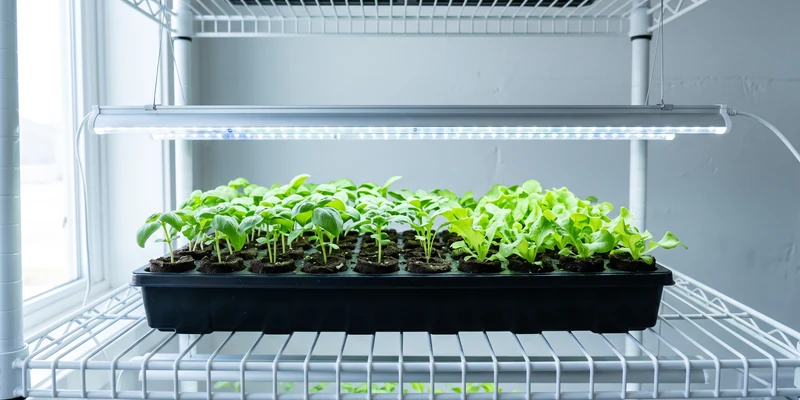
Every spring the same scene plays out on windowsills across the country: trays of seedlings germinate beautifully, then stretch into pale, spindly threads that flop over before they ever see the garden. The fix costs less than the seeds did. A seedling LED grow light, even a simple strip light, delivers what no window in March can: consistent light from directly above, close to the soil, for 14 hours a day.
Seedlings are actually the easiest lighting job in this whole series. They do not need panel-class intensity or spectrum tricks; they need gentle, even light kept honest-close to the tray and moved up as they grow. This guide covers the short list of things that matter, the lights that do the job cheaply, and the handful of habits that separate stocky transplants from leggy disappointments.
This article contains affiliate links. If you buy through them, we may earn a commission at no extra cost to you. Learn more.
Quick Answer
What grow light do seedlings need?
- Simple full spectrum LED strip lights, hung 4 to 8 inches above the tray, cover seedlings completely; Barrina-style T5 strips are the standard budget answer.
- Run them 14 to 16 hours a day on a timer from the moment seeds sprout.
- Raise the light as seedlings grow to hold that few-inch gap; distance is the difference between stocky and leggy.
Seedling Light Needs at a Glance
Seedlings want moderate intensity delivered from very close range, long daily hours, and perfectly even coverage across the tray. Here is the whole requirement in one table.
| Factor | Guideline for seedlings | Notes |
|---|---|---|
| Light type | Full spectrum LED strips, shop lights, or a dimmed panel | Even coverage across the whole tray beats raw power |
| Intensity | Modest, roughly 100 to 300 PPFD at the leaves | Achieved by hanging simple lights close, not by big wattage |
| Distance | LED strips commonly 4 to 8 inches above the seedlings | Old T5 fluorescents run 2 to 4 inches; panels dimmed and higher |
| Hours per day | 14 to 16, starting at germination | On a timer; consistency prevents stretching |
| Coverage | Edge to edge over every cell | Corner cells under weak light produce the leggy stragglers |
| When to start | The day the first sprout appears | Stretching begins within a day or two of germination in dim light |
Legginess: One Problem, One Cause, One Fix
A leggy seedling is not diseased or underfed, it is reaching. When light is too dim or too far away, the seedling gambles its limited energy on stem length, betting it can grow up out of the shade of whatever is blocking the sun. On a windowsill in early spring, that bet never pays off, and you get a long pale stem holding two seed leaves that eventually keels over.
The window makes it worse in a second way: light comes in sideways, so seedlings lean as they stretch. An LED a few inches directly overhead removes both signals at once. Light is abundant, so the seedling invests in thick stems and true leaves instead of height, and light is vertical, so it grows straight. That compact, dark green, slightly stubborn-looking growth is exactly what transplants into the garden well.
Why windowsills fail in seed-starting season
Seed starting happens in late winter and early spring, when days are short, the sun sits low, and cloudy stretches are long. Even a south-facing sill delivers a fraction of a June day, and it delivers it from the side. This is why growers who move trays under the most basic shop light report dramatically stockier seedlings than any window produced.
Our Grow Light Picks for Seedlings
How we chose: we compared inexpensive, widely available LEDs on coverage per tray, mounting ease over shelves, and the recurring feedback in seed-starter reviews. Seedling lighting rewards cheap and even over powerful and fancy, and the picks reflect that.
🏆 Best Overall
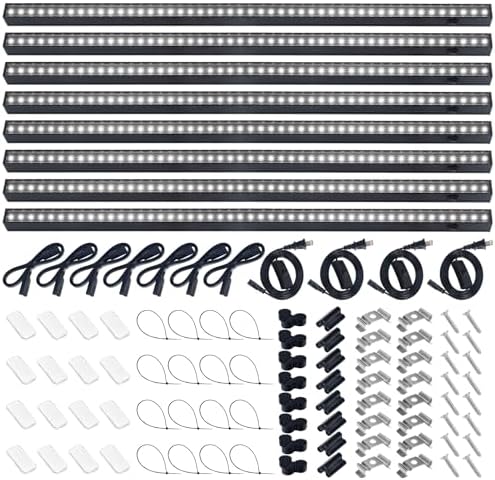
Linkable T5-style full spectrum LED strips, hung on light chains under a shelf, two strips per standard 1020 tray for edge-to-edge coverage. Cheap to buy, cheap to run, and the default recommendation in seed-starting communities.
🌱 Best All-in-One Shelf Solution
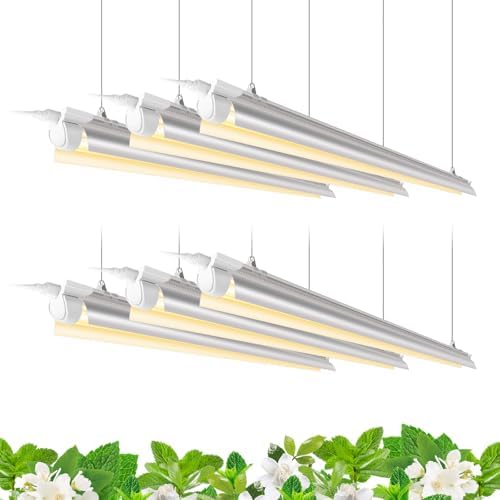
A 4 foot full spectrum LED shop-light style fixture that spans a shelf of trays from a single hanging point. One cord, one timer, and a whole shelf of seedlings covered evenly.
⬆️ Upgrade Pick
A small dimmable LED panel for seed starting that graduates into vegetable growing: dimmed high over trays in spring, full power over a tomato or pepper afterward. The pick if seedlings are step one of a bigger indoor plan.

Setup: The Adjustable-Height Rule
Whatever light you choose, hang it from something adjustable: chains, rope ratchets, or an adjustable-leg stand. Seedlings can add an inch in a couple of days, and the whole system works only if the light keeps floating a few inches above the tallest leaves week after week. Fixed-height lights start correct and end wrong.
Keep the tray layout even, too. Put slower germinators together so you are not compromising between a 3 inch tomato and a fresh basil sprout under one strip, and slide the outer cells inward periodically if your light is barely wider than the tray. A small fan on low, ruffling the seedlings for a few hours a day, thickens stems further and keeps the soil surface dry enough to discourage damping off. Since trays get watered under electrified shelves, a GFCI outlet and a drip loop in each cord are the sensible defaults. For height specifics per light type, see how far grow lights should be from plants.
From Sprout to Garden: The Light Timeline
Start the light the day the first seedling surfaces, at 14 to 16 hours on a timer. Hold that schedule and the few-inch distance until transplant time. There is no stage change to manage; seedlings want the same thing every week, just from a slightly higher light.
The last lighting job happens outdoors: hardening off. Even seedlings raised under bright LEDs will scorch in direct sun without transition, so give them a week of gradually longer outdoor sessions, starting in shade, before planting out. Indoors-to-garden is a light intensity jump of severalfold, and the week of acclimation is what makes it survivable. If your seedlings are destined for indoor systems instead, our tomato grow light guide picks up where this one ends, and grow light hours covers schedules for every stage after transplant.
Common Mistakes to Avoid
- Starting the light too late. Stretching begins within days of germination. The light goes on when the first sprout shows, not when trouble does.
- Hanging the light too high. Two feet up, a strip light is decor. Keep LEDs within 4 to 8 inches of the leaves.
- Uneven coverage. One narrow strip over a wide tray gives you a stripe of good seedlings flanked by leggy ones.
- No timer. Hand-switched lights average short, irregular days. A basic timer outperforms human memory every season.
- Skipping hardening off. A week of gradual outdoor exposure prevents the sunscald that flattens indoor-raised seedlings on their first garden day.
Frequently Asked Questions
How many hours of light do seedlings need per day? Around 14 to 16 hours, with a nightly dark period. Longer days partly compensate for the modest intensity of cheap lights, and a timer keeps the schedule honest.
How close should an LED light be to seedlings? Commonly 4 to 8 inches for LED strips and shop lights. If seedlings stretch, the light is too far or too weak; if leaves pale or curl, nudge it up an inch or two.
Can I fix leggy seedlings with a grow light? Partly. Existing stretch will not shrink, but close overhead light stops further stretching, and tomatoes specifically can be transplanted deeper, burying the leggy stem. For most other crops, prevention is the only cure.
Do seedlings need a special spectrum? No. Any full spectrum white LED grows fine seedlings. Fancy spectra matter far less than distance, duration, and even coverage at this stage.
Are cheap LED strip lights really enough for seedlings? Yes. Seedlings need modest intensity delivered close and evenly, which is exactly what strip lights do. Save the panel-class wattage for fruiting plants.
The Bottom Line
Seedlings need a simple light kept close: full spectrum LED strips 4 to 8 inches above the tray, 14 to 16 hours a day on a timer, raised as they grow. It is the cheapest fix in indoor growing and the one with the most visible payoff, stocky transplants instead of pale threads. Add a light breeze and a week of hardening off, and your garden starts stronger than any windowsill could make it.