Last updated: August 13, 2026
AeroGarden pods are where the real cost of ownership lives. The garden itself is a one time purchase, but pods are forever: every planting starts with a sponge, a basket, and a decision about whether to buy official, go third party, or seed your own. During the brand’s pause in early 2025, that decision briefly made itself, and the third party market proved it could carry the whole ecosystem.
This guide explains what a pod actually is, how the official and third party options differ, and how to plant your own seeds for a fraction of the refill price. By the end you will know exactly which route fits your garden and your patience.
This article contains affiliate links. If you buy through them, we may earn a commission at no extra cost to you. Learn more.
Quick Answer
Should you buy official or third party AeroGarden pods?
- Official pods are the convenient route: pre seeded, variety tested, and back in production since the spring 2025 relaunch.
- Third party sponges and baskets fit the same deck holes and cost far less, ideal once you know the routine.
- The cheapest path is grow anything style: generic sponges plus your own seeds, with nutrients dosed on the normal schedule.
Official vs Third Party Pods: The Real Differences
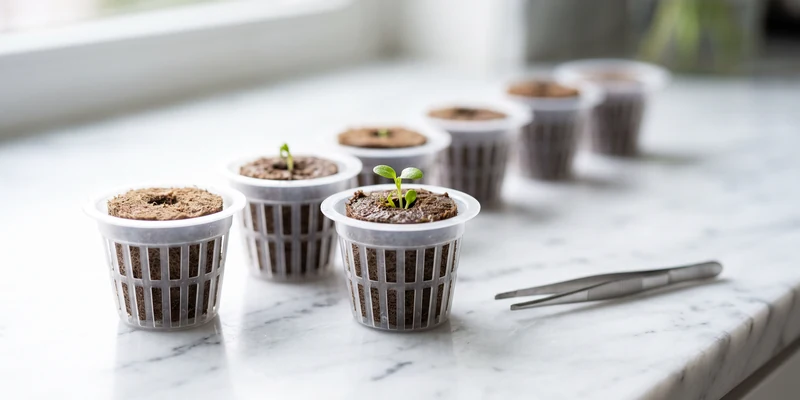
A pod is three simple parts: a plastic basket that sits in the deck, a sponge of compressed growing medium that holds the seed, and a label dome that covers it during germination. Everything else is branding. Here is how the routes compare, worth saving before your next refill order.
| Factor | Official AeroGarden pods | Third party and DIY |
|---|---|---|
| Seeds | Pre seeded, varieties selected for compact indoor growth | Unseeded sponges; you add any seed you like |
| Cost per planting | Highest, you pay for convenience and curation | A fraction of official pricing, especially in bulk sponge packs |
| Fit | Guaranteed for every AeroGarden model | Standard sizes fit the deck holes; check dimensions before ordering |
| Germination | Generally reliable, and the brand has historically replaced duds | Depends on your seed quality and technique |
| Variety choice | Limited to the catalog | Unlimited, any herb, green, or compact vegetable seed |
| Availability | Paused during the early 2025 shutdown, back since the spring relaunch | Continuously available throughout |
What Comes in an Official Pod Kit
An official seed pod kit bundles pre seeded sponges, baskets, domes, labels, and a bottle of the brand’s liquid plant food, enough to feed the planting through its life. The catalog covers the crops these gardens grow best: Genovese basil, gourmet herb mixes, salad green blends, cherry tomato varieties, and flowers for color.
The curation is the quiet value. Official varieties are chosen to stay compact under a countertop light, which matters more than beginners expect. A random beefsteak tomato seed will germinate happily and then try to become a six foot plant; the catalog’s dwarf varieties will not. If the brand’s stability worries you after the 2025 pause, our shutdown and relaunch explainer covers why pod supply is no longer the concern it briefly was.
A representative official kit, and the one most owners replant first:

The Third Party Route: What Fits and What to Check
Generic grow sponges and pod baskets are widely sold in bulk packs and fit the standard deck holes of most AeroGarden models. The sponge material differs slightly from official pods, often a peat or coco based plug rather than the brand’s mix, but plants do not read labels, and growers report equivalent results once germination succeeds.
Three checks before ordering: match the sponge dimensions to your model’s baskets, confirm the pack includes baskets if you do not have spares, and buy fresh seed from a reputable source, because seed age drives germination success more than sponge brand does. Domes are reusable across plantings, so save them.
The usual bulk buy for this route, sponges and baskets together:

Grow anything with your own seeds
The technique is simple: moisten the sponge, drop two or three seeds into the hole, cover with the dome, and remove the dome once sprouts appear. Thin to the strongest seedling. Herbs and lettuces are nearly foolproof; slower crops like peppers reward patience. Nutrients run on the same schedule as official pods, since the sponge itself contains none.
The official kit built for exactly this, with baskets, sponges, domes, and labels but no seeds:

Getting the Most Out of Every Pod
Pod economics improve dramatically with a few habits. Germination is the failure point, so start it right: keep domes on until sprouting, keep the water level high early so wicking reaches the seed, and expect most herbs to sprout within one to two weeks, with some crops slower.
After that, harvesting technique decides lifespan. Trim herbs regularly from the top rather than pulling leaves from the bottom, and a basil pod can produce for months. Unused pods and sponges store well in a cool, dry place, and how long they stay viable is its own question, covered in our guide to how long seed pods last.
Keep the deck clean between plantings
Old roots and nutrient residue are the raw material for algae and odors, and sponges exposed to light grow green film. A rinse between plantings and a deeper periodic clean, walked through in our step by step cleaning guide, keeps every new pod starting in a fresh system. If you already see green fuzz, our algae and mold guide sorts harmless from harmful.
Common Pod Mistakes to Avoid
- Planting tall varieties in a short garden. Standard tomatoes and full size peppers outgrow countertop lights. Stick to dwarf and compact varieties, official or otherwise.
- Removing domes too early. The dome holds humidity the seed needs. Wait for visible sprouts before taking it off.
- Filling every hole with the same crop. Six basil pods mature into a hedge fighting for light. Mix crops and stagger plantings.
- Blaming the sponge for old seed. Most third party germination failures trace to stale seed, not the plug. Buy fresh, dated seed packets.
- Skipping nutrients with DIY pods. Generic sponges are inert. Your plants get nothing unless you dose liquid nutrients on schedule.
Where to Go From Here
If you are still choosing the machine that will hold these pods, our AeroGarden review covers the relaunched brand and which model fits which kitchen. Already growing? The cleaning guide and the pod lifespan explainer are the two natural next reads for keeping refills productive.
Frequently Asked Questions
Are AeroGarden pods still being made? Yes. Production paused when the company ceased operations on January 1, 2025, and resumed with the spring 2025 relaunch. Third party sponges were available throughout.
Do third party pods work as well as official ones? Growers report comparable results once germination succeeds. The main variables are sponge fit and seed freshness, both of which you control.
Can I reuse AeroGarden pod baskets? Yes. Baskets and domes are durable plastic and reusable indefinitely; only the sponge and seed are consumed each planting. Wash them between uses.
Can I plant my own seeds in an AeroGarden? Yes, with grow anything style kits or generic sponges. Any compact herb, green, or dwarf vegetable variety works; just add nutrients on the normal schedule.
How long does a pod keep producing? Herbs commonly produce for several months with regular trimming, lettuce is typically harvested over one to two months, and fruiting crops run longer arcs of flower and fruit.
The Bottom Line
Official pods buy convenience and curated varieties, third party sponges buy freedom and savings, and the smart pattern is both: official kits while you learn the system, generic sponges plus your own seed once the routine is second nature. Whichever route you take, fresh seed, patient germination, and a clean deck matter more than the logo on the sponge.