Last updated: August 13, 2026
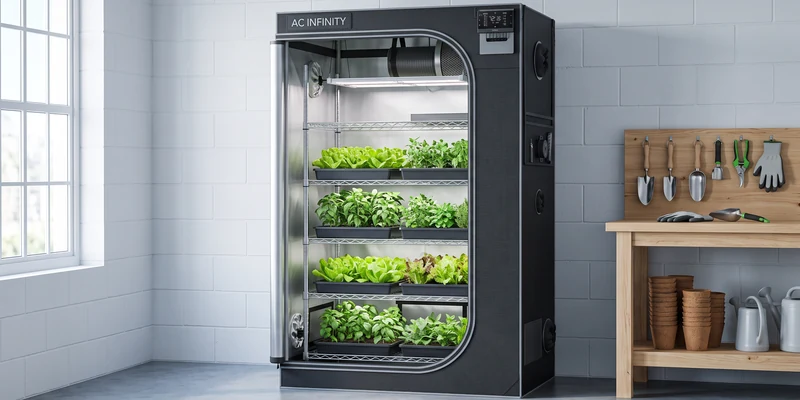
Most indoor growers meet AC Infinity through a fan rather than a tent. The company built its reputation on quiet inline ventilation, and the tents came later as the obvious place to put it. That order of events explains a lot about the AC Infinity grow tent: it is designed as one part of a connected system rather than as a fabric box that happens to be for sale.
This review looks at what the tents actually offer for growing vegetables, herbs, and seedlings, where the extra money goes, and when a cheaper tent makes more sense. It is based on published specifications and the patterns that repeat across owner feedback rather than on any testing of our own.
This article contains affiliate links. If you buy through them, we may earn a commission at no extra cost to you. Learn more.
Quick Answer
Is an AC Infinity grow tent worth the premium?
- Yes, if you want the heavy-canvas build and plan to use their fan and controller ecosystem, which is where most of the real value sits.
- The tents themselves stand out for thick fabric, metal corner hardware, and thoughtful port and window layout rather than for any single headline feature.
- Skip it if you only need a seasonal seed-starting space; a budget tent plus a good fan gets you most of the way for less.
AC Infinity Grow Tents at a Glance
AC Infinity sells tents on their own and as complete systems bundled with a light, an inline fan, and a controller. The tents are positioned above the mainstream budget lines on materials and hardware.
| Category | What to know |
|---|---|
| Product lines | CLOUDLAB tents sold separately, plus Advance Grow Tent System complete kits with light, fan, and controller |
| Fabric | Notably heavier canvas than typical mainstream tents, with a highly reflective interior liner |
| Frame | Steel poles with metal corner connectors rather than plastic fittings |
| Sizes | Small closet footprints through large room-sized tents, including 2 by 2, 2 by 4, 3 by 3, 4 by 4 |
| Ecosystem | UIS controllers link fans, lights, and accessories, with app control and automation by temperature and humidity |
| Best crops here | Herbs, leafy greens, seedlings, compact tomatoes, peppers, and cucumbers |
| Ideal for | Growers who want a permanent, automated indoor growing space rather than a seasonal setup |
What AC Infinity Gets Right
Build quality is the headline. Owners consistently describe the canvas as noticeably thicker and stiffer than budget tents, the zippers as chunky rather than fiddly, and the metal corner connectors as the part that stops a loaded frame from flexing. Those are unglamorous details, and they are exactly the details that decide whether a tent still looks right after three years of being unzipped daily.
The ecosystem is the actual product
The controller platform is what separates these tents from the field. Pair a CLOUDLINE fan with a controller and the tent regulates itself: fan speed rises with temperature or humidity, lights run on a schedule, and the app reports what happened overnight rather than what is happening while you stand there. Through a hot summer or a cold basement winter, that automation is the feature worth paying for, and it is why our grow tent kit roundup puts the complete system first.
The practical layout deserves credit too: sealed cord ports at sensible heights, viewing windows, a removable floor tray, and duct openings that actually line up with standard fan sizes.
Where AC Infinity Falls Short
The honest asterisk is value. A tent is a reflective bag on a frame, and lettuce does not grow better because the canvas is heavier. If your plan is a spring seed-starting station that lives in the garage most of the year, the premium buys durability you will not use.
Things owners mention
Three themes recur. The tents are heavier and bulkier to move and store than lighter models, which matters in a small apartment. The ecosystem pulls you in, since controllers, fans, and accessories work best with each other, and mixing brands loses some of the automation. And a new tent has a distinct plastic smell for the first days, which growers commonly handle by running the fan with the tent open before planting. None of these is a flaw exactly; they are the trade you make when you buy into a system rather than a product.
How It Compares
Against VIVOSUN, the comparison is straightforward: VIVOSUN offers more tent per dollar and complete kits that get you growing immediately, while AC Infinity offers better materials and far better automation. Our VIVOSUN grow tent review takes that side of the argument seriously. Against Spider Farmer and MARS HYDRO, the tents are broadly comparable and the difference again lands on the fan and controller.
If you strip the decision to one question, it is this: are you buying a tent, or are you building a growing space you intend to automate? The first question has cheap good answers. The second has one obvious one.
Check It Out
How we chose: the 2 by 4 foot footprint is the most useful size for edible growing at home, since it fits two standard seedling trays side by side and still suits a couple of larger pots later in the season.
🏆 The Reference Tent
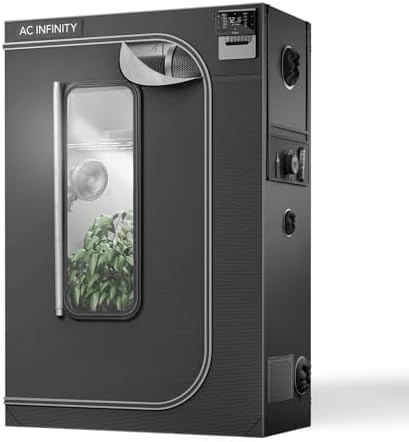
An AC Infinity CLOUDLAB tent in the 2 by 4 foot size: heavy canvas, reflective liner, metal corner hardware, sealed ports, and a viewing window. The version to buy if you already own a fan and light, or plan to choose them yourself.
Who It Is For, and Who Should Skip It
Buy an AC Infinity tent if indoor growing is a year-round habit rather than a spring project, if the tent will live in one place and get used constantly, and if you want climate automation instead of daily fiddling. It suits growers who want herbs and greens on tap all winter and a serious tomato or pepper setup in the warm months.
Skip it if you need a temporary seed-starting space, if you already own a fan and controller from another brand, or if the budget is better spent on the light. A weak fixture in an excellent tent grows worse vegetables than a good fixture in a cheap one, so our LED grow light roundup is often the better first purchase.
Alternatives Worth Considering
Three directions, depending on which part of the premium you would rather not pay.
💰 More Tent for Less
A VIVOSUN complete grow tent kit bundles tent, light, fan, filter, and hangers, and gets an empty corner growing in one order. The materials are lighter and the automation is basic, but the value is hard to argue with for a first setup.

🌱 A Smaller Starting Point
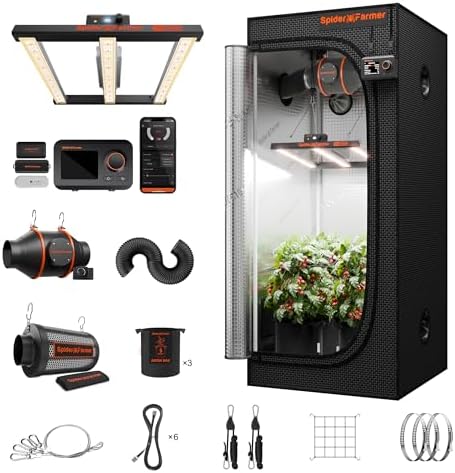
A Spider Farmer 2 by 2 foot tent kit built around one of their compact panels suits a closet, an office corner, or a single pepper plant, and is the low-commitment way into tent growing.
⚙️ The Full AC Infinity System
The Advance Grow Tent System pairs the tent with a dimmable LED, a CLOUDLINE inline fan, and the controller that automates both. If the automation is what attracted you here, this is the version that delivers it out of the box.
Frequently Asked Questions
Are AC Infinity grow tents worth the extra cost? For year-round growing and automated climate control, most owners say yes. For a seasonal seed-starting setup, a budget tent plus a decent fan covers the same job.
What size AC Infinity tent should I get for vegetables? A 2 by 4 foot tent handles seedlings and greens well. Tomatoes, peppers, and cucumbers want 4 by 4 feet and the extra height that comes with it.
Do I need the controller? No, the tent and fan work without it. The controller is what turns the setup into an automated climate that adjusts fan speed to temperature and humidity, and it is the main reason to stay inside the ecosystem.
Can I use another brand’s fan and light? Yes. Duct openings and hanging bars are standard sizes. You lose the automation that links AC Infinity components to each other, but the tent itself is brand-agnostic.
Is a carbon filter necessary for growing vegetables? Generally no, since odor is not an issue with edible crops. Many kits include one anyway, and leaving it out slightly reduces the load on the fan.
How hard is assembly? Straightforward, roughly a half hour job for one person on smaller sizes, easier with two on larger tents. Plan the placement and ducting route before you build, not after.
The Bottom Line
AC Infinity makes the most solidly built mainstream grow tents, but the real reason to buy one is the fan and controller ecosystem around it. If you want a permanent indoor growing space that manages its own climate while you are at work, this is the system to build on. If you want a seasonal seedling tent, spend the difference on a better light.
Check out the AC Infinity tent