Last updated: August 13, 2026
You bought a bag of hydroponic nutrient for a countertop garden, and now there is a bag of it in the cupboard while your houseplants and patio tomatoes sit in pots. The obvious question follows: can you use hydroponic nutrients in soil, or is that a shortcut that ends in dead plants?
The short version is that it works, and plenty of container growers do it deliberately. The longer version is that soil is a very different environment from a reservoir, and the habits that keep a hydroponic system healthy will quietly damage a pot if you carry them over unchanged. This guide covers when it makes sense, how to adjust the dose, and the two mistakes that cause almost all the trouble.
This article contains affiliate links. If you buy through them, we may earn a commission at no extra cost to you. Learn more.
Quick Answer
Can you use hydroponic nutrients in soil?
- Yes. Hydroponic nutrients are fully soluble mineral salts containing everything a plant needs, so soil-grown plants can use them the same way.
- Mix weaker than the hydroponic label rate, often around half, because potting mix already holds nutrients and does not flush the way a reservoir does.
- Do not chase hydroponic pH targets in soil, and water to runoff every few feedings so mineral salts do not accumulate in the pot.
Does It Work? A Quick Verdict by Situation
The answer shifts depending on what you are growing in and how much control you have over watering. Find your situation in the table before you mix anything.
| Situation | Verdict | What to do |
|---|---|---|
| Container plants with drainage holes | Works well | Mix at roughly half the hydroponic rate and water to runoff periodically |
| Seedlings and young transplants | Works with care | Start at a quarter strength or less; young roots burn easily |
| Houseplants in decorative pots without drainage | Risky | Salts have nowhere to go; use a dilute rate rarely, or repot into a draining container |
| Coco coir and other inert media | Excellent fit | Coco behaves closer to hydroponics; full hydroponic feeding is the normal approach |
| Rich organic potting mix with slow release fertilizer | Often unnecessary | The mix is already feeding; wait until it is exhausted before adding anything |
| Outdoor garden beds | Possible but inefficient | Soluble salts leach with rain; granular or slow release products suit beds better |
The pattern is simple: the more inert and free-draining your medium, the closer it behaves to a hydroponic system, and the more directly a hydroponic nutrient applies.
Why It Works: Plants Do Not Know the Difference
Roots absorb nutrients as dissolved mineral ions, and that is true whether those ions came from a bag of hydroponic powder or from organic matter broken down by soil microbes. Nitrate is nitrate. A complete hydroponic formula simply delivers those ions directly, already in the form plants take up.
That is also why hydroponic nutrients are usually more complete than a typical houseplant fertilizer. A standard bottle of plant food often lists nitrogen, phosphorus, and potassium and little else, on the assumption that soil supplies calcium, magnesium, and micronutrients. Hydroponic formulas cannot make that assumption, so they include everything, which is exactly what makes them useful in tired potting mix. Our hydroponic nutrients explainer breaks down what those labels contain.
Where Soil Changes the Rules
Three differences matter, and all three push in the same direction: use less, and let water move through the pot. Soil is a buffer and a storage medium, while a reservoir is neither.
Soil already holds nutrients, and holds onto them
Potting mix has cation exchange capacity, which means it grips nutrient ions and releases them gradually. Add a full hydroponic dose every watering and the pot accumulates salts faster than the plant uses them. The visible result is crusty white deposits on the soil surface or pot rim, leaf tips going brown and crisp, and growth stalling despite regular feeding.
pH targets are different, and soil buffers itself
Hydroponic growers aim somewhere around 5.5 to 6.5 because that is where nutrients stay available in water. Soil-grown plants are generally happiest around 6.0 to 7.0, and the mix resists pH changes on its own. Adjusting your watering can down to hydroponic pH is unnecessary and can acidify the medium over time. Feed at the pH your tap water arrives at, unless a soil test says otherwise; a soil pH meter is the tool for that question.
There is no reservoir to reset
In hydroponics you dump the tank and start clean. A pot has no equivalent, so flushing takes its place: every third or fourth feeding, water with plain water until a decent amount runs out the bottom. That single habit prevents most salt buildup problems.
How to Actually Do It
The routine is short, and the dilution step is the one that matters most. Work in this order the first time.
- Start at half strength. Take the hydroponic label rate per gallon and cut it in half for established container plants, or to a quarter for seedlings.
- Dissolve fully before pouring. Add powder to water, stir until clear, and keep calcium nitrate separate from the concentrated base mix so the two do not react and form residue.
- Water evenly, not just in the center. Dry pockets in a pot stay unfed and can concentrate salts elsewhere.
- Alternate with plain water. Feed, then water plain, then feed again is a common rhythm for containers under lights.
- Flush every few feedings. Plain water until it runs out the drainage holes clears accumulated salts.
- Watch the leaf tips. Browning, crisping margins usually mean too strong or too frequent, not too little.
Mixing order and the calcium nitrate rule are the same as in a reservoir; the detail is in our guide to mixing hydroponic nutrients the right way. If you are using a three-part kit, note that many soil growers simply mix the standard solution and then dilute the finished batch rather than reweighing each component; our MasterBlend guide gives the base ratios to work from.
What About the Reverse?
Going the other direction is a much worse idea. Soil fertilizers are generally not suitable for hydroponics, for two concrete reasons rather than snobbery.
First, most are incomplete: they leave out calcium and magnesium because soil is expected to provide them, and a reservoir provides nothing. Second, many do not dissolve fully, so undissolved material settles in the tank, clogs pumps and emitters, and never reaches the roots. Organic soil products add a third problem, since they need microbes to break down and can foul a recirculating system. If you need a nutrient for a hydroponic setup, our roundup of the best hydroponic nutrients covers the formulas built for it.
Common Mistakes to Avoid
- Feeding at full hydroponic strength. The most common cause of burned tips in pots. Half strength is the safe default.
- Adjusting soil watering to hydroponic pH. Soil buffers itself and prefers a higher range. Leave the pH Down out of it.
- Never flushing. Salts accumulate invisibly until growth stalls. Plain water to runoff every few feedings resets the pot.
- Using pots without drainage. With nowhere for excess to escape, mineral salts concentrate steadily. Repot or feed very sparingly.
- Feeding fresh potting mix. Most bagged mixes contain slow release fertilizer for several weeks. Adding more at planting time doubles the dose.
Where to Go From Here
If most of your growing happens in pots, a hydroponic formula is a genuinely useful thing to keep on the shelf, especially for plants in old mix that has stopped feeding them. Treat it as a complete, concentrated liquid feed and it behaves predictably.
If you would rather keep one product on the shelf for both jobs, a complete one part powder is the simplest answer: full strength in the reservoir, roughly half strength in the pots.
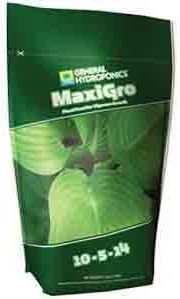
And if the bag came with a countertop garden that has since gone quiet, this is a reasonable way to use it up rather than letting it cake in the cupboard. Just keep hydroponic doses in hydroponic systems and halve them everywhere else.
Frequently Asked Questions
Will hydroponic nutrients burn my plants in soil? They can if used at full hydroponic strength every watering. Cutting the label rate roughly in half and alternating with plain water avoids it in most container setups.
Do I need to pH my water for soil feeding? Usually not. Soil buffers pH on its own and generally suits a range around 6.0 to 7.0, higher than a hydroponic reservoir. Adjust only if a soil test points to a problem.
Can I use hydroponic nutrients on houseplants? Yes, and they are often more complete than standard houseplant food. Dilute well, make sure the pot drains, and flush with plain water every few feedings.
Can I use soil fertilizer in a hydroponic system? Generally no. Most soil products lack calcium and magnesium and do not dissolve completely, which leads to deficiencies and clogged pumps.
How often should I feed potted plants with hydroponic nutrients? A common rhythm is a dilute feed every second or third watering during active growth, with plain water in between and a flush every few cycles.
The Bottom Line
Hydroponic nutrients work in soil because plants absorb the same ions either way, and their complete profile is often an upgrade over basic houseplant food. The adjustments are what matter: roughly half strength, no hydroponic pH chasing, drainage holes, and a plain water flush every few feedings. Do that and the bag in your cupboard becomes genuinely useful.