Last updated: August 15, 2026
Fill the bucket too high and the seedling’s stem sits in water it never asked for. Fill it too low and young roots dangle in the air, reaching for a reservoir they cannot touch. The deep water culture water level is one of those settings that nobody explains and everybody gets slightly wrong the first time, because the right answer changes as the plant grows.
The good news is that the whole subject reduces to one moving rule: start with the solution touching the bottom of the net pot, then let it drop to leave an air gap once roots hang into the water. This guide covers the level per growth stage, why the air gap matters so much, and the top-off routine that keeps the level where it belongs.
This article contains affiliate links. If you buy through them, we may earn a commission at no extra cost to you. Learn more.
Quick Answer
Where should the DWC water level sit?
- Seedling stage: solution just touching the bottom of the net pot, so bubbles and wicking keep the plug moist.
- Once roots hang into the water: drop the level to leave an air gap of roughly 1 to 2 inches below the net pot.
- From then on, top off to hold that gap; the upper roots exposed to humid air are doing the plant’s breathing.
The Right Level per Growth Stage
The correct level tracks the roots, not the calendar. Use this table as the reference, and check the actual root mass when in doubt, since crops and containers vary.
| Stage | Water level | Why |
|---|---|---|
| Just transplanted, no roots out yet | Touching the bottom of the net pot, or a fraction above it | The starter plug must stay moist by contact and splash until roots emerge |
| First roots through the mesh | At or just below the net pot base | Splash from the air stone keeps short roots wet while they extend |
| Roots hanging well into the reservoir | Air gap of about 1 to 2 inches below the net pot | Upper roots take oxygen from humid air; lower roots drink and feed |
| Mature plant, thick root mass | Hold the same gap; never re-submerge the crown | A flooded crown and wet stem invite rot at the worst possible spot |
| Kratky (no pump), any stage | Starts at the net pot, drops continuously, never topped up to the start | The widening gap is the oxygen supply; refilling it defeats the method |
Why the Air Gap Matters
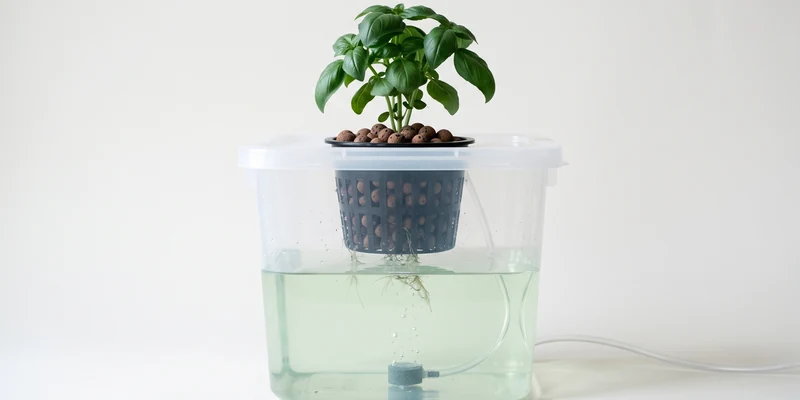
Roots need water and oxygen at the same time, and a DWC bucket delivers them in layers. The submerged roots handle drinking and feeding, while the stretch of root between the water surface and the net pot lives in air that the bubbling stone keeps close to saturated with humidity. Those exposed upper roots are the plant’s gas exchange organ.
Drown that zone by keeping the bucket brim-full and the plant loses its easiest oxygen source, leaving only the dissolved oxygen in the water. On a cool day with a strong air pump that can work; on a warm day it becomes the opening scene of root rot, which is a story about oxygen shortage before it is a story about pathogens. The full mechanism, and what to do when roots turn brown and slimy, is in our guide to DWC root rot.
The splash zone is doing quiet work
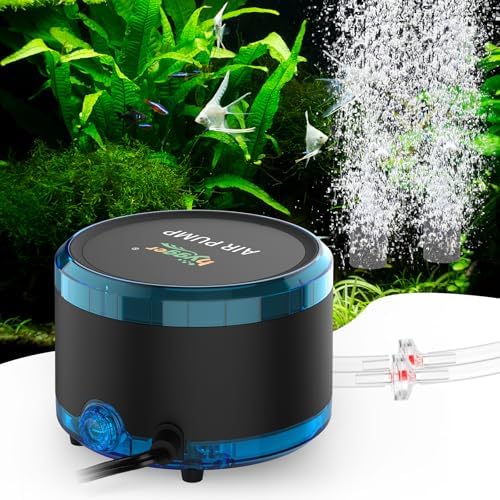
Between water and lid, bursting bubbles throw a fine mist upward. That splash keeps the hanging roots and the bottom of the net pot moist, which is why an aerated bucket tolerates a lower level than beginners expect, and why a dying air pump changes the water level math overnight. Sizing that pump correctly is covered in our guide to air pumps for hydroponics.
If the surface looks lazy rather than lively, the pump is undersized for the bucket, and that is the cheapest thing on the list to fix.
Setting the Level in Practice
Theory is inches below a net pot; practice is a bucket you cannot see into. The habit that solves it: mark your levels on the outside of the bucket once, then stop measuring.
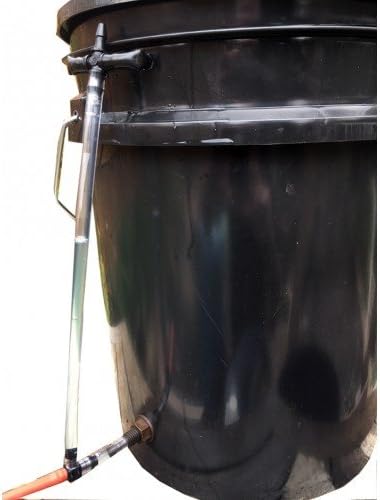
When you first assemble the system, set the empty net pot in the lid, measure from the rim of the bucket to the pot’s base, and mark the fill line and the 1-to-2-inch-gap line on the outside with tape or paint marker. A cheap sight tube, a clear vertical tube plumbed into the side, shows the level at a glance on bigger reservoirs. From there the routine is simple: check every day or two, top off with plain water or dilute solution to the current target line, and note how much the plant drinks, because that rate of drop is itself a health report. The complete assembly sequence, marks included, is in our 5-gallon DWC bucket setup.
A float style level indicator does the same job as tape marks without opening the lid to look.
Top-offs, strength, and reservoir changes
Plants drink water faster than they consume nutrients, so topping off with full-strength solution slowly concentrates the reservoir. Many growers top off with plain water or half-strength solution between full reservoir changes, and let an EC meter referee when readings drift. None of this changes the level rule: whatever you pour in, stop at the line.
DWC Level vs Kratky Level: Same Bucket, Opposite Rules
The two methods look identical on day one and diverge from there. In aerated DWC you actively hold the level at the air gap line for the life of the plant. In Kratky, the drop is the design: the plant drinks the level down, the air gap widens, and the roots differentiate into upper air roots and lower water roots along the way.
That is why the classic Kratky rule is not to refill back to the start, and why converting a Kratky bucket to DWC mid-grow means adding an air stone and then managing the level like any other DWC bucket. The passive method’s full logic is in our Kratky method guide, and the aerated side in the complete DWC guide.
Common Mistakes to Avoid
- Keeping the bucket brim-full all grow. The most common error. Once roots are in the water, the air gap is not empty space, it is the oxygen supply.
- Starting a seedling with a low level. A transplant with no roots out of the pot cannot reach a low reservoir. Start high, drop later.
- Topping off by eye through the lid hole. Level creep in both directions goes unnoticed. Mark the bucket once and trust the line.
- Refilling a Kratky bucket to the top. That erases the air gap the method depends on and suffocates the air roots it grew.
- Ignoring a fast-dropping level. Sudden extra thirst can mean heat stress or a leak; sudden low thirst often means root trouble. The line tells you either way.
Frequently Asked Questions
Should DWC roots be fully submerged? No. The lower portion of the root mass sits in the solution while the upper 1 to 2 inches below the net pot stay in humid air. Both zones are doing necessary work.
Should the water touch the net pot in DWC? Only at the start. For a fresh transplant the solution should touch the pot base; once roots hang into the reservoir, let the level drop to leave the air gap.
How often should I top off a DWC bucket? Check every day or two. A mature plant in warm weather can drop the level noticeably in a day, while a seedling barely moves it in a week.
Do I top off with water or nutrient solution? Many growers use plain water or half-strength solution between reservoir changes, since plants drink water faster than nutrients. An EC meter settles it precisely.
Is the water level rule different for Kratky? Yes, opposite. Kratky starts at the net pot and is deliberately never refilled to the start; the widening gap replaces the air pump.
The Bottom Line
Start with the solution kissing the net pot, then hold an air gap of about 1 to 2 inches once roots reach the water, and keep it there with marked lines and regular top-offs. The gap is not wasted space, it is where the plant breathes. Get the level and the aeration right and you have prevented most of what goes wrong in deep water culture.