Last updated: August 15, 2026
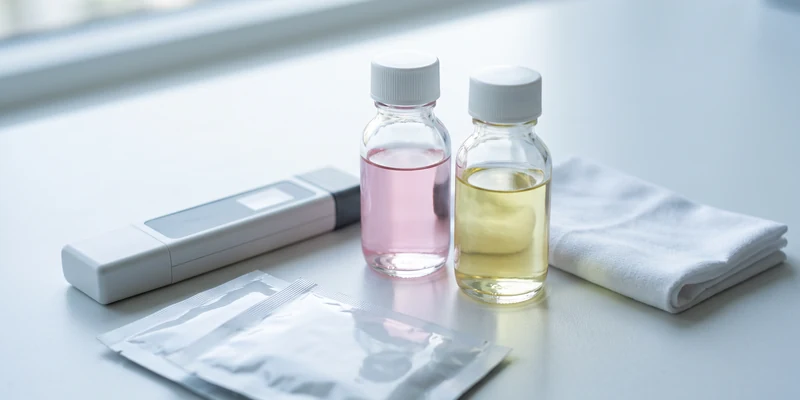
A pH meter is only as honest as the liquid you calibrate it with. pH meter calibration solution, also sold as buffer solution, is a lab-made liquid held at a known, stable pH so your meter has something trustworthy to compare itself against. Skip it, use it past its date, or reuse it, and the number on your screen becomes a guess with a decimal point.
The category looks confusing because bottles, foil sachets, and powder packets all sit next to each other, and half of them are labeled with numbers that mean nothing until someone explains them. This guide sorts out which buffer values you need for hydroponics, which format fits how often you actually calibrate, and the two extra bottles that quietly decide how long your probe survives.
This article contains affiliate links. If you buy through them, we may earn a commission at no extra cost to you. Learn more.
Quick Answer
Which pH calibration solution should you buy?
- For hydroponics, buy a pH 4.01 and pH 7.00 pair. Those two bracket the range your nutrient solution lives in, and nearly every meter calibrates on them.
- Bottles are the sensible default if you calibrate monthly or more; single-use sachets stay fresh longer if you calibrate a few times a year.
- Budget for storage solution as well. Storing an electrode dry, or in plain water, shortens its life more than anything else you can do to it.
What to Check Before You Buy
Five things separate a buffer that keeps your readings honest from one that adds its own error. Work down this list and most of the shelf sorts itself out.
| What to check | Why it matters | What to look for |
|---|---|---|
| Buffer values | Your meter needs points on both sides of your working range | pH 4.01 and 7.00 for hydroponics; add 10.01 only if you also measure alkaline water |
| Format | Decides how fast the solution goes stale once opened | Bottles for regular calibration, sealed sachets for occasional use, powder to mix on demand |
| Freshness and dating | Buffers drift with age, especially after opening | A printed expiration or lot date, and a bottle size you can finish in a season |
| Stated accuracy | A sloppy buffer caps how accurate your meter can be | Wording like NIST traceable, plus a value quoted at a reference temperature, usually 77 F (25 C) |
| Matching extras | Calibration is only half of probe care | A storage solution, and a cleaning solution if you measure nutrient mixes regularly |
Notice what is not on the list: brand loyalty. Buffers are a commodity chemistry, and a fresh generic solution beats a premium bottle that has been open on a shelf for two years. If you have not chosen a meter yet, start with our pH meter guide for hydroponics, then come back for the liquids.
Which Buffer Values Do You Actually Need?
For indoor growing, pH 4.01 and pH 7.00 are the pair that matters. Most crops in water-based systems sit around 5.5 to 6.5, and calibrating on 4 and 7 puts a reference point on each side of that window, which is exactly what a two-point calibration wants.
The pH 10.01 buffer belongs to a different job. It extends accuracy into alkaline territory, useful if you test very hard tap water, pond water, or soil slurries, and unnecessary for a nutrient reservoir. Three-point calibration is a nice-to-have on meters that support it, not a requirement for growing lettuce.
Why the numbers look odd
Buffers are quoted as 4.01 and 7.00 (some brands print 4.00 and 7.01) because a buffer’s true pH shifts slightly with temperature, and manufacturers state the value at a reference temperature. Meters with automatic temperature compensation handle that for you. If your meter does not compensate, let the buffer and the probe settle to room temperature before you calibrate, which removes most of the discrepancy on its own.
Bottles, Sachets, or Powder
All three formats deliver the same chemistry. What differs is how long the solution stays accurate once air reaches it, and how much you throw away per calibration.
| Format | Strengths | Trade-offs |
|---|---|---|
| Bottles | Cheapest per calibration, easy to pour into a shot glass, always on hand | Accuracy degrades over months once opened, especially the pH 10 buffer |
| Single-use sachets | Sealed until the moment you use them, so each calibration starts fresh | More waste per use, and awkward if you calibrate weekly |
| Powder packets | Long shelf life in the pouch, compact, mixes exactly what you need | You must mix with distilled water and measure the volume correctly |
A practical rule: if you calibrate at least once a month, bottles make sense. If your meter comes out a few times a year for a soil check or a new nutrient batch, sachets or powder will be more accurate on the day you actually need them.
Our Top Picks for Calibration Solution
How we chose: we compared widely available buffer solutions on stated accuracy and traceability, packaging that limits air exposure, availability of the 4.01 and 7.00 pair as a set, and how consistently growers report them working with common pocket meters. Buffers are simple products, so the picks below are about freshness, format, and fit rather than features.
🏆 Best Overall
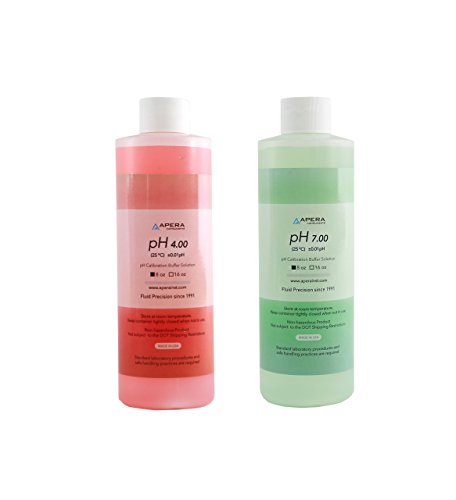
A bottled 4.01 and 7.00 pair from a meter maker that also sells the probes, which means the values and instructions line up with what your meter expects. The right default if you mix nutrients regularly and calibrate monthly. Pair it with our walkthrough on how to calibrate a pH meter.
📦 Best for Occasional Calibration
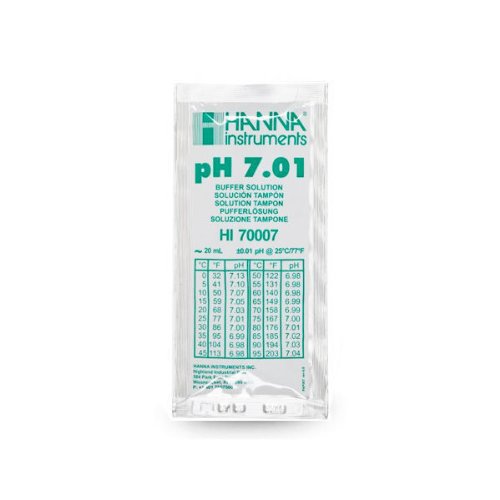
Sealed single-use sachets that stay accurate in a drawer far longer than an opened bottle. Ideal if your meter lives in a cupboard between grows, or if you want a few fresh calibrations in a travel kit.
💧 Best Budget Option
Buffer powder packets you dissolve in distilled water when you need them. The lowest cost per calibration and the longest unopened shelf life, at the price of one extra minute of mixing and the need to keep distilled water around.

Two Bottles Most Growers Forget
Calibration keeps the reading true. These two keep the probe alive long enough for that to matter, and both are cheap next to a replacement electrode.
🧴 Electrode Storage Solution
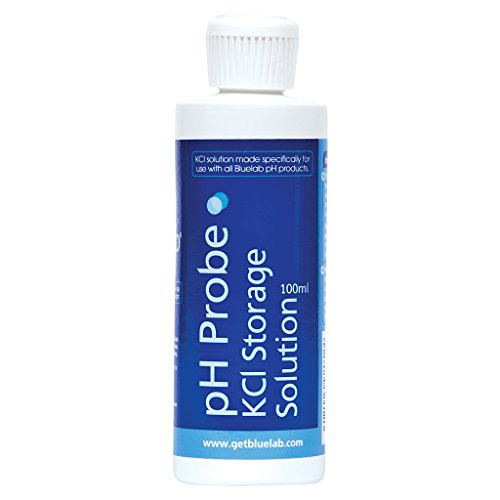
A potassium chloride storage solution keeps the glass bulb and reference junction hydrated between uses. This is the single most effective thing you can buy for probe lifespan, and it is not interchangeable with calibration solution or distilled water.
🧽 Probe Cleaning Solution
Nutrient salts and biofilm coat an electrode over time, and a coated probe drifts and responds slowly. A dedicated cleaner restores response without scrubbing the glass, which you should never do.

How Long Calibration Solution Lasts
Unopened, most buffers carry a shelf life of roughly one to two years from the manufacturing date. Once opened, treat a bottle as reliable for a few months of normal use, since air, dust, and stray drips all nudge the value.
The pH 10.01 buffer ages fastest because it absorbs carbon dioxide from the air, which pulls the value down. The pH 4.01 buffer is the most stable of the three, and pH 7.00 sits in between. If a bottle has no date on it and you cannot remember buying it, replace it rather than trust it; a wrong buffer is worse than no calibration because it teaches the meter a false reference.
Storage that actually helps
Keep bottles capped tight, upright, out of direct sun, and at stable room temperature. Never pour used solution back into the bottle, and never dip the probe directly into the bottle. Pour a small amount into a clean cup, calibrate, then discard it.
Using It Without Wasting It
A calibration takes about two minutes and roughly a shot glass of liquid per buffer. Pour a little pH 7.00 into one clean cup and a little pH 4.01 into another. Rinse the probe with distilled water, blot it gently on a lint-free cloth, and calibrate on 7.00 first, then rinse again and do 4.01.
Between the two steps, that rinse is what keeps a buffer usable for the next grower who reads this and wonders why their solution went off within weeks. Carrying a few drops of pH 7 into a pH 4 cup contaminates it immediately. When you are done, discard both cups, rinse the probe, and return it to storage solution. For the full routine including troubleshooting a probe that will not accept calibration, see our step by step guide.
Common Mistakes to Avoid
- Reusing buffer solution. Once a probe has been in it, the value has shifted. Pour, use, discard.
- Storing the probe in distilled water. Pure water pulls ions out of the reference junction. Storage solution exists precisely for this.
- Calibrating with cold buffer straight from a garage shelf. Let the liquid reach room temperature first, or let the meter’s temperature compensation settle before you confirm.
- Buying only pH 7.00. A single-point calibration corrects the offset but not the slope. The 4.01 buffer is what keeps readings honest down in the growing range.
- Keeping an ancient bottle “because it is still full”. Buffers age whether you use them or not. Date the bottle with a marker the day you open it.
Where to Go From Here
If your meter reads erratically even with fresh buffers, the probe is usually the problem rather than the liquid, and a comparison of the two brands most growers end up choosing between is in our Apera versus Hanna guide. Meters designed for potting mix are a separate category with their own quirks, covered in our soil pH meter guide.
And once your readings are trustworthy, the interesting work starts: holding the solution in range as plants drink it down. Our nutrients explainer covers why pH drifts in the first place.
Frequently Asked Questions
Can I make pH calibration solution at home? Not reliably. Buffers hold a precise pH against contamination and temperature shifts, which takes lab-grade salts and accurate weighing. Homemade mixtures are the one place in hydroponics where DIY is genuinely a false economy.
Is calibration solution the same as storage solution? No. Calibration solution sets the meter’s reference points; storage solution keeps the electrode hydrated between uses. Storing a probe in buffer solution slowly degrades both the buffer and the probe.
How often should I calibrate? Many growers calibrate monthly for a pocket meter in regular use, and before any measurement that matters, such as mixing a fresh reservoir. If readings wander between checks, calibrate more often or clean the probe.
Do I need the pH 10.01 buffer? For nutrient solutions, no. It matters if you also test alkaline tap water or garden soil slurries and want accuracy above pH 7.
Can I use tap water to rinse the probe? Use distilled or deionized water. Tap water carries dissolved minerals that contaminate buffers and skew the next reading.
What if my meter will not calibrate at all? Try fresh buffer first, then clean the probe. If a cleaned probe with fresh solution still refuses both points, the electrode has usually reached the end of its life.
The Bottom Line
Buy a fresh pH 4.01 and 7.00 pair, in bottles if you calibrate monthly and in sachets if your meter mostly sits in a drawer, and add storage solution the same day. Date the bottle when you open it, pour into a cup instead of dipping, and discard what you use. Those habits cost nothing and are the difference between a meter you trust and a meter you argue with.