Last updated: August 13, 2026
A pH meter for hydroponics is the one measuring tool that changes how you grow. Nutrient solution can be perfectly mixed and still leave a plant hungry, because outside a fairly narrow pH band the minerals in the water become chemically unavailable to roots. Yellowing leaves, stalled lettuce, and mysterious tip burn are very often a pH story rather than a nutrient story, and you cannot see pH by looking at the water.
The problem is that pH pens are a crowded, confusing category where identical looking pens behave very differently after two months of use. This guide sorts them by what actually matters over a growing season: calibration behavior, whether the probe can be replaced, and how the meter survives being stored badly. Picks are based on published specifications and the themes that repeat across grower feedback.
This article contains affiliate links. If you buy through them, we may earn a commission at no extra cost to you. Learn more.
Quick Answer
Which pH meter should you buy for hydroponics?
- For most home growers, a waterproof pocket tester with automatic temperature compensation and multi point calibration covers everything a reservoir needs.
- If you mix weekly or run several systems, step up to a pen with a replaceable probe, so a worn electrode means a new tip rather than a new meter.
- Whatever you buy, budget for buffer solutions and storage solution. A meter without them drifts within weeks and gives confident wrong numbers.
What Separates a Good pH Meter From a Frustrating One
Six things decide whether a pH pen is still trustworthy next season, and only two of them appear on the front of the box. Work down this list before comparing anything else.
| What to check | Why it matters | What to look for |
|---|---|---|
| Resolution and accuracy | Decides whether you can tell 5.8 from 6.1, which is a real difference to a plant | Readings to a tenth are workable for most growers; to a hundredth if you like precision |
| Calibration points | A one point calibration cannot correct the slope of a tired electrode | Two or three point calibration using pH 4.0, 7.0, and sometimes 10.0 buffers |
| Replaceable probe | Glass electrodes are consumables, not permanent parts | Models sold with a spare probe available separately |
| Temperature compensation | pH readings shift with temperature, and reservoirs are rarely at lab temperature | Automatic temperature compensation, listed as ATC |
| Waterproofing | Pens get dropped in reservoirs, and most of them do not survive it | An IP rating for water resistance and a body that floats or seals properly |
| Storage design | Storing the bulb dry is the single fastest way to ruin a meter | A cap with a sponge or reservoir designed to hold storage solution |
Notice what is missing: brand prestige and headline accuracy claims. A meter rated to a hundredth of a pH point that has not been calibrated in three months is less useful than a tenth resolution pen calibrated last week.
Why pH Matters More in Water Than in Soil
Soil buffers itself. A pot of potting mix carries organic matter and mineral surfaces that resist change, which is why soil gardeners can go years without measuring anything. A hydroponic reservoir has almost no buffering capacity, so the same nutrient solution can drift half a point in a day as plants take up ions.
Inside roughly 5.5 to 6.5, most indoor crops can access the full menu of nutrients. Drift too high and iron, manganese, and phosphorus become progressively harder to take up. Drift too low and other elements become excessive. Both look identical from the outside: a well fed plant that is not thriving. Crop specific ranges are collected in our dosing guide per crop.
Small reservoirs drift fastest
The smaller the water volume, the faster it moves. A countertop garden with a quart of solution can swing noticeably in a day, while a large tote moves slowly. That is one reason smart garden owners are told to change water on a schedule instead of measuring, and also why growers with jars and small buckets benefit most from owning a meter.
Test Strips, Drop Kits, or a Digital Pen
Three ways to measure exist, and they are not equally useful. Paper strips are the cheapest and the least precise, typically landing you within half a point at best, and they are hard to read against nutrient stained solution. They are fine as a sanity check and poor as a routine tool.
Liquid drop test kits, the type sold for aquariums, are more reliable than strips and need no calibration or batteries. The color comparison still relies on your eyes, and reading a yellow tinted nutrient solution against a color card is genuinely difficult. They make a good backup for the day your pen dies.
Digital pens are the practical default
A pocket pen gives a number in seconds, repeats that number reliably when calibrated, and costs little to maintain. The trade is upkeep: buffer solution every few weeks, storage solution between uses, and a probe that eventually wears out. Growers who skip the upkeep are the ones who conclude that digital meters are unreliable.
Our Top Picks at a Glance
How we chose: we compared widely available pH testers on calibration options, temperature compensation, waterproofing, probe replaceability, and the durability themes that repeat across grower feedback, using manufacturer specifications rather than any hands on trial of our own. All three are pocket sized, because that is what a home reservoir actually needs.
🏆 Best Overall
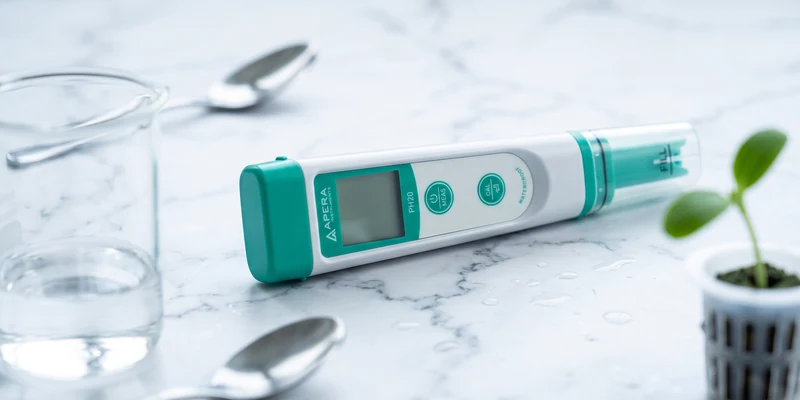
A waterproof pocket tester with automatic temperature compensation and guided multi point calibration, sized to live next to the reservoir. Reads to a tenth of a pH point, which is exactly the resolution a nutrient solution decision needs, and growers consistently describe calibration as quick enough that they actually do it.

🔬 Upgrade Pick
The step up adds finer resolution and, more importantly, a replaceable probe. When the electrode ages after a season or two of weekly use, you fit a new tip instead of buying another meter, which changes the long term math for anyone running several systems.

⭐ Also Great
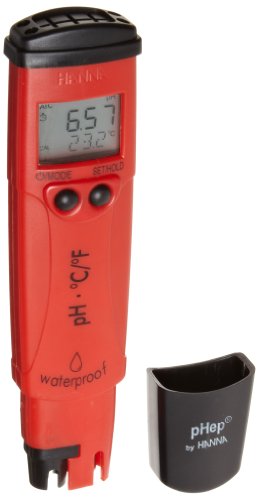
A pocket tester from a long established instrument maker, with a simple two button routine and a body built for wet hands. A sensible pick if you already own testers from the same family and want your calibration habit to be identical across them.
The Two Purchases That Keep a Meter Honest
A pH pen is not a finished purchase on its own. Buffer solutions are how the meter learns what 4.0 and 7.0 feel like, and storage solution is what keeps the glass bulb hydrated between readings. Skipping either one is the reason so many pens read fine for a month and nonsense afterward.
🧪 Calibration Buffers
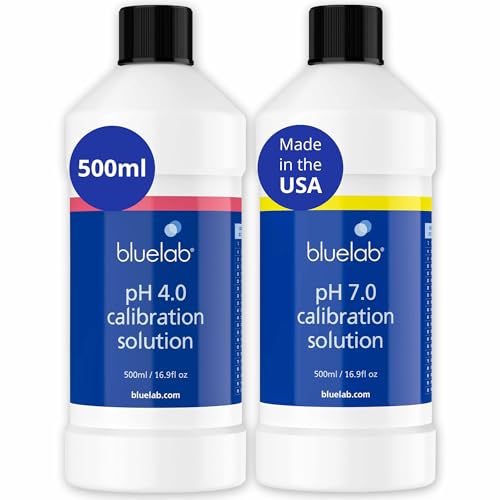
A set of pH 4.0 and 7.0 buffer solutions, in bottles or single use sachets. Sachets stay uncontaminated because you use each one once, which suits growers who calibrate every few weeks; see our walkthrough on calibrating a pH meter.
💧 Storage Solution
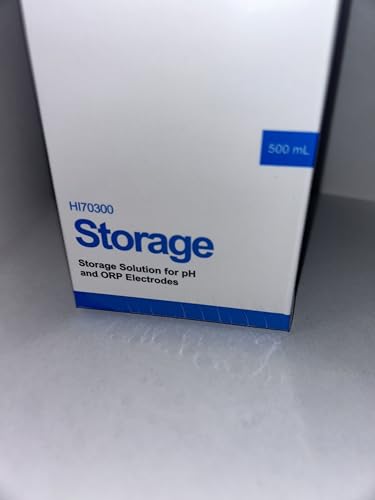
The bottle nobody mentions until a meter has already died. Electrode storage solution keeps the sensing bulb wet and the reference junction working. Distilled water is not a substitute, and dry storage shortens probe life considerably.
Keeping a Meter Alive Through a Season
Rinse the probe with clean water after every reading, then blot it gently on a paper towel rather than wiping it, since rubbing the glass builds static and slows the response. Cap it with storage solution in the sponge, and keep the cap upright so the bulb never dries out.
Calibrate on a schedule instead of when something looks wrong. Weekly is realistic for growers who mix often, monthly for lighter use, and always after the meter has been stored dry or dropped. If readings start drifting during a single measurement or take a long time to settle, the electrode is aging, which is exactly when a replaceable probe pays for itself.
Where growers go wrong with EC meters too
The same care rules apply to conductivity meters, which measure solution strength rather than acidity. Many growers buy a combination unit and then treat it as maintenance free. Both sensors need rinsing, and pH needs buffers no matter what the box promises. Our guide to mixing hydroponic nutrients covers where each reading fits in the routine.
Common Mistakes to Avoid
- Storing the probe dry. The fastest way to kill a pH meter. Storage solution in the cap, every time.
- Measuring before the nutrients are in. Nutrient concentrate moves pH, so a reading taken first tells you nothing useful.
- Calibrating in old buffer. Buffer that has been dipped in repeatedly is contaminated. Pour a fresh sample rather than dunking the probe in the bottle.
- Chasing tenths. Anywhere in roughly 5.5 to 6.5 is fine for most crops. Constant correction stresses plants more than a stable number slightly off center.
- Reading straight from a cold reservoir. Temperature affects pH readings. Automatic compensation handles most of it, but let the probe settle before trusting the number.
- Buying a sealed pen for heavy use. If you mix weekly, a non replaceable probe turns into a recurring purchase of whole meters.
Where to Go From Here
If you are measuring soil rather than solution, a water pen is the wrong shape for the job and a different tool applies; our guide to the best soil pH meters explains why the cheap analog probes disappoint. And if you are weighing two specific brands against each other, we compare them directly in Apera vs Hanna.
Once the meter is on the shelf, the payoff comes from using it as part of a routine rather than as an alarm. Mix, measure strength, correct pH, note the number, and repeat at every reservoir change. Deficiency guesswork drops away quickly once you have three weeks of readings to compare.
Frequently Asked Questions
What pH should hydroponic nutrient solution be? Most indoor crops do well somewhere around 5.5 to 6.5. Leafy greens tend to sit toward the lower half of that band and fruiting crops toward the middle, and stability matters more than hitting an exact number.
How often should I calibrate a pH meter? Weekly if you mix solution often, monthly for occasional use, and always after storing the probe dry, dropping the meter, or seeing a reading that does not match what you expect. The routine takes a few minutes with pH 4.0 and 7.0 buffers.
Can I use pH strips instead of a meter? As an occasional sanity check, yes. For routine use they are hard to read against colored nutrient solution and typically only get you within about half a point, which is wide enough to miss a real problem.
Do cheap pH pens work? Many read acceptably when new. The differences show up over months: calibration that will not hold, slow response, and no way to replace a worn probe. That is where the frustration in the category comes from.
Do I need an EC meter as well? They answer different questions. pH tells you whether nutrients are available, EC tells you how much is in the water. Growers who run several crops usually end up owning both, or one combination unit.
Why does my meter read differently every time? Usually a dry or aging probe, contaminated buffer, or a reading taken before the number settled. Recalibrate with fresh buffer, give the probe thirty seconds in the solution, and replace the electrode if drift continues.
The Bottom Line
Buy a waterproof pocket pen with automatic temperature compensation and multi point calibration, and step up to a replaceable probe if you mix solution weekly. Then spend the small extra on buffer and storage solution, because those two bottles are what separate a meter that stays accurate from one that quietly starts lying. Keep the reading somewhere around 5.5 to 6.5 and most nutrient mysteries disappear.