Last updated: August 13, 2026
Ask any indoor growing forum which meter to buy and two names come back: an Apera pH meter or something from Hanna Instruments. Both make waterproof pocket testers, both cover the range a hydroponic reservoir needs, and both will tell you whether your nutrient solution sits near 5.8 or has drifted to 6.9. Choosing between them is less about which brand is better and more about which one matches how you grow.
This comparison lines them up on the things that actually change your experience over a season: how calibration feels in practice, whether you can replace a worn probe, how easy consumables are to find, and how deep each catalog goes if your setup grows. It is based on published specifications and the themes that repeat across grower feedback rather than any testing of our own.
This article contains affiliate links. If you buy through them, we may earn a commission at no extra cost to you. Learn more.
Quick Answer
Apera or Hanna: which pH meter should you buy?
- For most home growers, Apera is the easier recommendation: pocket testers with guided calibration, clear displays, and replaceable probes across much of the range.
- Hanna makes sense if you want one brand across pH, EC, and lab style instruments, or if you value a long established service and dealer network.
- Either way, the deciding factor is a replaceable probe. A sealed pen is a recurring purchase; a pen with a spare tip is a long term tool.
Apera and Hanna Side by Side
Both brands span simple pocket pens up to serious instruments, so compare like with like. This table covers the characteristics that separate them at the level most indoor growers shop at.
| What matters | Apera Instruments | Hanna Instruments |
|---|---|---|
| Reputation | Newer name, built around value focused testers for growers, aquariums, and pools | Long established instrument maker with a broad professional and laboratory catalog |
| Pocket testers | A tightly focused lineup that steps up in resolution and probe quality | A very wide lineup, from simple checkers to grower specific GroLine models |
| Calibration | Guided multi point routines that growers consistently describe as easy to follow | Automatic recognition of standard buffers on most models, familiar to lab users |
| Replaceable probes | Available on much of the range, including popular mid tier pens | Available across many models, plus a large catalog of specialist electrodes |
| Consumables | Buffers and storage solution widely sold alongside the meters | Buffers, storage, and cleaning solutions stocked broadly, including sachets |
| Ecosystem | Straightforward: pH, EC, and combination pocket meters | Deep: pH, EC, temperature, controllers, benchtop meters, dedicated grower lines |
| Best suited to | Home growers who want one dependable pen and a simple calibration habit | Growers scaling up, or anyone who wants matching instruments from one maker |
Nothing in that table declares a winner, which is the honest outcome. Both brands make meters that hold calibration when maintained and drift when neglected. The differences show up in fit rather than in capability.
Where Apera Tends to Win
Apera’s strength is the experience at the pocket tester level. The calibration routine is guided, the display is easy to read in a dim grow space, and the step from a basic tenth resolution pen to a hundredth resolution pen with a replaceable probe is a short and obvious one. For a grower who owns exactly one meter, that clarity matters.
Replaceable probes without a research project
Glass electrodes are consumables, and the practical question is how painful the replacement is. On Apera’s mid tier pens, swapping a probe is a documented, ordinary purchase rather than an exercise in matching part numbers from a professional catalog. Growers who mix solution weekly usually reach that point within a season or two, which is when the choice pays off. Our pH meter guide covers the same trade-off across other brands.
The other quiet advantage is focus. The lineup is small enough that choosing takes minutes, and the pens are aimed at exactly the use case a home hydroponic grower has: a reservoir, a cup of solution, and hands that are already wet.
Where Hanna Tends to Win
Hanna’s advantage is depth and continuity. It has been making measurement instruments for decades, the catalog runs from pocket testers to benchtop meters and controllers, and consumables and spares are widely stocked through professional channels as well as online. If your growing is likely to expand into something more permanent, staying inside one instrument family has real value.
Grower specific tools and simple checkers
Hanna also serves both ends of the spectrum better. At the simple end, its compact checkers do one job with two buttons. At the serious end, the GroLine range targets growers specifically, with combined measurements and rugged bodies aimed at people testing several reservoirs a day. Neither end is where most first time buyers shop, but both are useful to know about.
The trade is choice paralysis. The catalog is large, model numbers are dense, and it is genuinely possible to buy a meter that is either overkill or missing the one feature you needed. Read the specification list carefully, particularly on whether the electrode can be replaced.
Which Grower Are You?
This is where the comparison resolves. Find yourself below and the answer is usually obvious.
You have one system and mix occasionally
Buy a basic waterproof pocket tester from either brand, with automatic temperature compensation and at least two point calibration. Apera’s entry pens are the common recommendation because the calibration routine is easy to follow, and an easy routine is one you will actually perform. Add buffers and storage solution in the same order.
The Apera pocket tester most often named for this role:

You mix weekly across several buckets or a tower
Prioritize a replaceable probe over everything else, then pick whichever brand makes that specific model easy to buy spares for. Both qualify. This is the grower for whom a sealed pen becomes a recurring purchase, and the one who benefits most from calibrating on a schedule, as described in our guide to calibrating a pH meter.
You want one brand for everything
Hanna, comfortably. Matching pH and EC instruments, a common calibration culture, and an upgrade path into benchtop equipment is exactly what a large catalog buys you. It is the choice for growers who expect their setup to keep expanding.
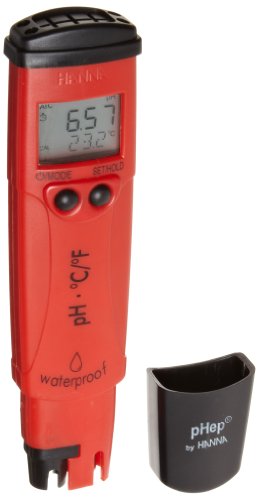
The Hanna equivalent at pocket tester level:
You want the least maintenance possible
Look at Bluelab as a third option before deciding. Its pens are built around long life probes and simple routines and are popular with growers who dislike fiddling, though the maintenance rules are the same everywhere: rinse, blot, store wet, calibrate.
Common Mistakes to Avoid
- Comparing a flagship to an entry model. Both brands span the range. Line up similar tiers or the comparison is meaningless.
- Ignoring probe replaceability. It is the single biggest long term cost difference between two otherwise identical pens.
- Forgetting the consumables. Neither brand’s meter stays accurate without buffer and storage solution, and buying them later usually means a month of bad readings first.
- Assuming higher resolution means better readings. A hundredth resolution pen that has not been calibrated is less useful than a tenth resolution pen that was calibrated last week.
- Buying a combination meter to save space. Convenient, but a failure in one sensor takes the whole unit out of service.
Where to Go From Here
Whichever brand you land on, the meter only earns its place inside a routine: mix nutrients, check strength, correct pH, note the number. That sequence is laid out in our guide to mixing hydroponic nutrients, and the target numbers per crop live in our dosing guide.
If part of your growing happens in pots, remember that neither pen belongs in soil directly. A spear tip probe or the slurry method is the right approach there, as covered in our guide to the best soil pH meters.
Frequently Asked Questions
Is Apera as good as Hanna? For home hydroponics, the two are closely matched at similar tiers. Apera is usually the easier pick for a single pocket meter, while Hanna’s advantage is catalog depth and a long service history.
Which is more accurate? Accuracy depends far more on calibration and probe condition than on the badge. A well maintained pen from either brand will out read a neglected premium meter every time.
Can I use the same buffer solutions for both? Yes. pH 4.0 and 7.0 buffers are standard, so buffer from one brand works with a meter from another. Use fresh poured samples rather than dipping into the bottle.
Do both brands offer replaceable probes? Both do on many models, but not on all of them, and it is the specification most worth checking before you order. Sealed pens are effectively disposable once the electrode ages.
Which one is better for a beginner? Whichever pen has a calibration routine you understand. In practice that pushes most first time buyers toward a guided Apera pocket tester, but a simple Hanna checker suits someone who wants two buttons and nothing else.
What about EC meters from these brands? Both make conductivity meters and combination units. The same care rules apply: rinse after use, store correctly, and calibrate with the appropriate standard solution.
The Bottom Line
For a single home system, an Apera pocket tester is the easier meter to live with, mostly because its calibration routine is straightforward and probe replacement is uncomplicated. Hanna earns the nod when you want one instrument family across pH and EC or expect to scale up. Whichever you choose, insist on a replaceable probe, buy buffers and storage solution with it, and calibrate on a schedule.